Department of Developmental Biology, Washington University School of Medicine, St. Louis, MO 63110, USA; Division of Life Sciences, Korea University, Seoul 02841, Republic of Korea.
Division of Life Sciences, Korea University, Seoul 02841, Republic of Korea; Creative Research Initiatives Center for Molecular Biology of Translation, Korea University, Seoul 02841, Republic of Korea.
Neurobiol Dis. 2019 Jul;127:178-192. doi: 10.1016/j.nbd.2019.02.001. Epub 2019 Feb 5.
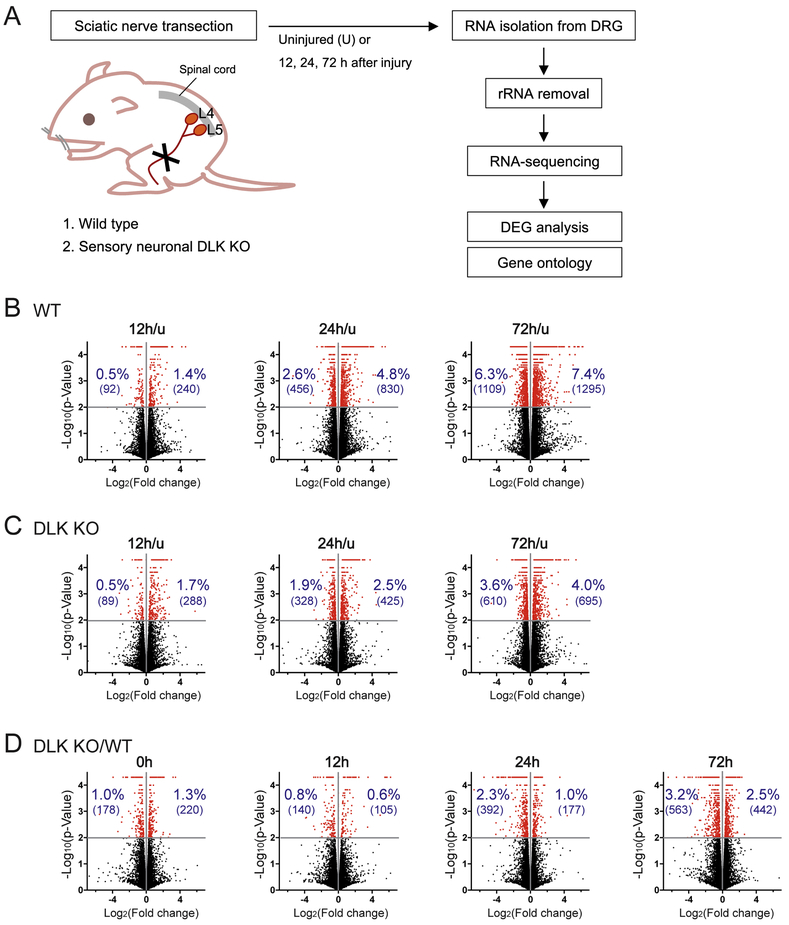
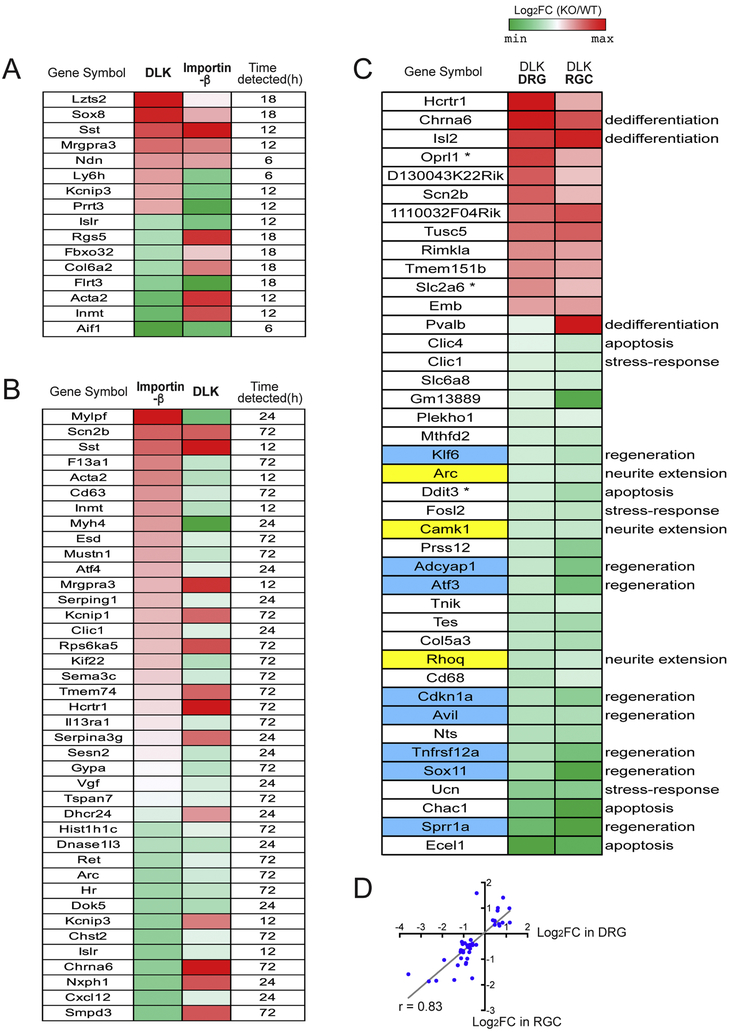
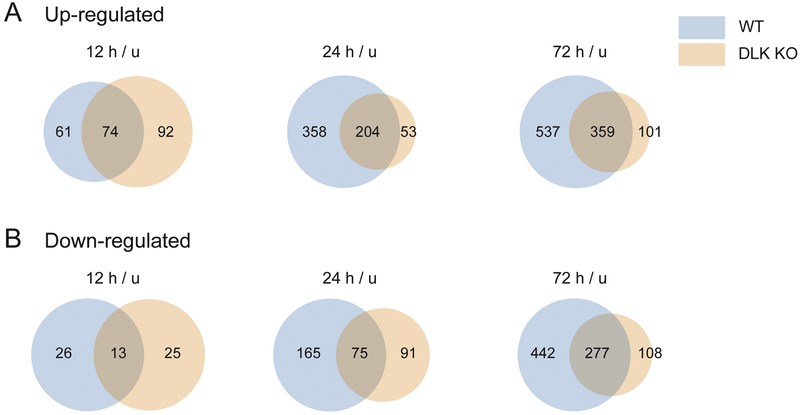
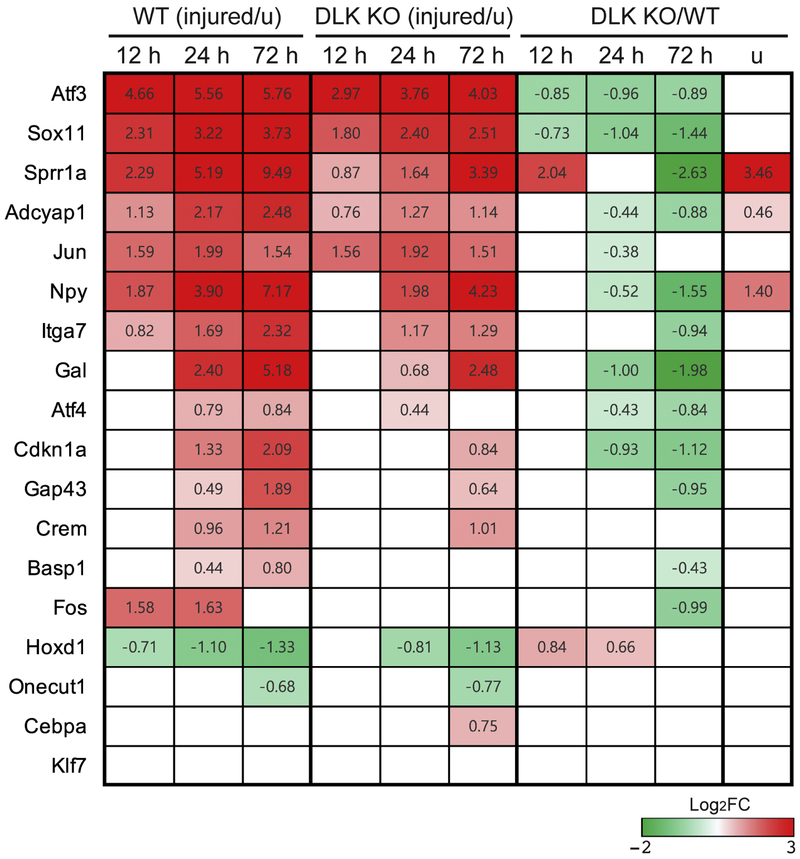
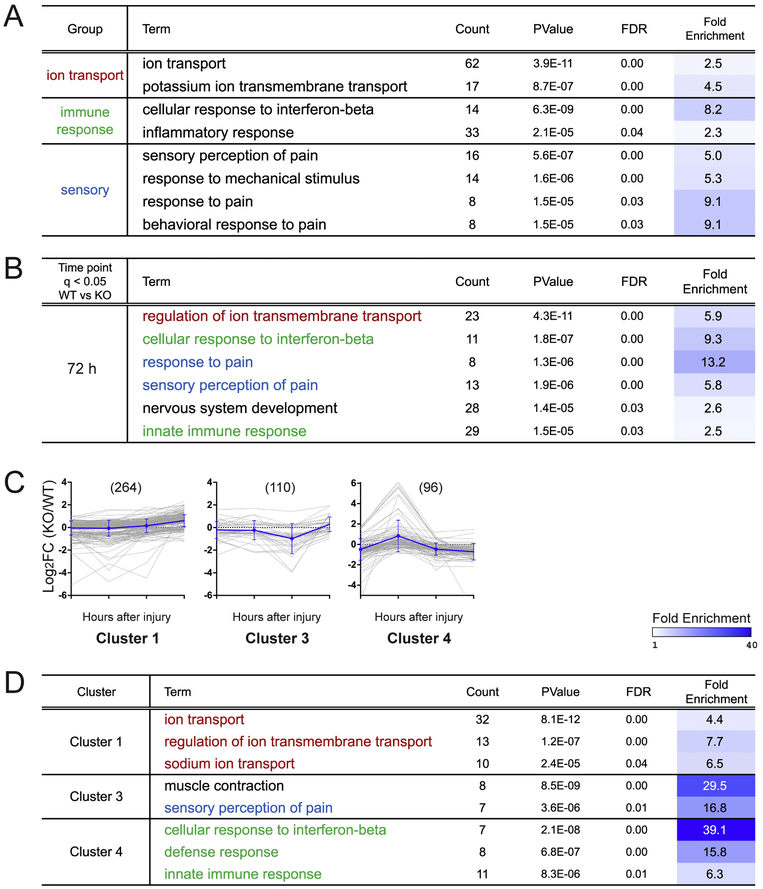
Following damage to a peripheral nerve, injury signaling pathways converge in the cell body to generate transcriptional changes that support axon regeneration. Here, we demonstrate that dual leucine zipper kinase (DLK), a central regulator of injury responses including axon regeneration and neuronal apoptosis, is required for the induction of the pro-regenerative transcriptional program in response to peripheral nerve injury. Using a sensory neuron-conditional DLK knockout mouse model, we show a time course for the dependency of gene expression changes on the DLK pathway after sciatic nerve injury. Gene ontology analysis reveals that DLK-dependent gene sets are enriched for specific functional annotations such as ion transport and immune response. A series of comparative analyses shows that the DLK-dependent transcriptional program is distinct from that promoted by the importin-dependent retrograde signaling pathway, while it is partially shared between PNS and CNS injury responses. We suggest that DLK-dependency might provide a selective filter for regeneration-associated genes among the injury-responsive transcriptome.
在外周神经损伤后,损伤信号通路在细胞体中汇聚,产生支持轴突再生的转录变化。在这里,我们证明双亮氨酸拉链激酶(DLK),一种包括轴突再生和神经元凋亡在内的损伤反应的核心调节剂,是响应外周神经损伤诱导促再生转录程序所必需的。使用感觉神经元条件性 DLK 敲除小鼠模型,我们显示了坐骨神经损伤后,基因表达变化对 DLK 通路的依赖性的时间过程。基因本体论分析表明,DLK 依赖性基因集富集了特定的功能注释,如离子转运和免疫反应。一系列比较分析表明,DLK 依赖性转录程序与依赖导入蛋白的逆行信号通路所促进的转录程序不同,而与 PNS 和 CNS 损伤反应部分共享。我们认为,DLK 依赖性可能为损伤反应转录组中的再生相关基因提供了一个选择性的筛选。