Department of Biomedical Engineering, School of Engineering and Applied Sciences, Yale University, New Haven, CT 06511, USA.
Yale J Biol Med. 2012 Jun;85(2):167-85. Epub 2012 Jun 25.
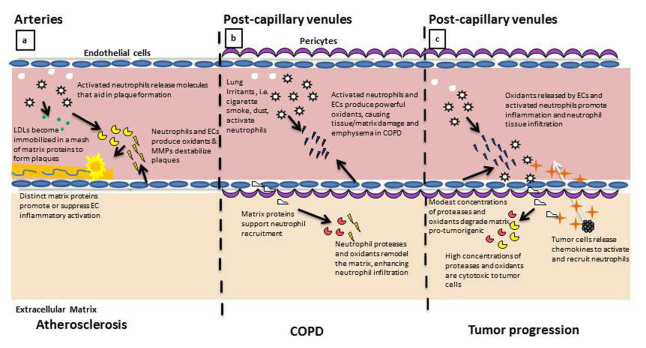
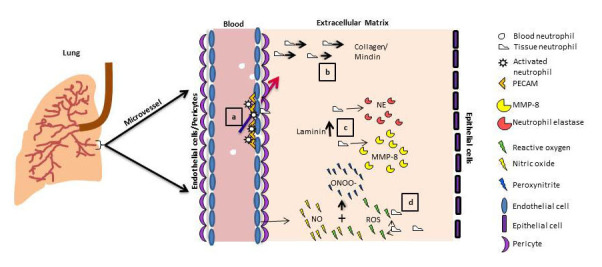
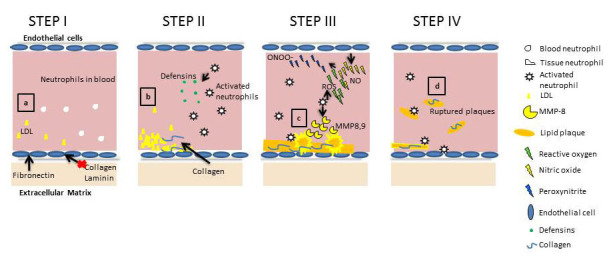
Polymorphoneuclear leukocytes or neutrophils, a major component of white blood cells, contribute to the innate immune response in humans. Upon sensing changes in the microenvironment, neutrophils adhere to the vascular wall, migrate through the endothelial cell (EC)-pericyte bilayer, and subsequently through the extracellular matrix to reach the site of inflammation. These cells are capable of destroying microbes, cell debris, and foreign proteins by oxidative and non-oxidative processes. While primarily mediators of tissue homeostasis, there are an increasing number of studies indicating that neutrophil recruitment and transmigration can also lead to host-tissue injury and subsequently inflammation-related diseases. Neutrophil-induced tissue injury is highly regulated by the microenvironment of the infiltrated tissue, which includes cytokines, chemokines, and the provisional extracellular matrix, remodeled through increased vascular permeability and other cellular infiltrates. Thus, investigation of the effects of matrix proteins on neutrophil-EC interaction and neutrophil transmigration may help identify the proteins that induce pro- or anti-inflammatory responses. This area of research presents an opportunity to identify therapeutic targets in inflammation-related diseases. This review will summarize recent literature on the role of neutrophils and the effects of matrix proteins on neutrophil-EC interactions, with focus on three different disease models: 1) atherosclerosis, 2) COPD, and 3) tumor growth and progression. For each disease model, inflammatory molecules released by neutrophils, important regulatory matrix proteins, current anti-inflammatory treatments, and the scope for further research will be summarized.
多形核白细胞或中性粒细胞是白细胞的主要成分,有助于人体的先天免疫反应。中性粒细胞在感知微环境变化后,黏附于血管壁,穿过内皮细胞 (EC)-周细胞双层,随后穿过细胞外基质到达炎症部位。这些细胞能够通过氧化和非氧化过程破坏微生物、细胞碎片和外来蛋白。虽然中性粒细胞主要是组织稳态的介质,但越来越多的研究表明,中性粒细胞的募集和迁移也会导致宿主组织损伤,进而引发炎症相关疾病。中性粒细胞诱导的组织损伤受到浸润组织微环境的高度调节,其中包括细胞因子、趋化因子和临时细胞外基质,这些物质通过增加血管通透性和其他细胞浸润来重塑。因此,研究基质蛋白对中性粒细胞-EC 相互作用和中性粒细胞迁移的影响可能有助于确定诱导促炎或抗炎反应的蛋白。这一研究领域为识别炎症相关疾病的治疗靶点提供了机会。本综述将总结近期关于中性粒细胞作用以及基质蛋白对中性粒细胞-EC 相互作用影响的文献,重点关注三种不同的疾病模型:1)动脉粥样硬化,2)COPD,3)肿瘤生长和进展。对于每种疾病模型,将总结中性粒细胞释放的炎症分子、重要的调节基质蛋白、当前的抗炎治疗方法以及进一步研究的范围。