Departments of Genetics and Developmental Biology, Stanford University Medical Center, Stanford, California, United States of America.
PLoS Genet. 2012;8(6):e1002780. doi: 10.1371/journal.pgen.1002780. Epub 2012 Jun 21.
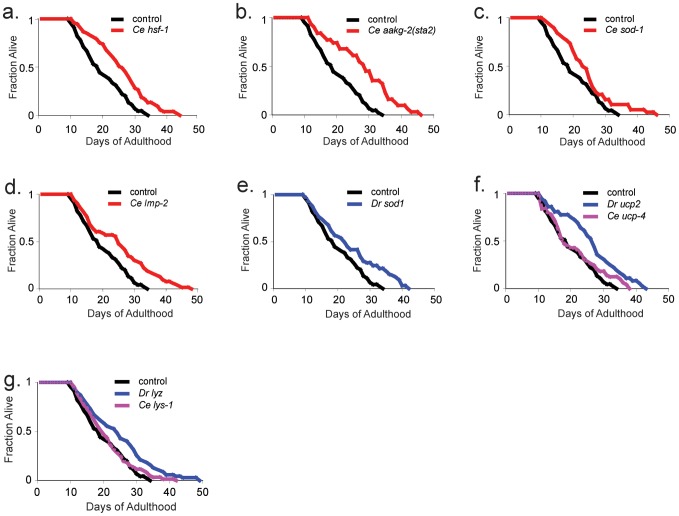
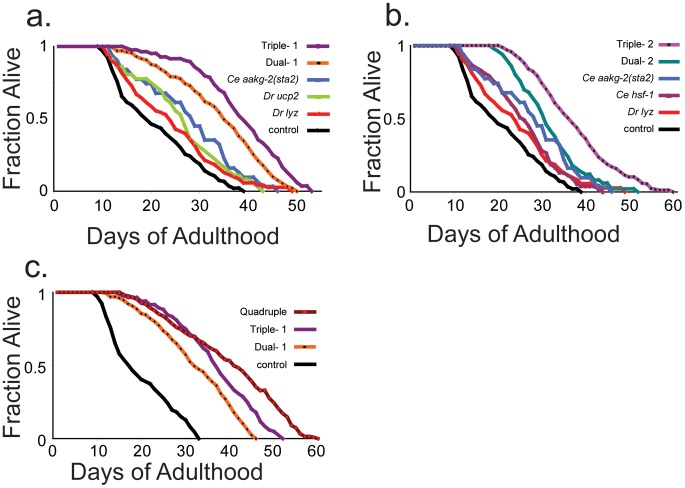
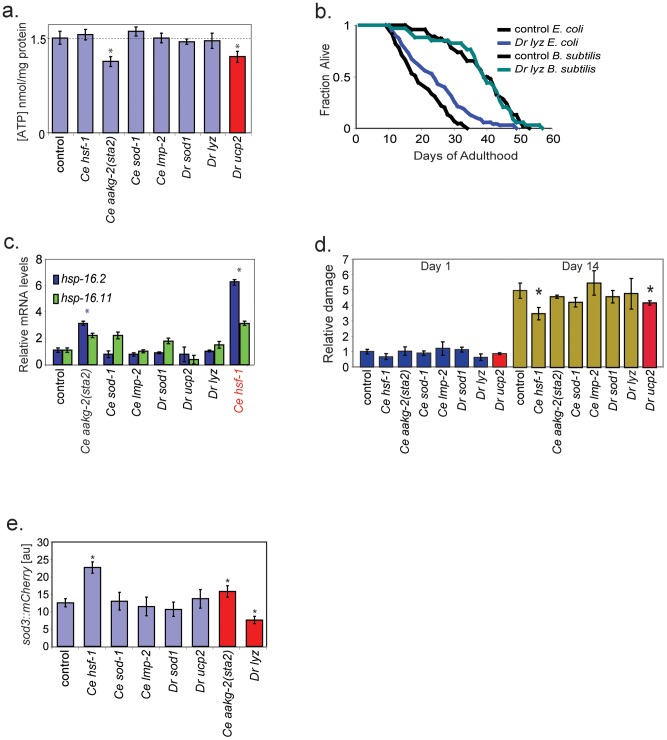
We have taken an engineering approach to extending the lifespan of Caenorhabditis elegans. Aging stands out as a complex trait, because events that occur in old animals are not under strong natural selection. As a result, lifespan can be lengthened rationally using bioengineering to modulate gene expression or to add exogenous components. Here, we engineered longer lifespan by expressing genes from zebrafish encoding molecular functions not normally present in worms. Additionally, we extended lifespan by increasing the activity of four endogenous worm aging pathways. Next, we used a modular approach to extend lifespan by combining components. Finally, we used cell- and worm-based assays to analyze changes in cell physiology and as a rapid means to evaluate whether multi-component transgenic lines were likely to have extended longevity. Using engineering to add novel functions and to tune endogenous functions provides a new framework for lifespan extension that goes beyond the constraints of the worm genome.
我们采用工程学方法来延长秀丽隐杆线虫的寿命。衰老作为一种复杂的特征,其原因在于老年动物身上发生的事件不受强烈的自然选择影响。因此,我们可以通过生物工程来合理地延长寿命,调节基因表达或添加外源性成分。在这里,我们通过表达来自斑马鱼的基因来延长寿命,这些基因编码的分子功能在蠕虫中通常不存在。此外,我们还通过增加四个内源性蠕虫衰老途径的活性来延长寿命。接下来,我们使用模块化方法通过组合组件来延长寿命。最后,我们使用基于细胞和基于蠕虫的测定法来分析细胞生理学的变化,并作为快速评估多组分转基因系是否可能延长寿命的方法。通过工程学添加新的功能并调整内源性功能,为延长寿命提供了一个超越蠕虫基因组限制的新框架。