Jonas Jost B, Budde Wido M, Stroux Andrea, Oberacher-Velten Isabel M, Juenemann Anselm G
Department of Ophthalmology, Faculty of Clinical Medicine, University of Heidelberg, Mannheim, Germany.
J Ophthalmic Vis Res. 2010 Apr;5(2):92-100.
To evaluate circadian intraocular pressure (IOP) profiles in eyes with different types of chronic open-angle glaucoma (COAG) and normal eyes.
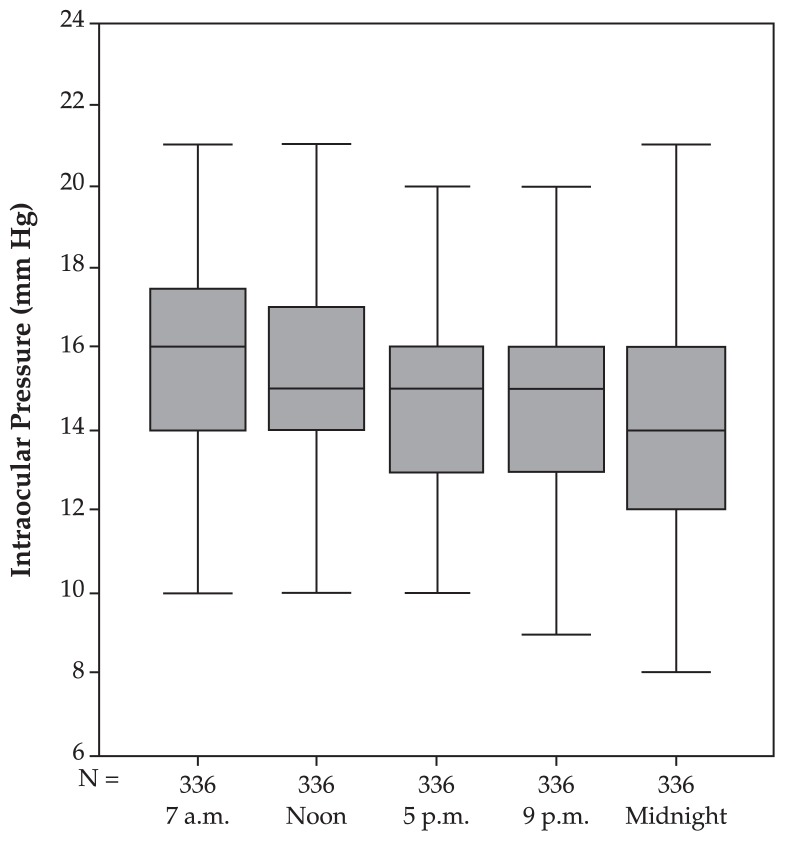
This study included 3,561 circadian IOP profiles obtained from 1,408 eyes of 720 Caucasian individuals including glaucoma patients under topical treatment (1,072 eyes) and normal subjects (336 eyes). IOP profiles were obtained by Goldmann applanation tonometry and included measurements at 7 am, noon, 5 pm, 9 pm, and midnight.
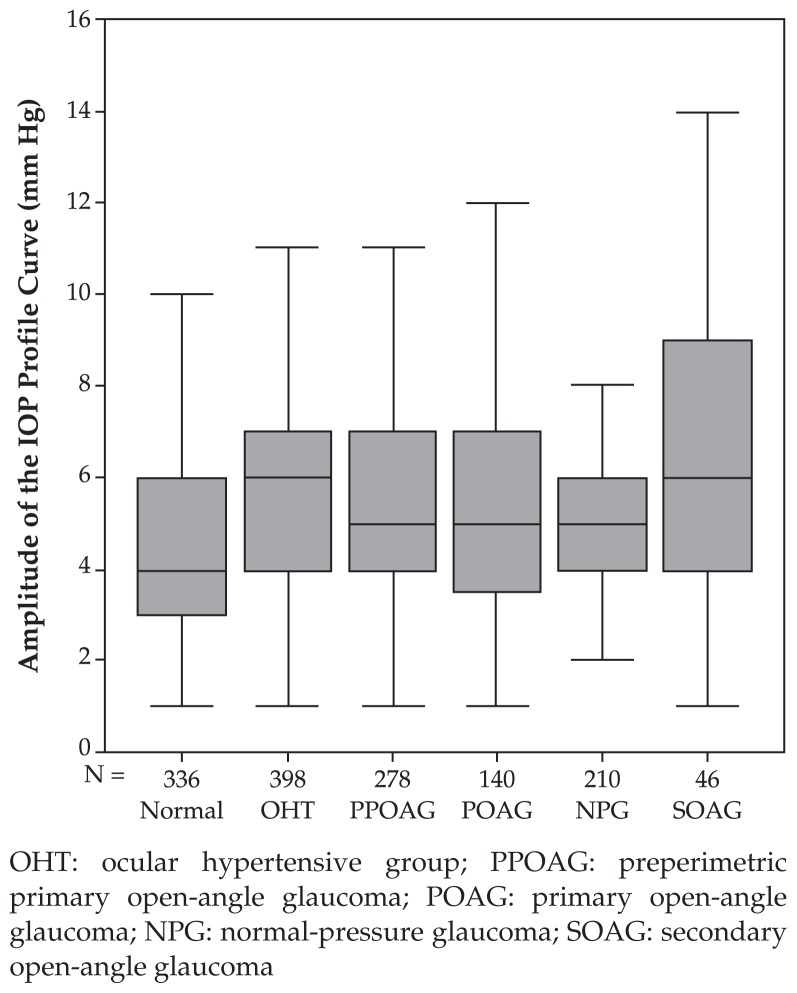
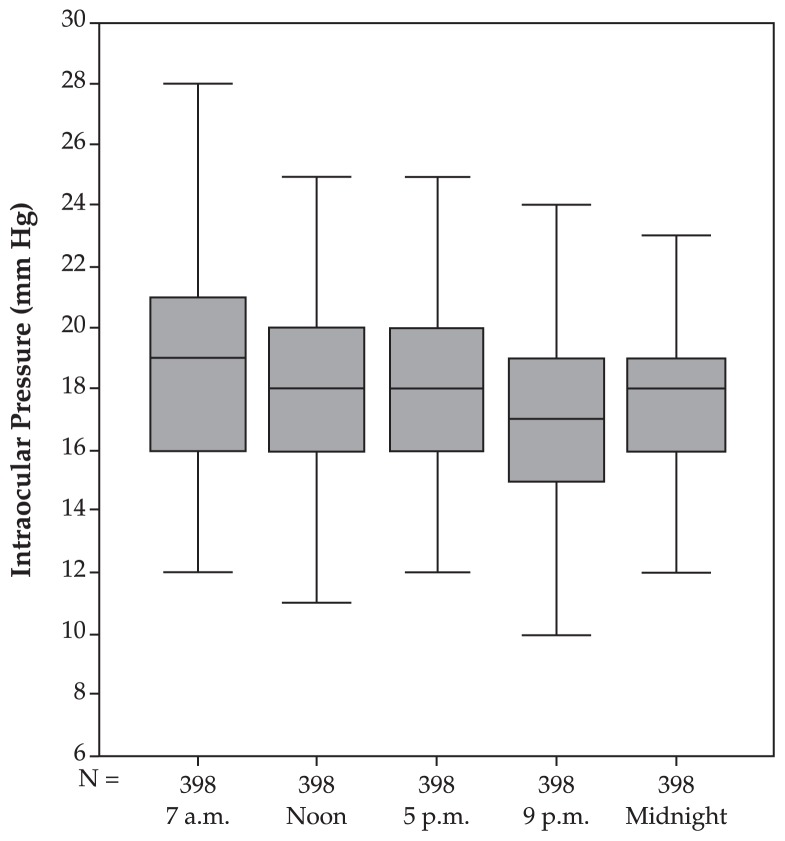
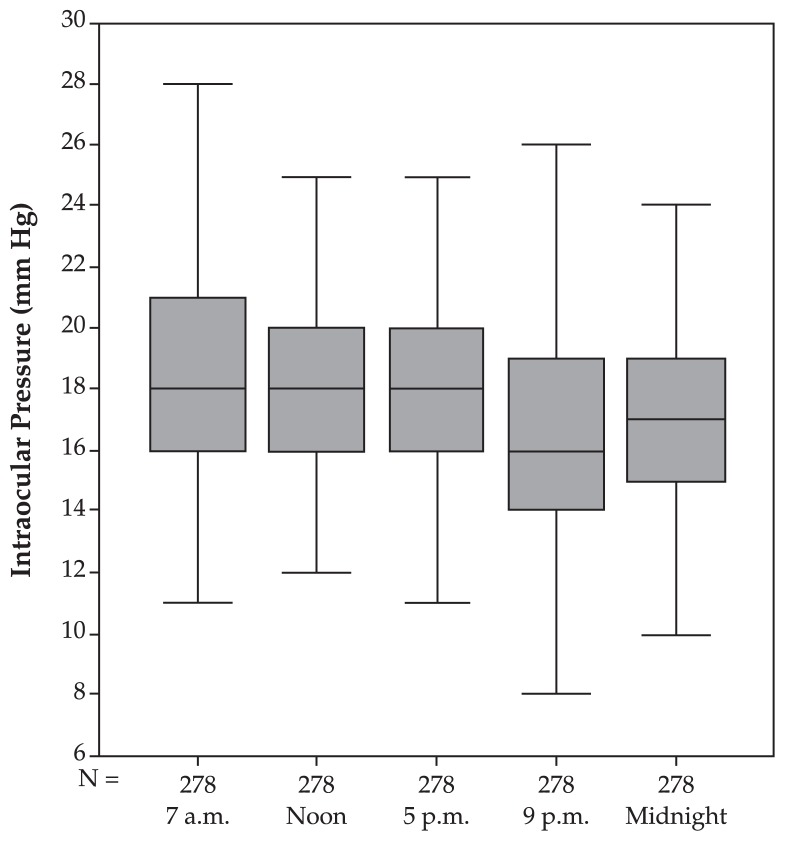
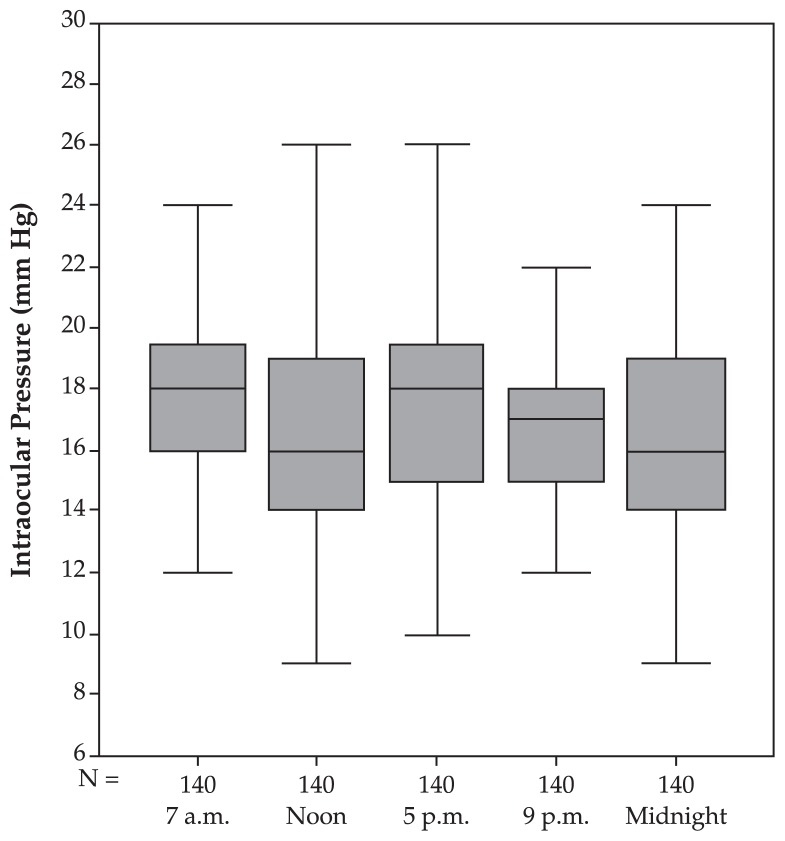
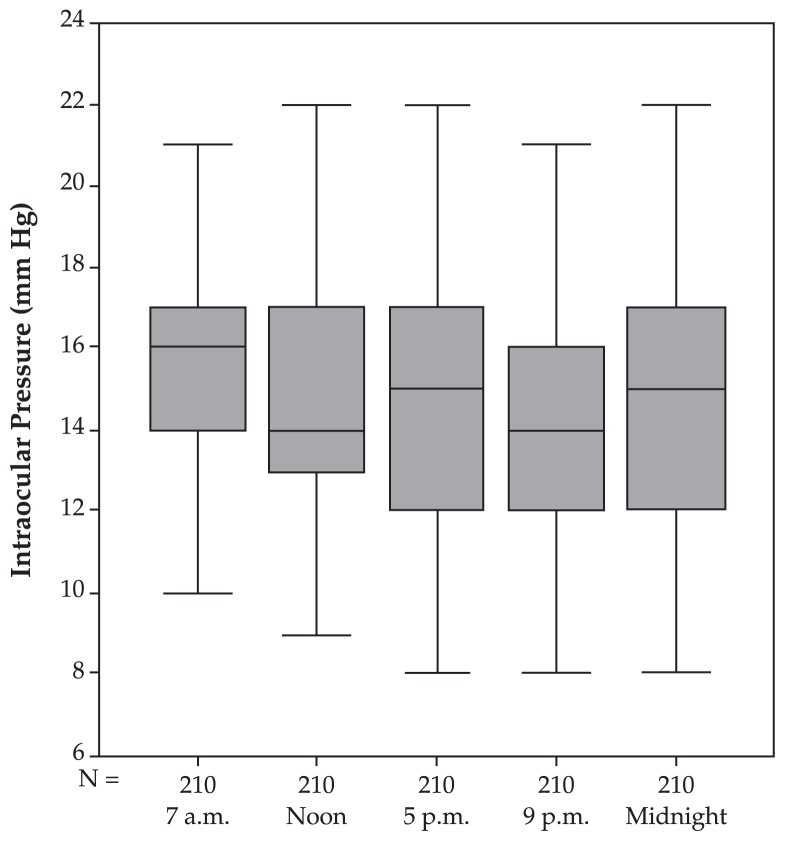
Fluctuations of circadian IOP in the secondary open-angle glaucoma (SOAG) group (6.96±3.69 mmHg) was significantly (P<0.001) higher than that of the normal pressure glaucoma group (4.89±1.99 mmHg) and normal eyes (4.69±1.95 mmHg); but the difference between the two latter groups was not significant (P=0.47). Expressed as percentages, IOP fluctuations did not vary significantly among any of the study groups. Inter-ocular IOP difference for any measurement was significantly (P<0.001) smaller than the profile fluctuations. In all study groups except the SOAG group, IOP was highest at 7 am, followed by noon, 5 pm, and finally 9 pm or midnight. In the SOAG group, mean IOP measurements did not vary significantly during day and night.
In contrast to normal eyes and eyes with primary open-angle glaucoma under topical antiglaucoma treatment, eyes with SOAG under topical treatment do not show the usual circadian IOP profile in which the highest IOP values occur in the morning, and the lowest in the evening or at midnight. These findings may have implications for timing of tonometry. Fluctuation of circadian IOP was highest in SOAG compared to other types of open angle glaucomas.
评估不同类型慢性开角型青光眼(COAG)患者及正常眼的昼夜眼压(IOP)变化情况。
本研究纳入了720名白种人的1408只眼睛的3561份昼夜眼压数据,其中包括接受局部治疗的青光眼患者(1072只眼)和正常受试者(336只眼)。通过Goldmann压平眼压计测量眼压,测量时间点包括上午7点、中午、下午5点、晚上9点和午夜。
继发性开角型青光眼(SOAG)组的昼夜眼压波动(6.96±3.69 mmHg)显著高于正常眼压性青光眼组(4.89±1.99 mmHg)和正常眼(4.69±1.95 mmHg)(P<0.001);但后两组之间的差异不显著(P=0.47)。以百分比表示,各研究组之间的眼压波动无显著差异。任何测量时间点的双眼眼压差异均显著小于眼压变化波动(P<0.001)。除SOAG组外,所有研究组的眼压在上午7点最高,其次是中午、下午5点,最后是晚上9点或午夜。在SOAG组中,昼夜平均眼压测量值无显著变化。
与正常眼和接受局部抗青光眼治疗的原发性开角型青光眼患者的眼睛不同,接受局部治疗的SOAG患者的眼睛未表现出通常的昼夜眼压变化规律,即眼压最高值出现在早晨,最低值出现在晚上或午夜。这些发现可能对视眼压测量的时间安排有影响。与其他类型的开角型青光眼相比,SOAG患者的昼夜眼压波动最大。