Dabbaghmanesh M H, Taheri Boshrooyeh H, Kalantarhormozi M R, Ranjbar Omrani Gh H
Department of Internal Medicine, Endocrine and Metabolism Research Center, Nemazee Hospital, Shiraz University of Medical Sciences, Shiraz, Iran.
Iran Red Crescent Med J. 2011 Apr;13(4):249-55. Epub 2011 Apr 1.
Zinc is an essential micronutrient for human health. However, little is known about concentration of this mineral among Iranian population. This study was carried out to determine the current zinc status, evaluate the impact of certain factors like age, sex and Body Mass Index (BMI), and to verify the prevalence of zinc deficiency among Iranian adult population in Shiraz, southern Iran.
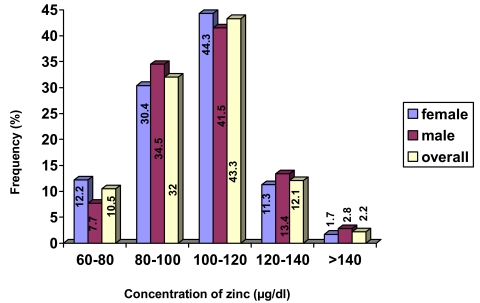
Serum samples from 374 randomly selected healthy individuals living in Shiraz, Iran, aged 19-82 years (143 males, 231 females) were collected and the serum zinc concentration was measured by Flame-Atomic Absorption Spectrometry. We considered the subjects with serum zinc concentration less than 100 μg/dl as zinc deficient.
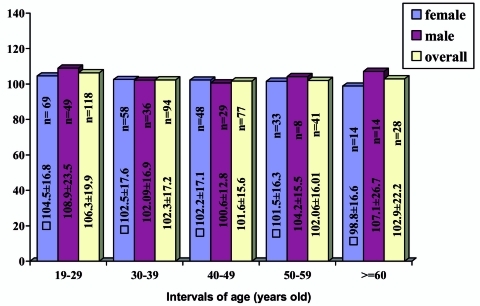
The serum zinc levels in females were lower than those of males with no statistically significant difference. Serum zinc concentrations were unrelated to age and BMI. It also did not change among different ages and BMI intervals.
About 42.5% of our cases had serum zinc concentration below the cut off value of 100 μg/dl in the serum. Designing appropriate strategies for overcoming this public health problem is necessary.
锌是人体健康必需的微量营养素。然而,对于伊朗人群中这种矿物质的浓度知之甚少。本研究旨在确定当前的锌状况,评估年龄、性别和体重指数(BMI)等某些因素的影响,并核实伊朗南部设拉子成年人群中锌缺乏的患病率。
收集了来自伊朗设拉子374名年龄在19 - 82岁之间(143名男性,231名女性)随机选取的健康个体的血清样本,并通过火焰原子吸收光谱法测量血清锌浓度。我们将血清锌浓度低于100μg/dl的受试者视为锌缺乏。
女性的血清锌水平低于男性,但无统计学显著差异。血清锌浓度与年龄和BMI无关。在不同年龄和BMI区间也没有变化。
我们研究中的约42.5%的病例血清锌浓度低于血清中100μg/dl的临界值。有必要制定适当的策略来克服这一公共卫生问题。