Department of Chemistry and Biochemistry, Texas Tech University, Lubbock, TX 79409-1061, USA.
Electrophoresis. 2012 Jul;33(12):1755-67. doi: 10.1002/elps.201100715.
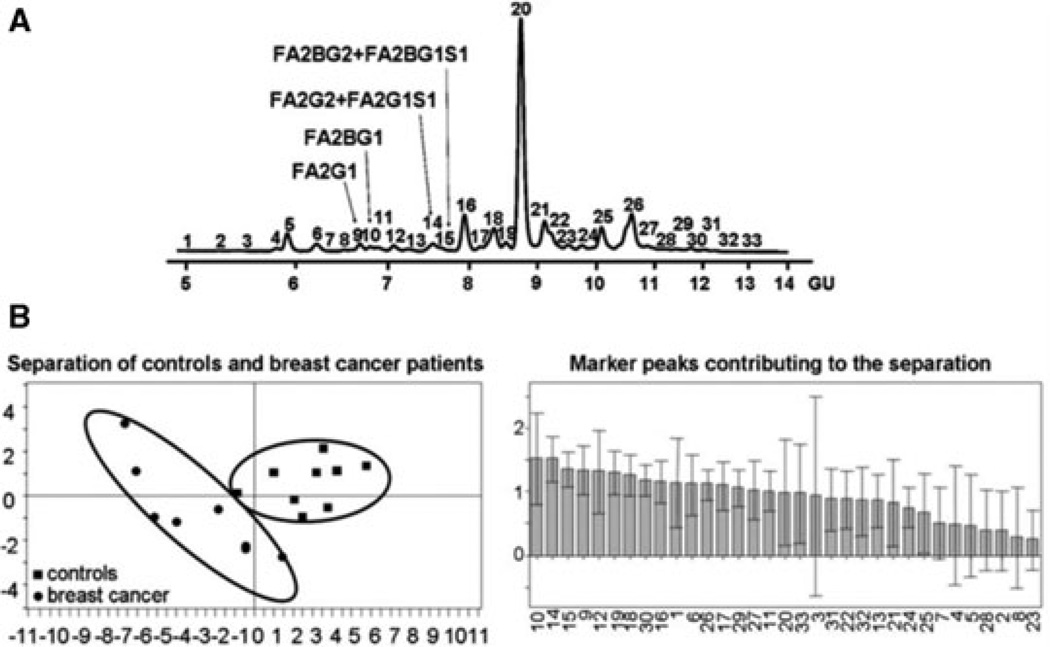
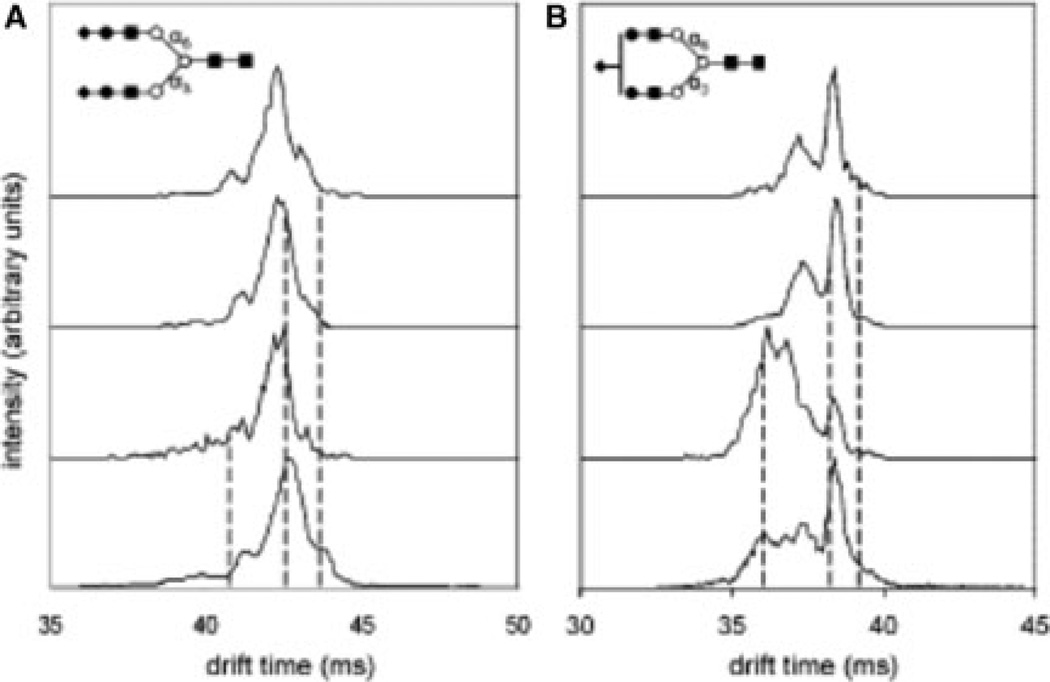
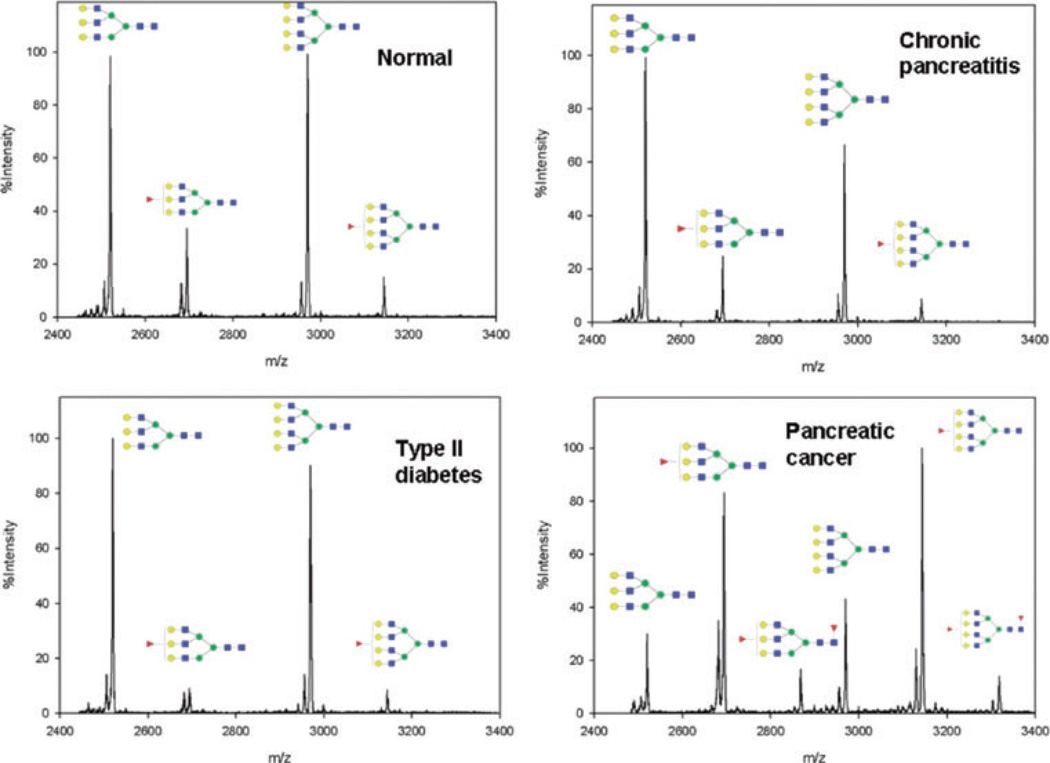
Correlations between aberrant glycosylation and cancer have been established for decades. The major advances in mass spectrometry (MS) and separation science have rapidly advanced detailed characterization of the changes associated with cancer development and progression. Over the past 10 years, many reports have described MS-based glycomic methods directed toward comparing the glycomic profiles of different human specimens collected from disease-free individuals and patients with cancers. Glycomic profiling of glycoproteins isolated from human specimens originating from disease-free individuals and patients with cancers have also been performed. Profiling of native, labeled, and permethylated glycans has been acquired using MALDI-MS and LC-MS. This review focuses on describing, discussing, and evaluating the different glycomic methods employed to characterize and quantify glycomic changes associated with cancers of different organs, including breast, colon, esophagus, liver, ovarian, pancreas, and prostate.
几十年来,人们已经确定了异常糖基化与癌症之间的相关性。质谱(MS)和分离科学的主要进展迅速推进了与癌症发生和发展相关的变化的详细特征描述。在过去的 10 年中,许多报告描述了基于 MS 的糖组学方法,这些方法旨在比较来自无疾病个体和癌症患者的不同人类标本的糖组图谱。还对来自无疾病个体和癌症患者的人类标本中分离的糖蛋白进行了糖组学分析。使用 MALDI-MS 和 LC-MS 获得了对天然、标记和全甲基化聚糖的分析。这篇综述重点描述、讨论和评估了不同的糖组学方法,这些方法用于描述和定量与不同器官(包括乳腺、结肠、食道、肝脏、卵巢、胰腺和前列腺)癌症相关的糖组变化。