Centro de Biomedicina Molecular e Estrutural, Campus de Gambelas, Universidade do Algarve, Faro, Portugal.
BMC Neurol. 2012 Jun 28;12:47. doi: 10.1186/1471-2377-12-47.
Huntington's disease (HD) is a fatal progressive neurodegenerative disorder caused by the expansion of the polyglutamine repeat region in the huntingtin gene. Although the disease is triggered by the mutation of a single gene, intensive research has linked numerous other genes to its pathogenesis. To obtain a systematic overview of these genes, which may serve as therapeutic targets, CHDI Foundation has recently established the HD Research Crossroads database. With currently over 800 cataloged genes, this web-based resource constitutes the most extensive curation of genes relevant to HD. It provides us with an unprecedented opportunity to survey molecular mechanisms involved in HD in a holistic manner.
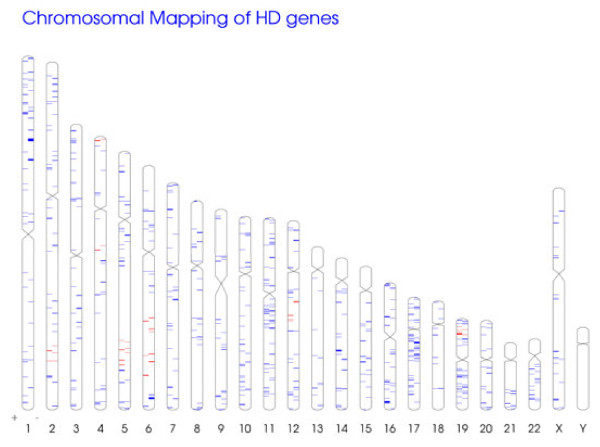
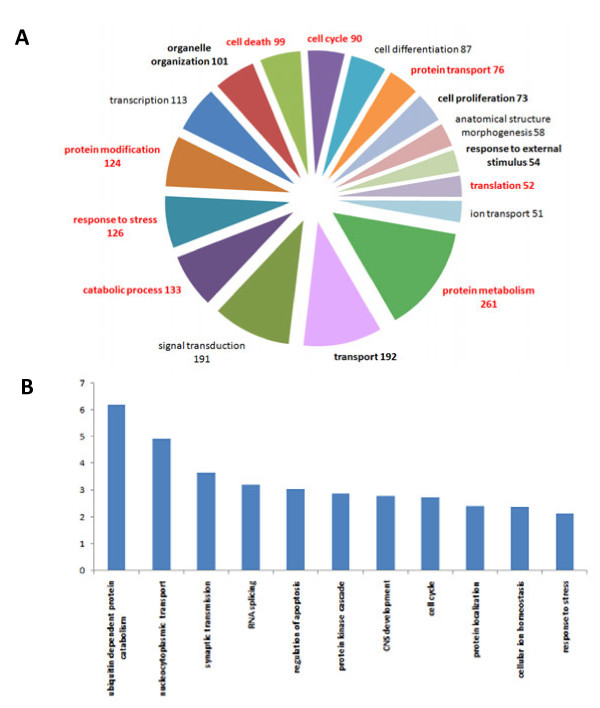
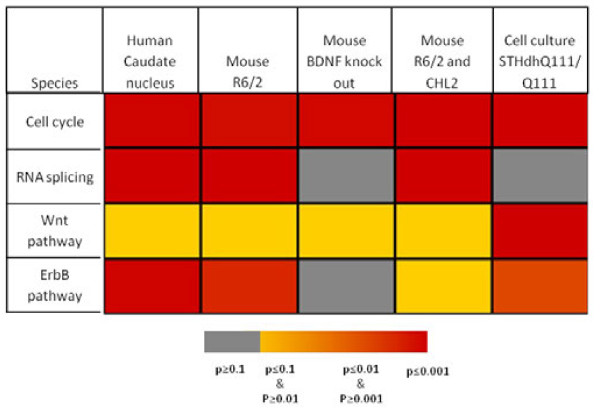
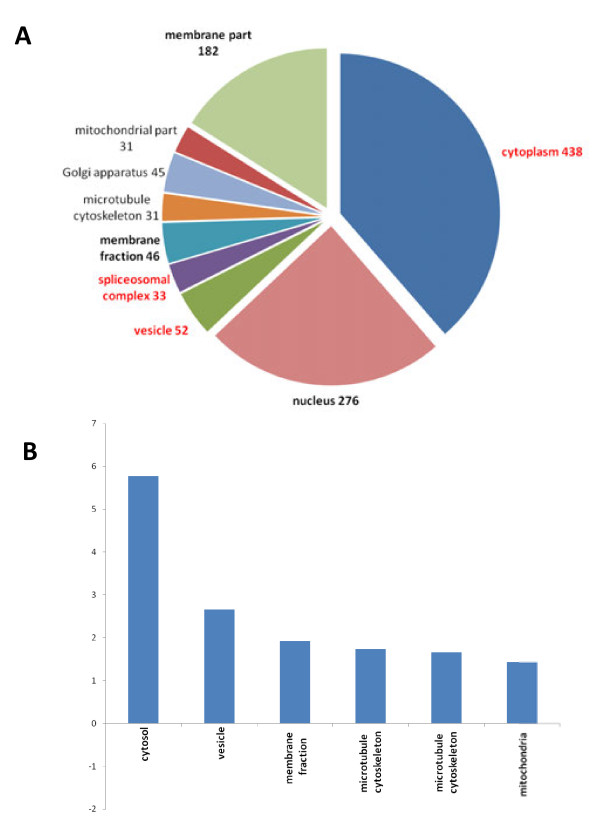
To gain a synoptic view of therapeutic targets for HD, we have carried out a variety of bioinformatical and statistical analyses to scrutinize the functional association of genes curated in the HD Research Crossroads database. In particular, enrichment analyses were performed with respect to Gene Ontology categories, KEGG signaling pathways, and Pfam protein families. For selected processes, we also analyzed differential expression, using published microarray data. Additionally, we generated a candidate set of novel genetic modifiers of HD by combining information from the HD Research Crossroads database with previous genome-wide linkage studies.
Our analyses led to a comprehensive identification of molecular mechanisms associated with HD. Remarkably, we not only recovered processes and pathways, which have frequently been linked to HD (such as cytotoxicity, apoptosis, and calcium signaling), but also found strong indications for other potentially disease-relevant mechanisms that have been less intensively studied in the context of HD (such as the cell cycle and RNA splicing, as well as Wnt and ErbB signaling). For follow-up studies, we provide a regularly updated compendium of molecular mechanism, that are associated with HD, at http://hdtt.sysbiolab.eu Additionally, we derived a candidate set of 24 novel genetic modifiers, including histone deacetylase 3 (HDAC3), metabotropic glutamate receptor 1 (GRM1), CDK5 regulatory subunit 2 (CDK5R2), and coactivator 1ß of the peroxisome proliferator-activated receptor gamma (PPARGC1B).
The results of our study give us an intriguing picture of the molecular complexity of HD. Our analyses can be seen as a first step towards a comprehensive list of biological processes, molecular functions, and pathways involved in HD, and may provide a basis for the development of more holistic disease models and new therapeutics.
亨廷顿病(HD)是一种致命的进行性神经退行性疾病,由亨廷顿基因中多聚谷氨酰胺重复区的扩展引起。尽管该疾病是由单个基因突变引发的,但大量研究已经将许多其他基因与该病的发病机制联系起来。为了系统地了解这些可能成为治疗靶点的基因,CHDI 基金会最近建立了亨廷顿病研究交叉点数据库。该网络资源目前包含 800 多个已分类的基因,是与 HD 相关的基因最广泛的编目。它为我们提供了一个前所未有的机会,以整体的方式调查 HD 中涉及的分子机制。
为了获得亨廷顿病治疗靶点的综合视图,我们对亨廷顿病研究交叉点数据库中编目的基因进行了各种生物信息学和统计分析。特别是,我们针对基因本体类别、KEGG 信号通路和 Pfam 蛋白家族进行了富集分析。对于选定的过程,我们还使用已发表的微阵列数据进行了差异表达分析。此外,我们通过将亨廷顿病研究交叉点数据库中的信息与先前的全基因组连锁研究相结合,生成了一组新的 HD 遗传修饰因子的候选集。
我们的分析导致了与 HD 相关的分子机制的全面识别。值得注意的是,我们不仅恢复了经常与 HD 相关的过程和途径(如细胞毒性、细胞凋亡和钙信号传导),而且还发现了其他潜在的与疾病相关的机制的强烈迹象,这些机制在 HD 背景下的研究较少(如细胞周期和 RNA 剪接以及 Wnt 和 ErbB 信号传导)。对于后续研究,我们在 http://hdtt.sysbiolab.eu 提供了与 HD 相关的分子机制的定期更新简编。此外,我们推导出了一组 24 个新的遗传修饰因子的候选集,包括组蛋白脱乙酰酶 3(HDAC3)、代谢型谷氨酸受体 1(GRM1)、细胞周期蛋白依赖性激酶 5 调节亚基 2(CDK5R2)和过氧化物酶体增殖物激活受体 γ的共激活因子 1β(PPARGC1B)。
我们的研究结果为 HD 的分子复杂性提供了一个有趣的画面。我们的分析可以看作是全面列出与 HD 相关的生物过程、分子功能和途径的第一步,并且可能为开发更全面的疾病模型和新疗法提供基础。