Yalçin Müge, El-Athman Rukeia, Ouk Koliane, Priller Josef, Relógio Angela
Institute for Theoretical Biology (ITB), Charité-Universitätsmedizin Berlin, corporate member of Freie Universität Berlin, Humboldt-Universität zu Berlin, and Berlin Institute of Health, Berlin 10117, Germany.
Molecular Cancer Research Center (MKFZ), Medical Department of Hematology, Oncology, and Tumour Immunology, Charité-Universitätsmedizin Berlin, corporate member of Freie Universität Berlin, Humboldt-Universität zu Berlin, and Berlin Institute of Health, Berlin 10117, Germany.
Cancers (Basel). 2020 Apr 13;12(4):963. doi: 10.3390/cancers12040963.
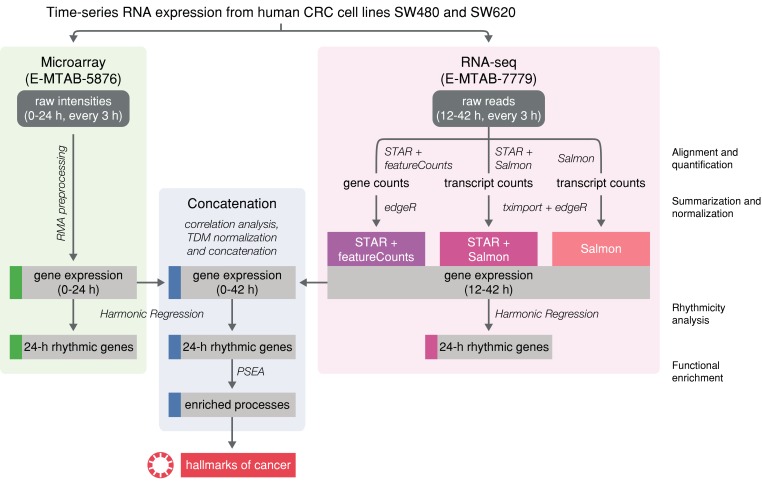
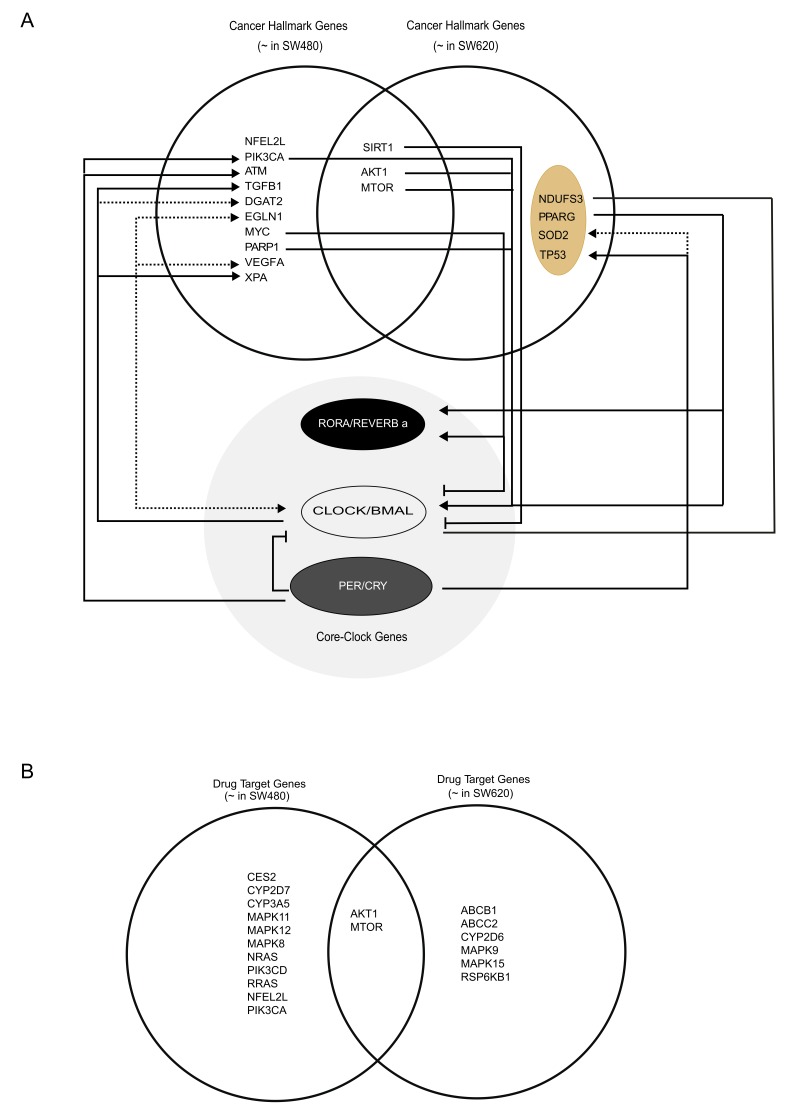
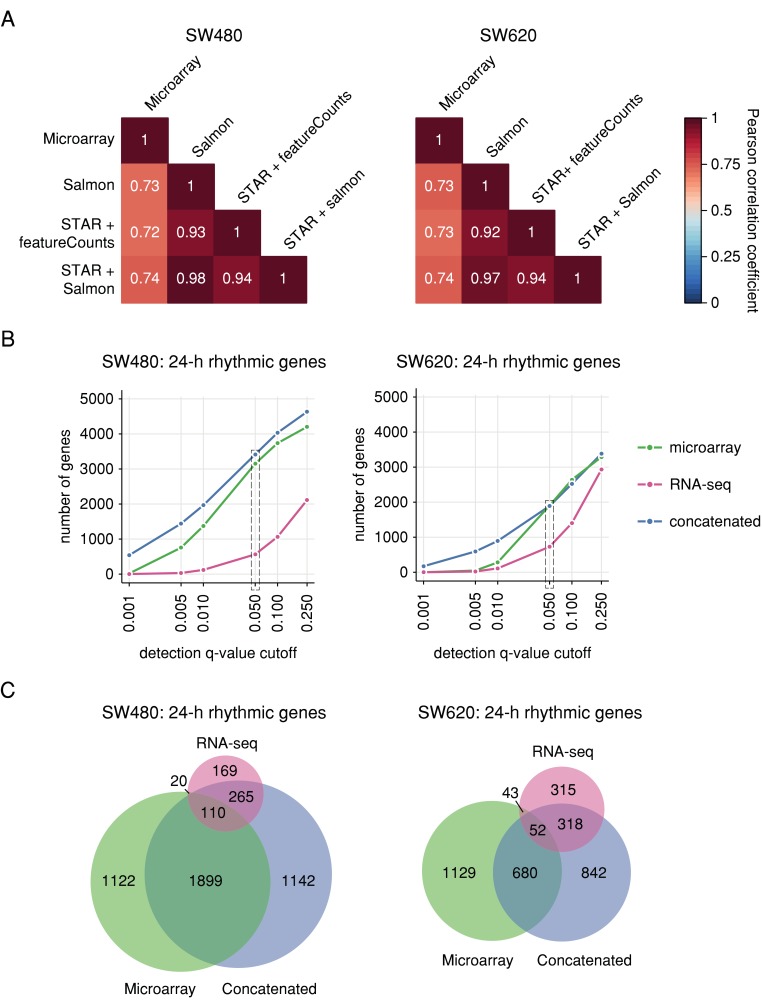
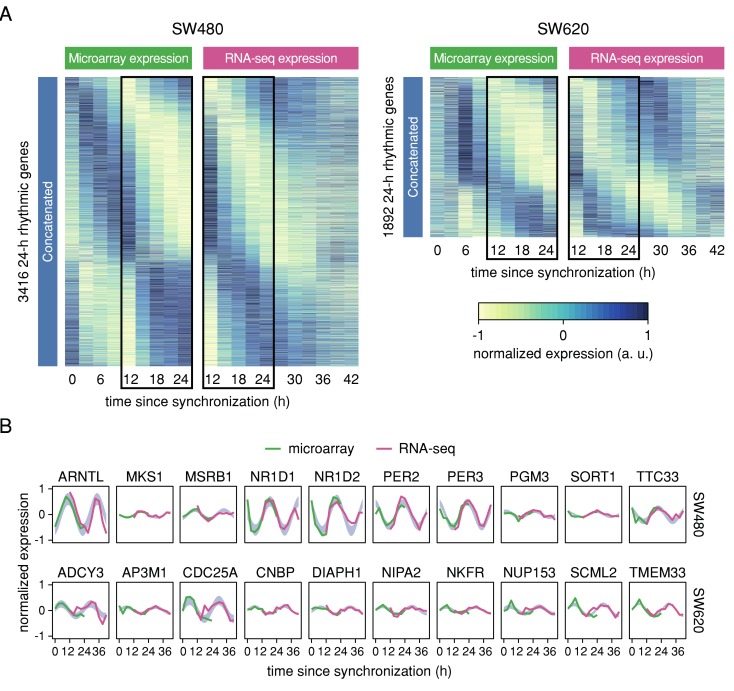
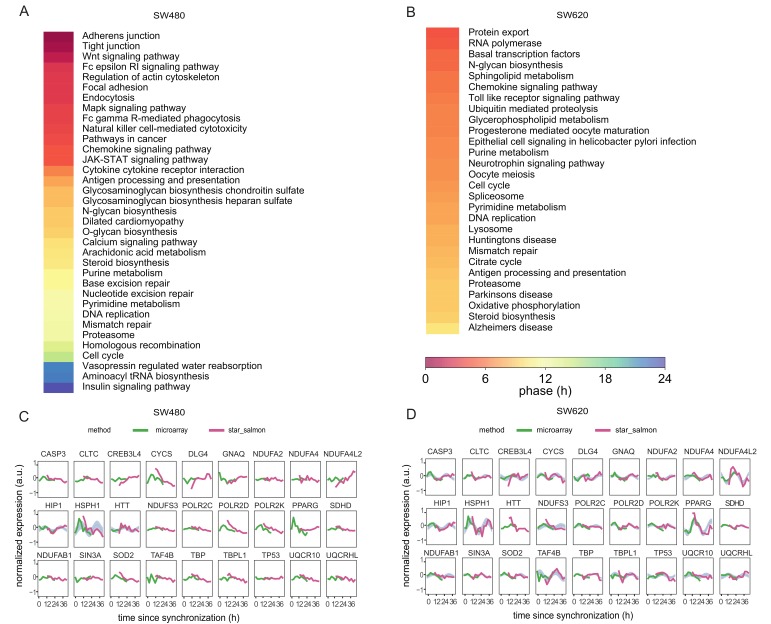
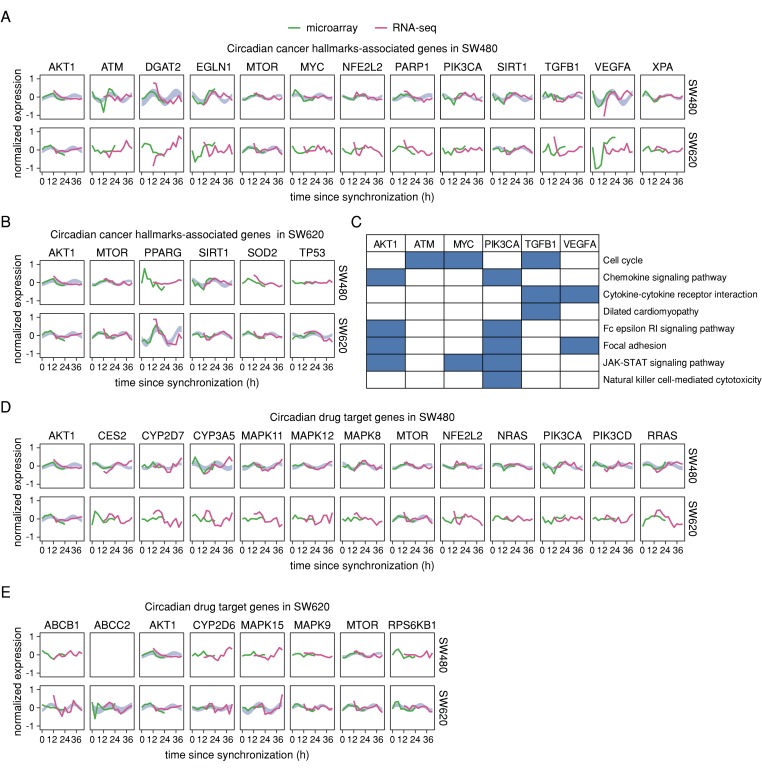
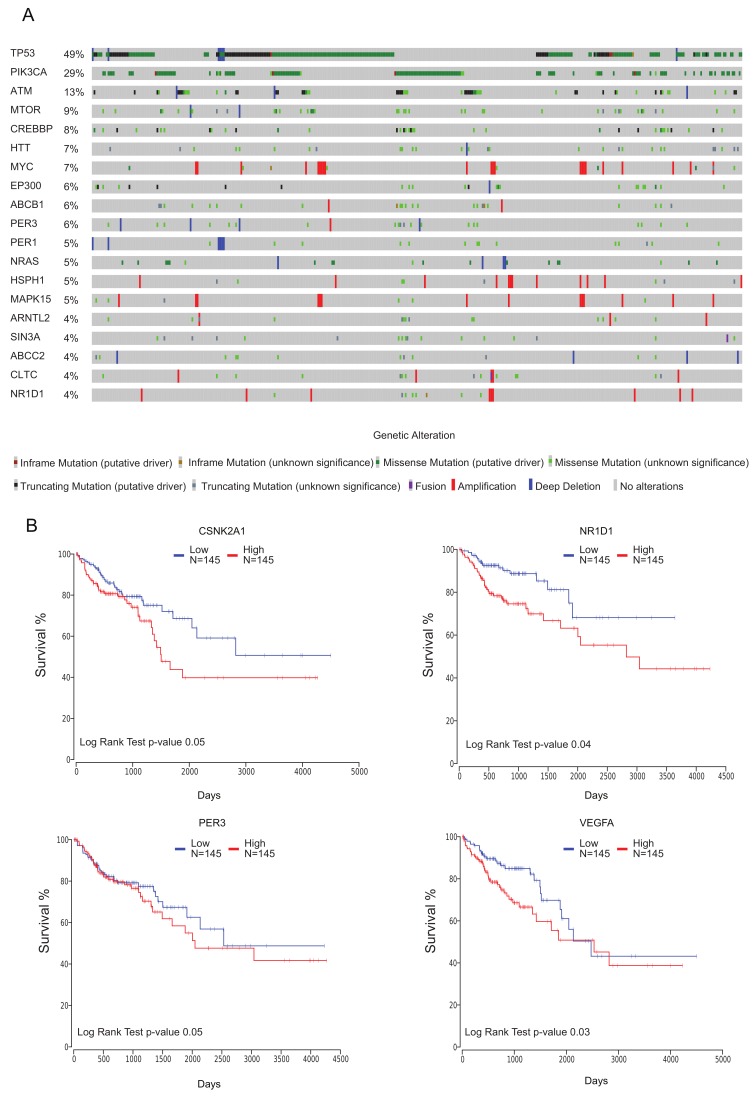
Accumulating evidence points to a link between circadian clock dysfunction and the molecular events that drive tumorigenesis. Here, we investigated the connection between the circadian clock and the hallmarks of cancer in an in vitro model of colorectal cancer (CRC). We used a cross-platform data normalization method to concatenate and compare available microarray and RNA-sequencing time series data of CRC cell lines derived from the same patient at different disease stages. Our data analysis suggests differential regulation of molecular pathways between the CRC cells and identifies several of the circadian and likely clock-controlled genes (CCGs) as cancer hallmarks and circadian drug targets. Notably, we found links of the CCGs to Huntington's disease (HD) in the metastasis-derived cells. We then investigated the impact of perturbations of our candidate genes in a cohort of 439 patients with colon adenocarcinoma retrieved from the Cancer Genome Atlas (TCGA). The analysis revealed a correlation of the differential expression levels of the candidate genes with the survival of patients. Thus, our study provides a bioinformatics workflow that allows for a comprehensive analysis of circadian properties at different stages of colorectal cancer, and identifies a new association between cancer and HD.
越来越多的证据表明昼夜节律功能障碍与驱动肿瘤发生的分子事件之间存在联系。在此,我们在结直肠癌(CRC)的体外模型中研究了昼夜节律与癌症特征之间的联系。我们使用了一种跨平台数据归一化方法,将来自同一患者在不同疾病阶段的CRC细胞系的可用微阵列和RNA测序时间序列数据进行整合和比较。我们的数据分析表明CRC细胞之间分子途径的差异调节,并确定了几个昼夜节律以及可能受时钟控制的基因(CCGs)作为癌症特征和昼夜节律药物靶点。值得注意的是,我们在转移衍生细胞中发现了CCGs与亨廷顿舞蹈症(HD)的联系。然后,我们在从癌症基因组图谱(TCGA)获取的439例结肠腺癌患者队列中研究了我们候选基因扰动的影响。分析揭示了候选基因差异表达水平与患者生存之间的相关性。因此,我们的研究提供了一种生物信息学工作流程,可对结直肠癌不同阶段的昼夜节律特性进行全面分析,并确定癌症与HD之间的新关联。