Department of Pharmacology, Brain Science & Engineering Institute, CMRI, Kyungpook National University School of Medicine, 101 Dong-In, Daegu, Joong-gu, 700-422, South Korea.
J Neuroinflammation. 2012 Jun 29;9:149. doi: 10.1186/1742-2094-9-149.
Plasminogen activator inhibitor type 1 (PAI-1) is the primary inhibitor of urokinase type plasminogen activators (uPA) and tissue type plasminogen activators (tPA), which mediate fibrinolysis. PAI-1 is also involved in the innate immunity by regulating cell migration and phagocytosis. However, little is known about the role of PAI-1 in the central nervous system.
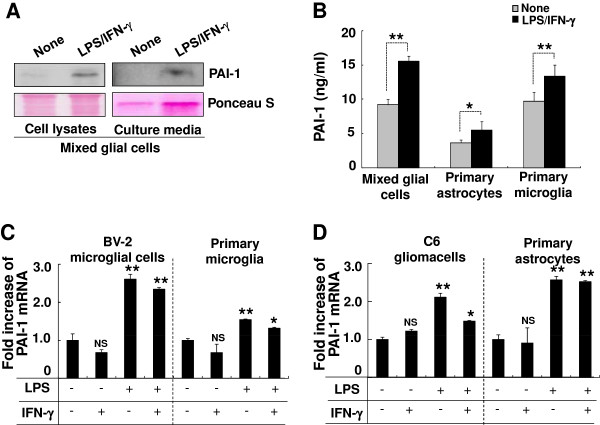
In this study, we identified PAI-1 in the culture medium of mouse mixed glial cells by liquid chromatography and tandem mass spectrometry. Secretion of PAI-1 from glial cultures was detected by ELISA and western blotting analysis. Cell migration was evaluated by in vitro scratch-wound healing assay or Boyden chamber assay and an in vivo stab wound injury model. Phagocytic activity was measured by uptake of zymosan particles.
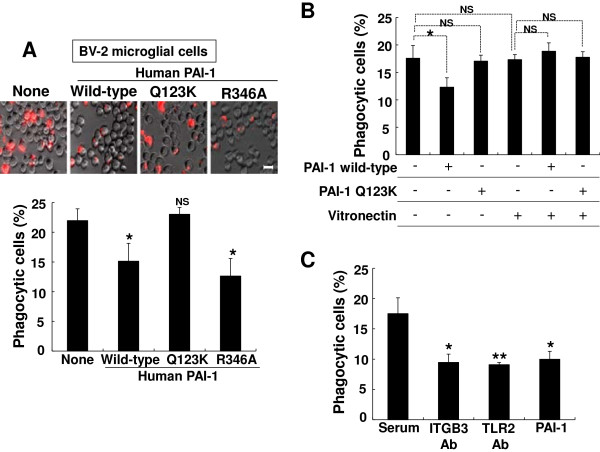
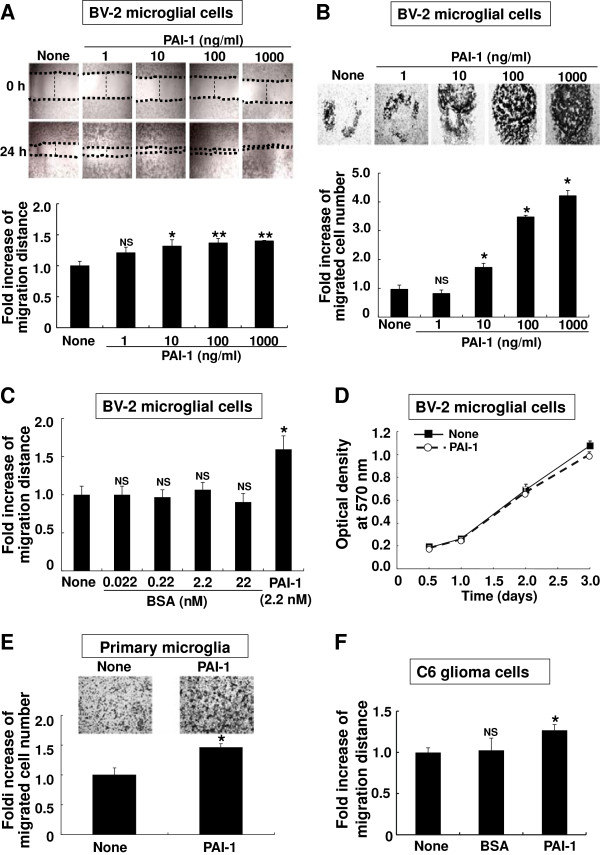
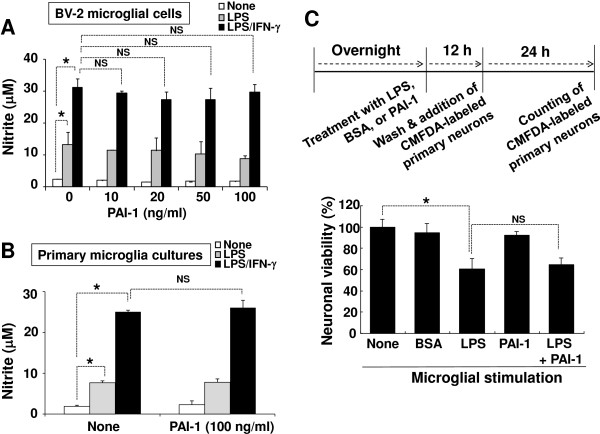
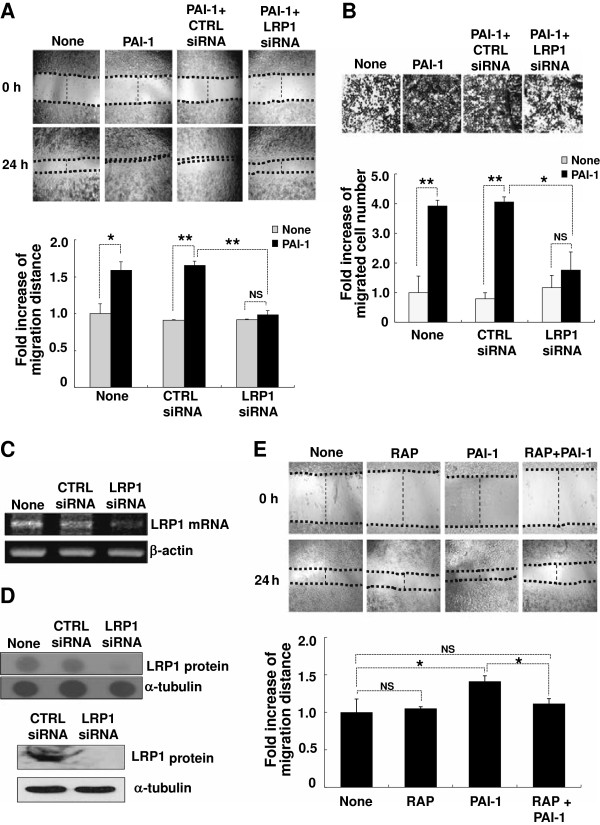
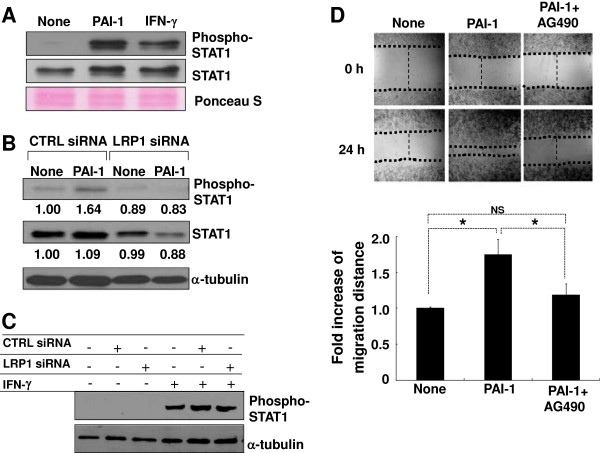
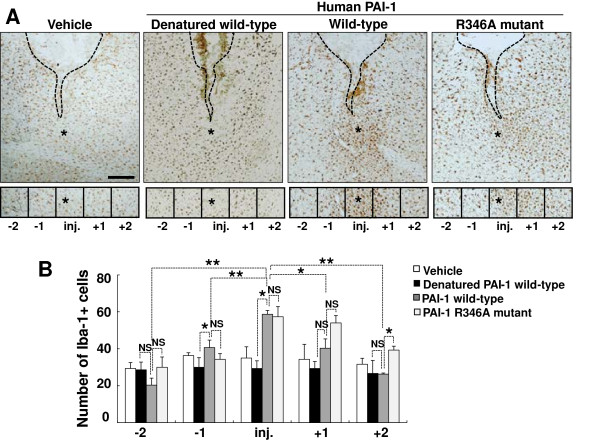
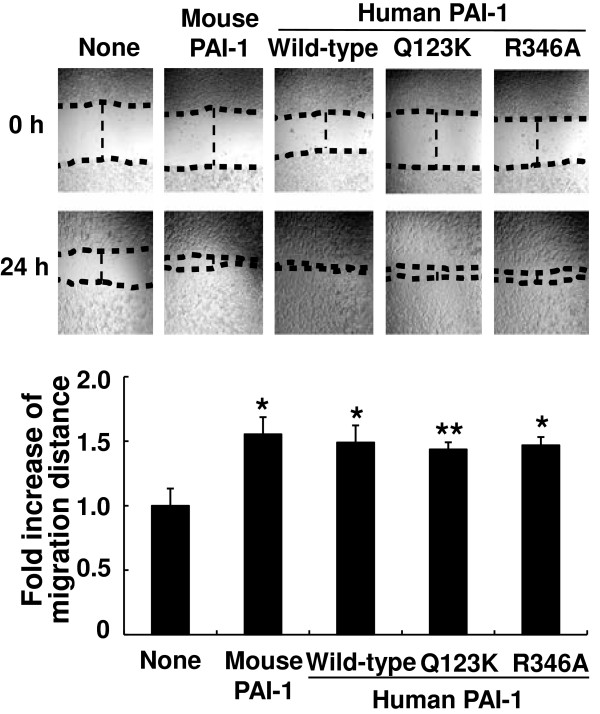
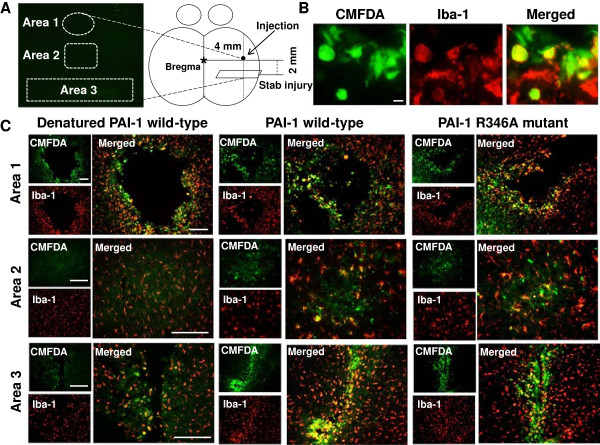
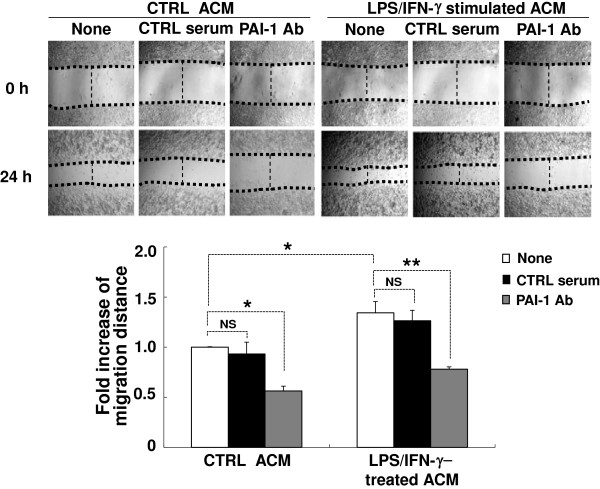
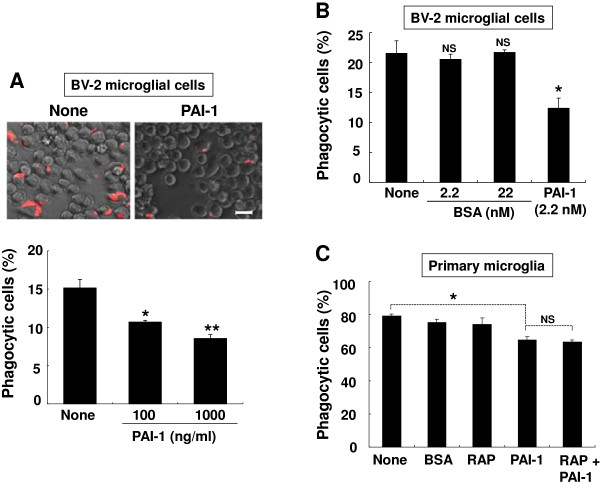
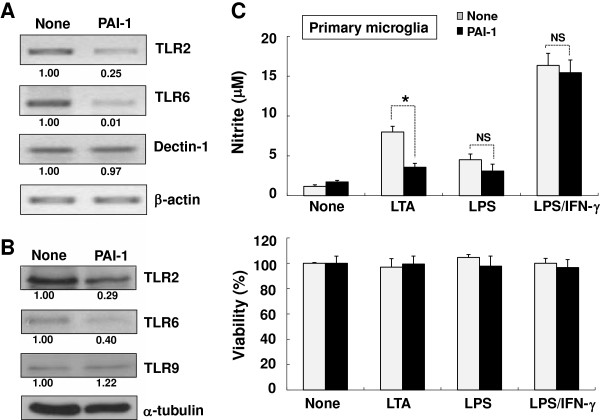
The levels of PAI-1 mRNA and protein expression were increased by lipopolysaccharide and interferon-γ stimulation in both microglia and astrocytes. PAI-1 promoted the migration of microglial cells in culture via the low-density lipoprotein receptor-related protein (LRP) 1/Janus kinase (JAK)/signal transducer and activator of transcription (STAT)1 axis. PAI-1 also increased microglial migration in vivo when injected into mouse brain. PAI-1-mediated microglial migration was independent of protease inhibition, because an R346A mutant of PAI-1 with impaired PA inhibitory activity also promoted microglial migration. Moreover, PAI-1 was able to modulate microglial phagocytic activity. PAI-1 inhibited microglial engulfment of zymosan particles in a vitronectin- and Toll-like receptor 2/6-dependent manner.
Our results indicate that glia-derived PAI-1 may regulate microglial migration and phagocytosis in an autocrine or paracrine manner. This may have important implications in the regulation of brain microglial activities in health and disease.
纤溶酶原激活物抑制剂 1(PAI-1)是尿激酶型纤溶酶原激活物(uPA)和组织型纤溶酶原激活物(tPA)的主要抑制剂,可介导纤维蛋白溶解。PAI-1 还通过调节细胞迁移和吞噬作用参与固有免疫。然而,人们对 PAI-1 在中枢神经系统中的作用知之甚少。
在这项研究中,我们通过液相色谱和串联质谱法在小鼠混合神经胶质细胞的培养基中鉴定出 PAI-1。通过 ELISA 和 Western blot 分析检测神经胶质细胞培养物中 PAI-1 的分泌。通过体外划痕愈合试验或 Boyden 室试验以及体内刺伤损伤模型评估细胞迁移。通过吞噬酵母聚糖颗粒来测量吞噬活性。
脂多糖和干扰素-γ刺激均可增加小胶质细胞和星形胶质细胞中 PAI-1 mRNA 和蛋白表达水平。PAI-1 通过低密度脂蛋白受体相关蛋白(LRP)1/Janus 激酶(JAK)/信号转导和转录激活因子(STAT)1 轴促进小胶质细胞在培养中的迁移。当将 PAI-1 注射到小鼠大脑中时,也会增加小胶质细胞在体内的迁移。PAI-1 介导的小胶质细胞迁移不依赖于蛋白酶抑制,因为具有受损的 PA 抑制活性的 R346A PAI-1 突变体也能促进小胶质细胞迁移。此外,PAI-1 能够调节小胶质细胞的吞噬活性。PAI-1 以依赖 vitronectin 和 Toll 样受体 2/6 的方式抑制小胶质细胞对酵母聚糖颗粒的吞噬作用。
我们的结果表明,胶质细胞衍生的 PAI-1 可能以自分泌或旁分泌方式调节小胶质细胞的迁移和吞噬作用。这可能对调节健康和疾病状态下大脑小胶质细胞的活性具有重要意义。