Kitasato University Graduate School of Medical Sciences, Sagamihara, Japan.
Cardiovasc Diabetol. 2012 Jun 29;11:79. doi: 10.1186/1475-2840-11-79.
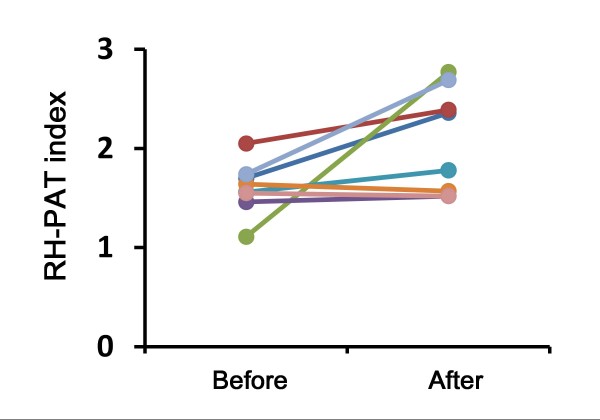
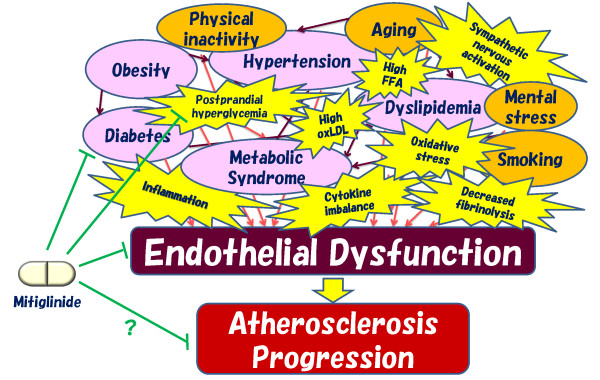
The risk of cardiovascular complication in a diabetes patient is similar to that in a nondiabetic patient with a history of myocardial infarction. Although intensive control of glycemia achieved by conventional antidiabetic agents decreases microvascular complications such as retinopathy and nephropathy, no marked effect has been reported on macrovascular complications or all-cause mortality. Evidence from VADT, ACCORD, and ADVANCE would suggest that glycemic control has little effect on macrovascular outcomes. Moreover, in the case of ACCORD, intensive glycemic control may be associated with an increased risk of mortality. There is sufficient evidence that suggests that postprandial hyperglycemia may be an independent risk factor for cardiovascular disease in diabetes patients. However, there are no prospective clinical trials supporting the recommendation that lowering postprandial blood glucose leads to lower risk of cardiovascular outcomes. Mitiglinide is a short-acting insulinotropic agent used in type 2 diabetes treatment. It has a rapid stimulatory effect on insulin secretion and reduces postprandial plasma glucose level in patients with type 2 diabetes. Because of its short action time, it is unlikely to exert adverse effects related to hypoglycemia early in the morning and between meals. Mitiglinide reduces excess oxidative stress and inflammation, plays a cardioprotective role, and improves postprandial metabolic disorders. Moreover, mitiglinide add-on therapy with pioglitazone favorably affects the vascular endothelial function in type 2 diabetes patients. These data suggest that mitiglinide plays a potentially beneficial role in the improvement of postprandial hyperglycemia in type 2 diabetes patients and can be used to prevent cardiovascular diseases. Although the results of long-term, randomized, placebo-controlled trials for determining the cardiovascular effects of mitiglinide on clinical outcomes are awaited, this review is aimed at summarizing substantial insights into this topic.
糖尿病患者发生心血管并发症的风险与既往心肌梗死病史的非糖尿病患者相似。虽然通过传统降糖药物强化控制血糖可降低视网膜病变和肾病等微血管并发症,但对大血管并发症或全因死亡率并无显著影响。来自 VADT、ACCORD 和 ADVANCE 的证据表明,血糖控制对大血管结局几乎没有影响。此外,在 ACCORD 研究中,强化血糖控制可能与死亡率增加相关。有充分的证据表明,餐后高血糖可能是糖尿病患者发生心血管疾病的独立危险因素。然而,目前尚无前瞻性临床试验支持降低餐后血糖可降低心血管结局风险的建议。米格列醇是一种用于 2 型糖尿病治疗的短效胰岛素促分泌剂。它对胰岛素分泌有快速刺激作用,可降低 2 型糖尿病患者的餐后血糖水平。由于其作用时间短,不太可能在清晨和两餐之间产生与低血糖相关的不良反应。米格列醇可减少过度的氧化应激和炎症,发挥心脏保护作用,并改善餐后代谢紊乱。此外,米格列醇联合吡格列酮治疗可改善 2 型糖尿病患者的血管内皮功能。这些数据表明,米格列醇在改善 2 型糖尿病患者餐后高血糖方面可能具有有益作用,可用于预防心血管疾病。尽管需要等待长期、随机、安慰剂对照试验来确定米格列醇对临床结局的心血管影响,但本文旨在对这一主题进行综述。