Division of Infectious Diseases, Massachusetts General Hospital, Boston, MA, USA; Department of Pediatrics, Harvard Medical School, Boston, MA, USA.
Division of Infectious Diseases, Massachusetts General Hospital, Boston, MA, USA; Department of Medicine, Harvard Medical School, Boston, MA, USA.
Lancet. 2012 Jun 30;379(9835):2466-2476. doi: 10.1016/S0140-6736(12)60436-X.
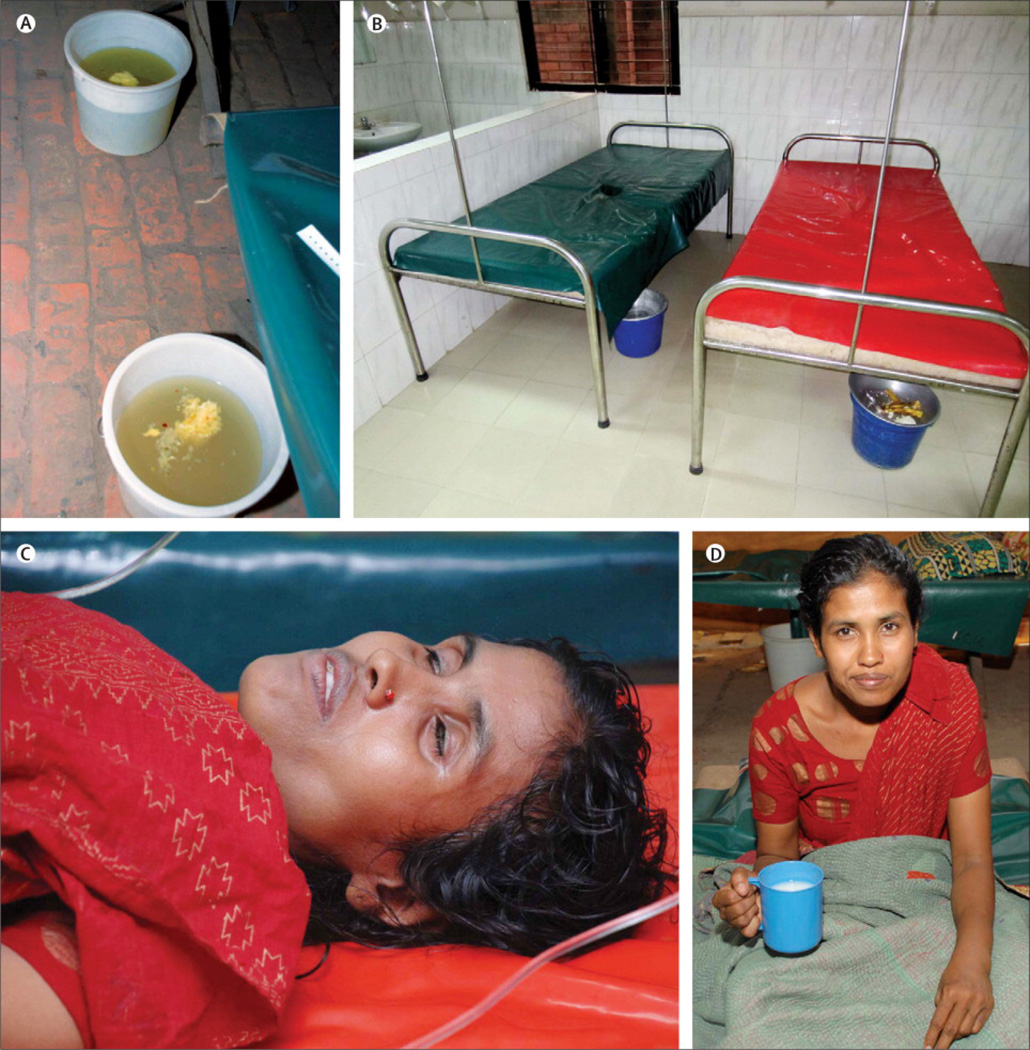
Cholera is an acute, secretory diarrhoea caused by infection with Vibrio cholerae of the O1 or O139 serogroup. It is endemic in more than 50 countries and also causes large epidemics. Since 1817, seven cholera pandemics have spread from Asia to much of the world. The seventh pandemic began in 1961 and affects 3-5 million people each year, killing 120,000. Although mild cholera can be indistinguishable from other diarrhoeal illnesses, the presentation of severe cholera is distinct, with pronounced diarrhoeal purging. Management of patients with cholera involves aggressive fluid replacement; effective therapy can decrease mortality from more than 50% to less than 0·2%. Antibiotic treatment decreases volume and duration of diarrhoea by 50% and is recommended for patients with moderate to severe dehydration. Prevention of cholera depends on access to safe water and sanitation. Two oral cholera vaccines are available and the most effective use of these in integrated prevention programmes is being actively assessed.
霍乱是由 O1 或 O139 血清群霍乱弧菌感染引起的急性分泌性腹泻。它在 50 多个国家流行,也会引起大规模的流行。自 1817 年以来,已有 7 次霍乱大流行从亚洲蔓延到世界大部分地区。第七次大流行始于 1961 年,每年影响 300 至 500 万人,死亡 12 万人。虽然轻度霍乱可能与其他腹泻病难以区分,但严重霍乱的表现则截然不同,有明显的腹泻性腹泻。霍乱患者的管理包括积极的液体替代;有效的治疗可以将死亡率从 50%以上降低到 0.2%以下。抗生素治疗可将腹泻量和持续时间减少 50%,并建议中度至重度脱水患者使用。霍乱的预防取决于获得安全用水和卫生设施。目前有两种口服霍乱疫苗,正在积极评估这些疫苗在综合预防规划中的最有效使用。