• 文献检索
  • 文档翻译
  • 深度研究
  • 学术资讯
  • Suppr Zotero 插件Zotero 插件
  • 邀请有礼
  • 套餐&价格
  • 历史记录
应用&插件
Suppr Zotero 插件Zotero 插件浏览器插件Mac 客户端Windows 客户端微信小程序
定价
高级版会员购买积分包购买API积分包
服务
文献检索文档翻译深度研究API 文档MCP 服务
关于我们
关于 Suppr公司介绍联系我们用户协议隐私条款
关注我们

Suppr 超能文献

核心技术专利:CN118964589B侵权必究
粤ICP备2023148730 号-1Suppr @ 2026

文献检索

告别复杂PubMed语法,用中文像聊天一样搜索,搜遍4000万医学文献。AI智能推荐,让科研检索更轻松。

立即免费搜索

文件翻译

保留排版,准确专业,支持PDF/Word/PPT等文件格式,支持 12+语言互译。

免费翻译文档

深度研究

AI帮你快速写综述,25分钟生成高质量综述,智能提取关键信息,辅助科研写作。

立即免费体验

心理感知是道德的本质。

Mind Perception Is the Essence of Morality.

作者信息

Gray Kurt, Young Liane, Waytz Adam

出版信息

Psychol Inq. 2012 Apr;23(2):101-124. doi: 10.1080/1047840X.2012.651387. Epub 2012 May 31.

DOI:10.1080/1047840X.2012.651387
PMID:22754268
原文链接:https://pmc.ncbi.nlm.nih.gov/articles/PMC3379786/
Abstract

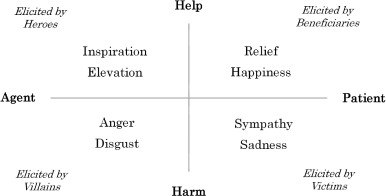
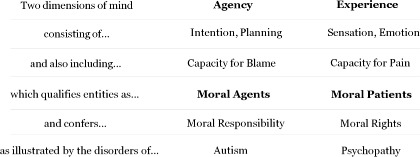
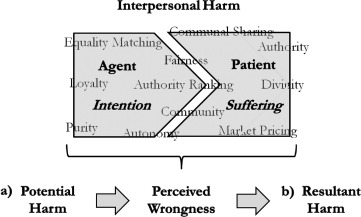
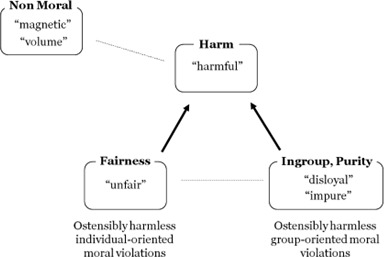
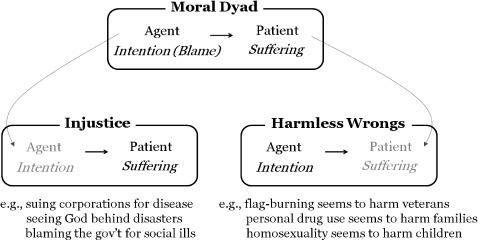
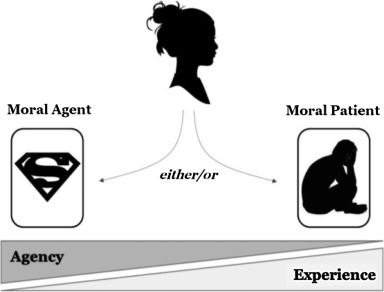
Mind perception entails ascribing mental capacities to other entities, whereas moral judgment entails labeling entities as good or bad or actions as right or wrong. We suggest that mind perception is the essence of moral judgment. In particular, we suggest that moral judgment is rooted in a cognitive template of two perceived minds-a moral dyad of an intentional agent and a suffering moral patient. Diverse lines of research support dyadic morality. First, perceptions of mind are linked to moral judgments: dimensions of mind perception (agency and experience) map onto moral types (agents and patients), and deficits of mind perception correspond to difficulties with moral judgment. Second, not only are moral judgments sensitive to perceived agency and experience, but all moral transgressions are fundamentally understood as agency plus experienced suffering-that is, interpersonal harm-even ostensibly harmless acts such as purity violations. Third, dyadic morality uniquely accounts for the phenomena of dyadic completion (seeing agents in response to patients, and vice versa), and moral typecasting (characterizing others as either moral agents or moral patients). Discussion also explores how mind perception can unify morality across explanatory levels, how a dyadic template of morality may be developmentally acquired, and future directions.

摘要

心理感知是指将心理能力赋予其他实体,而道德判断则是将实体标记为好或坏,或将行为标记为正确或错误。我们认为,心理感知是道德判断的本质。具体而言,我们认为道德判断植根于一种对两个被感知心理的认知模板——一个由有意图的施动者和受苦的道德受动者组成的道德二元组。多种研究线索支持二元道德观。首先,心理感知与道德判断相关联:心理感知的维度(能动性和体验)映射到道德类型(施动者和受动者)上,而心理感知的缺陷与道德判断的困难相对应。其次,道德判断不仅对感知到的能动性和体验敏感,而且所有道德违规行为从根本上都被理解为能动性加上体验到的痛苦——即人际伤害——即使是表面上无害的行为,如违反纯洁性的行为。第三,二元道德观独特地解释了二元完成现象(看到施动者对应受动者,反之亦然)和道德类型化现象(将他人描述为道德施动者或道德受动者)。讨论还探讨了心理感知如何在不同解释层面上统一道德,道德的二元模板可能如何在发展过程中习得,以及未来的研究方向。
https://cdn.ncbi.nlm.nih.gov/pmc/blobs/25c8/3379786/207ba0ec11ae/hpli23_101_f8.jpg
https://cdn.ncbi.nlm.nih.gov/pmc/blobs/25c8/3379786/e51c08c954af/hpli23_101_f1.jpg
https://cdn.ncbi.nlm.nih.gov/pmc/blobs/25c8/3379786/7c0f8bcc7f39/hpli23_101_f2.jpg
https://cdn.ncbi.nlm.nih.gov/pmc/blobs/25c8/3379786/39a5597578d0/hpli23_101_f3.jpg
https://cdn.ncbi.nlm.nih.gov/pmc/blobs/25c8/3379786/b6598d3c30df/hpli23_101_f4.jpg
https://cdn.ncbi.nlm.nih.gov/pmc/blobs/25c8/3379786/82fb3661657a/hpli23_101_f5.jpg
https://cdn.ncbi.nlm.nih.gov/pmc/blobs/25c8/3379786/5b72addafe6a/hpli23_101_f6.jpg
https://cdn.ncbi.nlm.nih.gov/pmc/blobs/25c8/3379786/099b49b42f0f/hpli23_101_f7.jpg
https://cdn.ncbi.nlm.nih.gov/pmc/blobs/25c8/3379786/207ba0ec11ae/hpli23_101_f8.jpg
https://cdn.ncbi.nlm.nih.gov/pmc/blobs/25c8/3379786/e51c08c954af/hpli23_101_f1.jpg
https://cdn.ncbi.nlm.nih.gov/pmc/blobs/25c8/3379786/7c0f8bcc7f39/hpli23_101_f2.jpg
https://cdn.ncbi.nlm.nih.gov/pmc/blobs/25c8/3379786/39a5597578d0/hpli23_101_f3.jpg
https://cdn.ncbi.nlm.nih.gov/pmc/blobs/25c8/3379786/b6598d3c30df/hpli23_101_f4.jpg
https://cdn.ncbi.nlm.nih.gov/pmc/blobs/25c8/3379786/82fb3661657a/hpli23_101_f5.jpg
https://cdn.ncbi.nlm.nih.gov/pmc/blobs/25c8/3379786/5b72addafe6a/hpli23_101_f6.jpg
https://cdn.ncbi.nlm.nih.gov/pmc/blobs/25c8/3379786/099b49b42f0f/hpli23_101_f7.jpg
https://cdn.ncbi.nlm.nih.gov/pmc/blobs/25c8/3379786/207ba0ec11ae/hpli23_101_f8.jpg

相似文献

1
Mind Perception Is the Essence of Morality.心理感知是道德的本质。
Psychol Inq. 2012 Apr;23(2):101-124. doi: 10.1080/1047840X.2012.651387. Epub 2012 May 31.
2
Deconstructing moral character judgments.解构道德品质判断
Curr Opin Psychol. 2022 Feb;43:205-212. doi: 10.1016/j.copsyc.2021.07.008. Epub 2021 Jul 28.
3
The Theory of Dyadic Morality: Reinventing Moral Judgment by Redefining Harm.对偶道德理论:通过重新定义伤害来重塑道德判断。
Pers Soc Psychol Rev. 2018 Feb;22(1):32-70. doi: 10.1177/1088868317698288. Epub 2017 May 14.
4
The myth of harmless wrongs in moral cognition: Automatic dyadic completion from sin to suffering.道德认知中无害错误的神话:从罪恶到苦难的自动对偶完成。
J Exp Psychol Gen. 2014 Aug;143(4):1600-15. doi: 10.1037/a0036149. Epub 2014 Mar 17.
5
Moral Judgments of COVID-19 Social Distancing Violations: The Roles of Perceived Harm and Impurity.对违反新冠疫情社交距离行为的道德评判:感知到的危害和不纯洁感的作用。
Pers Soc Psychol Bull. 2022 May;48(5):766-781. doi: 10.1177/01461672211025433. Epub 2021 Jul 10.
6
Moral typecasting: divergent perceptions of moral agents and moral patients.道德类型化:对道德主体和道德客体的不同认知
J Pers Soc Psychol. 2009 Mar;96(3):505-20. doi: 10.1037/a0013748.
7
Culture, theory-of-mind, and morality: How independent and interdependent minds make moral judgments.文化、心理理论和道德:独立和相互依存的思维如何做出道德判断。
Biol Psychol. 2022 Oct;174:108423. doi: 10.1016/j.biopsycho.2022.108423. Epub 2022 Sep 6.
8
The affective harm account (AHA) of moral judgment: Reconciling cognition and affect, dyadic morality and disgust, harm and purity.道德判断的情感伤害论:调和认知与情感、对偶道德与厌恶、伤害与纯洁。
J Pers Soc Psychol. 2022 Dec;123(6):1199-1222. doi: 10.1037/pspa0000310. Epub 2022 Mar 31.
9
Harm mediates the disgust-immorality link.伤害中介了厌恶-不道德之间的联系。
Emotion. 2016 Sep;16(6):862-76. doi: 10.1037/emo0000167. Epub 2016 Apr 21.
10
The puzzle of wrongless harms: Some potential concerns for dyadic morality and related accounts.无错之害的难题:对偶道德论和相关理论的一些潜在关注点。
Cognition. 2022 Mar;220:104980. doi: 10.1016/j.cognition.2021.104980. Epub 2022 Jan 3.

引用本文的文献

1
Do Social Relationships Influence Moral Judgment? A Cross-Cultural Examination.社会关系会影响道德判断吗?一项跨文化研究。
Behav Sci (Basel). 2025 Aug 12;15(8):1097. doi: 10.3390/bs15081097.
2
Will Human-Animal Chimeras Cause Moral Confusion? Exploring Public Attitudes.人兽嵌合体是否会引发道德困惑?探究公众态度。
J Bioeth Inq. 2025 Aug 12. doi: 10.1007/s11673-024-10413-4.
3
Openness to Being Gossiped About: Understanding Gossip from the Target's Perspective.对被人说闲话持开放态度:从被说闲话者的角度理解闲话。

本文引用的文献

1
Reasoning about dead agents reveals possible adaptive trends.对死亡病原体的推理揭示了可能的适应性趋势。
Hum Nat. 2005 Dec;16(4):360-81. doi: 10.1007/s12110-005-1015-2.
2
Who Sees Human? The Stability and Importance of Individual Differences in Anthropomorphism.谁能洞察人性?拟人化中个体差异的稳定性与重要性。
Perspect Psychol Sci. 2010 May;5(3):219-32. doi: 10.1177/1745691610369336.
3
The group-member mind trade-off: attributing mind to groups versus group members.群体成员思维交换:将思维归因于群体与群体成员。
Self Identity. 2025;24(3):253-279. doi: 10.1080/15298868.2025.2467737. Epub 2025 Feb 28.
4
Mind Care: The Moral Significance of the Dementia Caregiving Dyad.心灵关怀:痴呆症照护二元组的道德意义
Am J Bioeth. 2025 May 21:1-12. doi: 10.1080/15265161.2025.2497980.
5
'It's not just immoral!': The role of moral disengagement and incivility in dehumanising the transgressor of immoral behaviour.“这不仅仅是不道德的!”:道德推脱和不文明行为在将不道德行为的违规者非人化过程中的作用。
PLoS One. 2025 May 7;20(5):e0322212. doi: 10.1371/journal.pone.0322212. eCollection 2025.
6
Counselor type (Human/AI) and consultation intention: a moderated mediation model of trust and psychological counseling scenarios.咨询者类型(人类/人工智能)与咨询意向:信任与心理咨询场景的有调节的中介模型
BMC Psychol. 2025 Apr 20;13(1):408. doi: 10.1186/s40359-025-02741-w.
7
Children's gendered expectations of moral parties.儿童对道德派对的性别化期望。
Sci Rep. 2025 Apr 1;15(1):11121. doi: 10.1038/s41598-025-94375-6.
8
Beyond lifestyle, logic and empathy: subjective health, mood, emotional intelligence, and personality as keys to well-being for women and men.超越生活方式、逻辑和同理心:主观健康、情绪、情商和个性是男女幸福的关键。
BMC Psychiatry. 2025 Mar 11;25(1):222. doi: 10.1186/s12888-025-06639-0.
9
Neural dynamics of mental state attribution to social robot faces.对社交机器人面部进行心理状态归因的神经动力学
Soc Cogn Affect Neurosci. 2025 Apr 2;20(1). doi: 10.1093/scan/nsaf027.
10
The Double Standard of Ownership.所有权的双重标准。
Open Mind (Camb). 2025 Feb 16;9:325-339. doi: 10.1162/opmi_a_00190. eCollection 2025.
Psychol Sci. 2012 Jan 1;23(1):77-85. doi: 10.1177/0956797611423546. Epub 2011 Dec 8.
4
More than a body: mind perception and the nature of objectification.超越肉体:心智感知与客体化本质。
J Pers Soc Psychol. 2011 Dec;101(6):1207-20. doi: 10.1037/a0025883. Epub 2011 Nov 7.
5
Don't mind meat? The denial of mind to animals used for human consumption.不介意肉?对用于人类食用的动物的心灵否认。
Pers Soc Psychol Bull. 2012 Feb;38(2):247-56. doi: 10.1177/0146167211424291. Epub 2011 Oct 6.
6
Blaming, praising, and protecting our humanity: the implications of everyday dehumanization for judgments of moral status.归咎、赞扬和保护我们的人性:日常去人性化对道德地位判断的影响。
Br J Soc Psychol. 2011 Sep;50(3):469-83. doi: 10.1348/014466610X521383. Epub 2011 Apr 7.
7
More dead than dead: perceptions of persons in the persistent vegetative state.比死亡更甚:持续性植物状态患者的认知。
Cognition. 2011 Nov;121(2):275-80. doi: 10.1016/j.cognition.2011.06.014. Epub 2011 Jul 27.
8
Patterns of moral judgment derive from nonmoral psychological representations.道德判断模式源于非道德心理表征。
Cogn Sci. 2011 Aug;35(6):1052-75. doi: 10.1111/j.1551-6709.2010.01167.x. Epub 2011 Jan 31.
9
The mismeasure of morals: antisocial personality traits predict utilitarian responses to moral dilemmas.道德的误测:反社会人格特质预示着功利主义对道德困境的反应。
Cognition. 2011 Oct;121(1):154-61. doi: 10.1016/j.cognition.2011.05.010. Epub 2011 Jul 16.
10
When ignorance is no excuse: Different roles for intent across moral domains.当无知不是借口时:意图在道德领域中的不同作用。
Cognition. 2011 Aug;120(2):202-14. doi: 10.1016/j.cognition.2011.04.005. Epub 2011 May 23.