Department of Mycorrhizal Symbioses, Institute of Botany, Academy of Sciences of the Czech Republic, Průhonice, Czech Republic.
PLoS One. 2012;7(6):e39524. doi: 10.1371/journal.pone.0039524. Epub 2012 Jun 25.
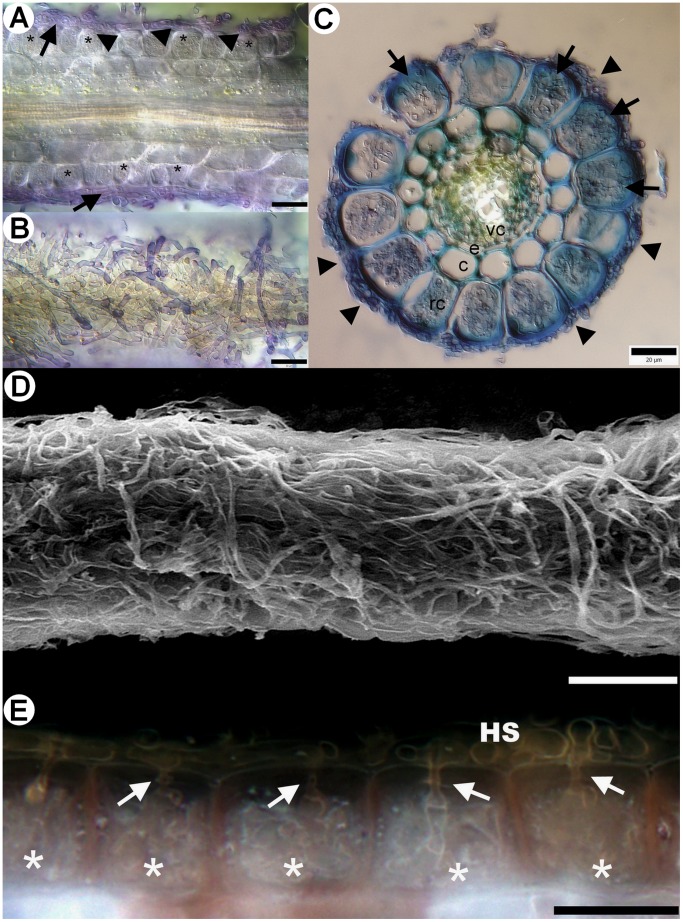
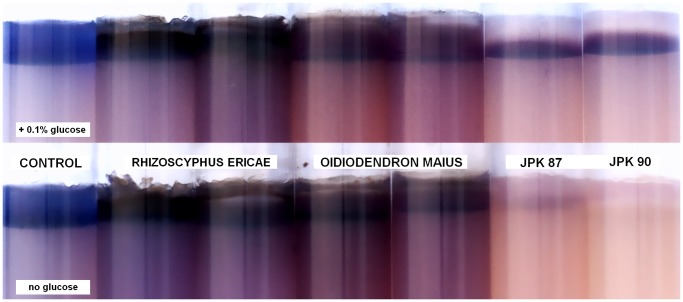
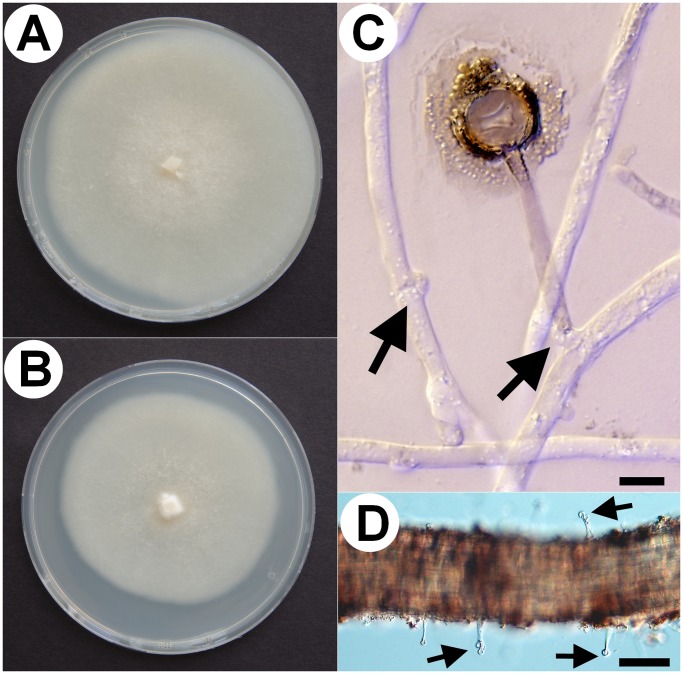
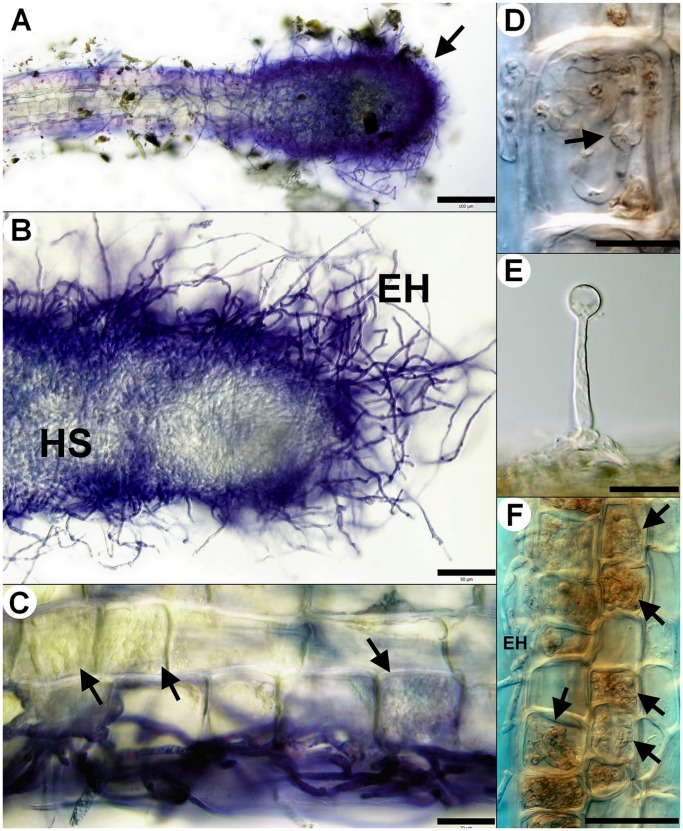
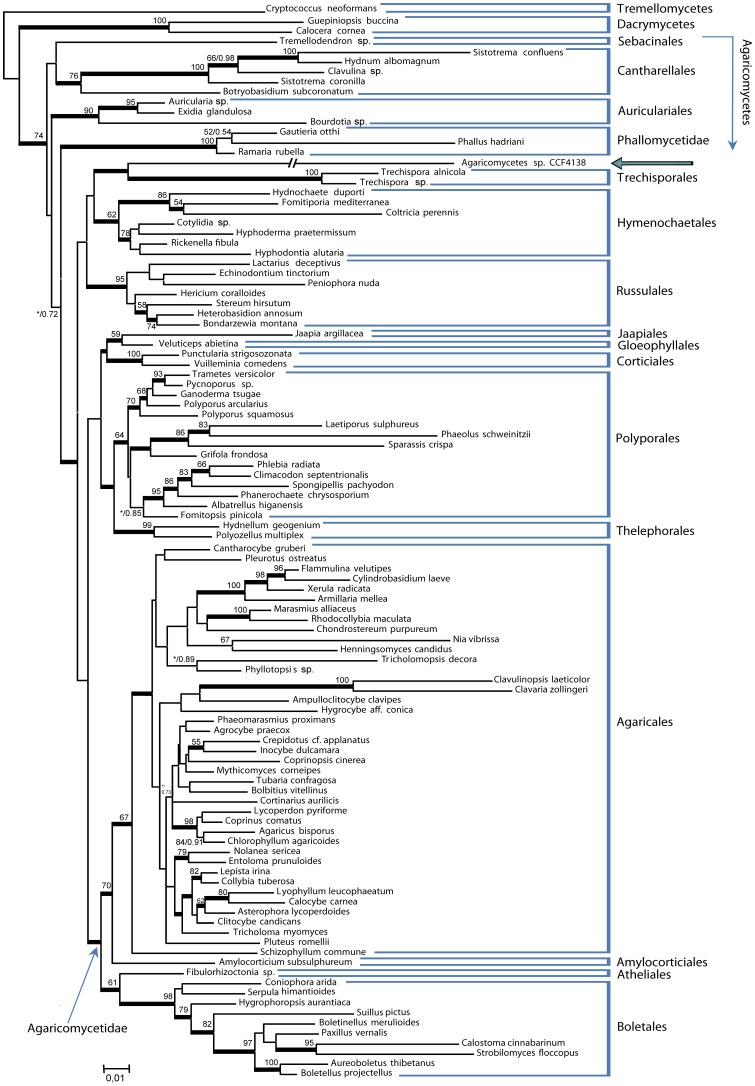
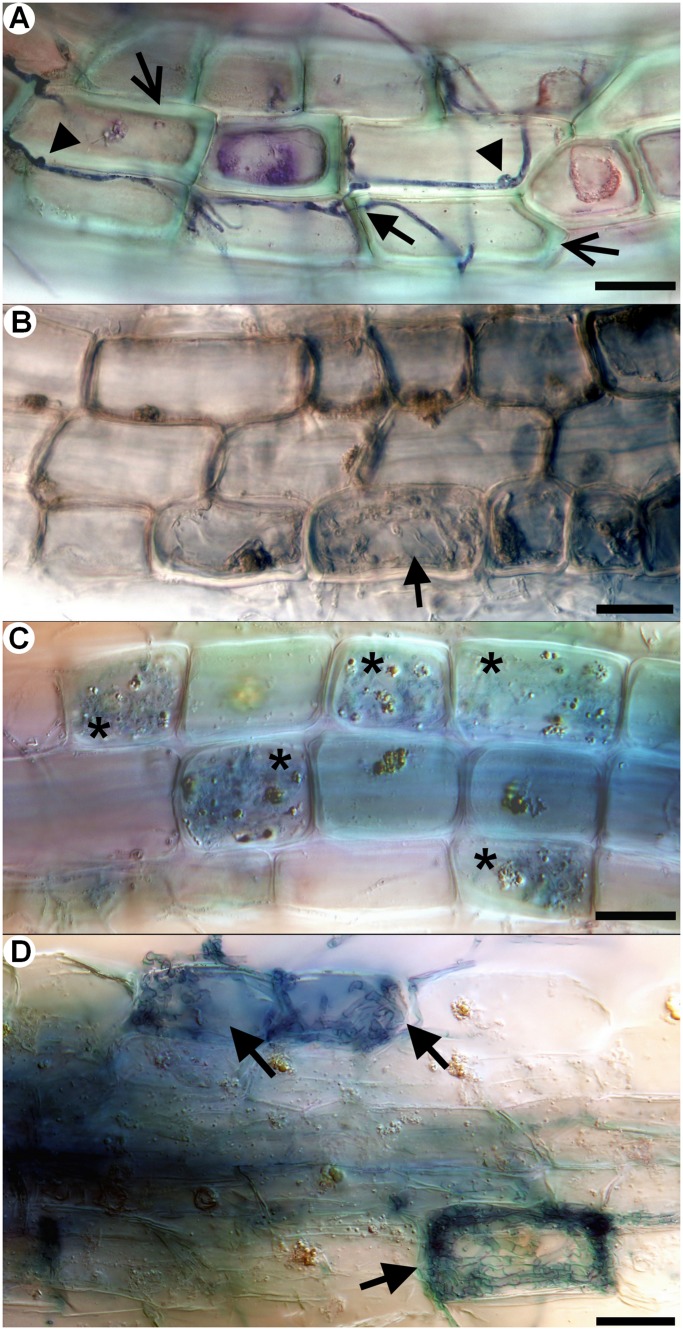
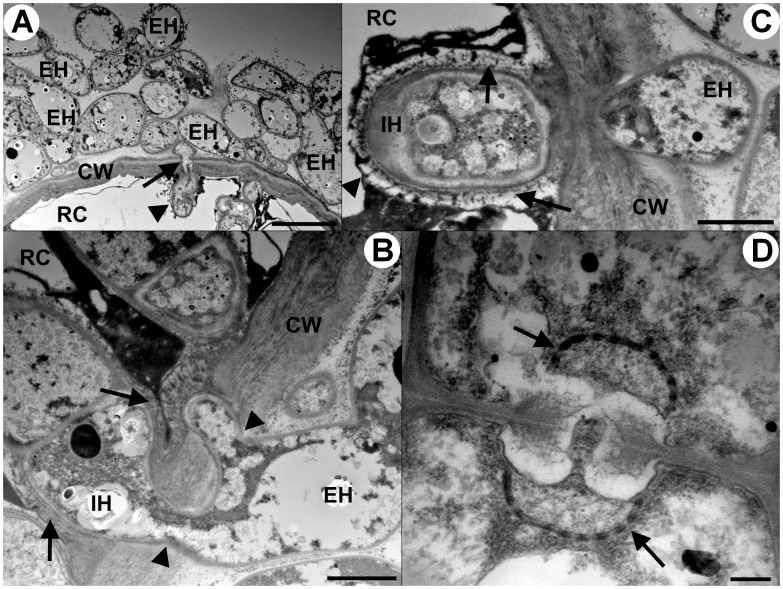
Ericaceae (the heath family) are widely distributed calcifuges inhabiting soils with inherently poor nutrient status. Ericaceae overcome nutrient limitation through symbiosis with ericoid mycorrhizal (ErM) fungi that mobilize nutrients complexed in recalcitrant organic matter. At present, recognized ErM fungi include a narrow taxonomic range within the Ascomycota, and the Sebacinales, basal Hymenomycetes with unclamped hyphae and imperforate parenthesomes. Here we describe a novel type of basidiomycetous ErM symbiosis, termed 'sheathed ericoid mycorrhiza', discovered in two habitats in mid-Norway as a co-dominant mycorrhizal symbiosis in Vaccinium spp. The basidiomycete forming sheathed ErM possesses clamped hyphae with perforate parenthesomes, produces 1- to 3-layer sheaths around terminal parts of hair roots and colonizes their rhizodermis intracellularly forming hyphal coils typical for ErM symbiosis. Two basidiomycetous isolates were obtained from sheathed ErM and molecular and phylogenetic tools were used to determine their identity; they were also examined for the ability to form sheathed ErM and lignocellulolytic potential. Surprisingly, ITS rDNA of both conspecific isolates failed to amplify with the most commonly used primer pairs, including ITS1 and ITS1F + ITS4. Phylogenetic analysis of nuclear LSU, SSU and 5.8S rDNA indicates that the basidiomycete occupies a long branch residing in the proximity of Trechisporales and Hymenochaetales, but lacks a clear sequence relationship (>90% similarity) to fungi currently placed in these orders. The basidiomycete formed the characteristic sheathed ErM symbiosis and enhanced growth of Vaccinium spp. in vitro, and degraded a recalcitrant aromatic substrate that was left unaltered by common ErM ascomycetes. Our findings provide coherent evidence that this hitherto undescribed basidiomycete forms a morphologically distinct ErM symbiosis that may occur at significant levels under natural conditions, yet remain undetected when subject to amplification by 'universal' primers. The lignocellulolytic assay suggests the basidiomycete may confer host adaptations distinct from those provisioned by the so far investigated ascomycetous ErM fungi.
杜鹃花科(石南科)广泛分布于钙限制生境中,能在养分状况先天较差的土壤中生存。杜鹃花科通过与富含养分的内生菌根真菌(ErM)共生来克服养分限制,这些真菌能将难溶的有机物质中复合的养分进行移动。目前,公认的 ErM 真菌包括子囊菌门中狭窄的分类范围,以及 Sebacinales,即具有未夹紧菌丝和无孔栓子的基础担子菌。在这里,我们描述了一种新型的担子菌 ErM 共生关系,称为“鞘状内生菌根”,在挪威中部的两个生境中发现,它是 Vaccinium spp. 的主要共生菌根。形成鞘状 ErM 的担子菌具有带有穿孔栓子的夹紧菌丝,在根毛的末端周围产生 1-3 层鞘,并在其根皮层内进行定殖,形成典型的 ErM 共生关系的菌丝环。从鞘状 ErM 中分离出两种担子菌,并使用分子和系统发育工具来确定它们的身份;还检查了它们形成鞘状 ErM 和木质纤维素降解能力。令人惊讶的是,两种同种类分离株的 ITS rDNA 都无法用最常用的引物对扩增,包括 ITS1 和 ITS1F + ITS4。核 LSU、SSU 和 5.8S rDNA 的系统发育分析表明,该担子菌位于 Trechisporales 和 Hymenochaetales 附近的长分支上,但与目前归入这些目真菌的序列关系不明确(>90%相似性)。该担子菌形成了特征性的鞘状 ErM 共生关系,并在体外增强了 Vaccinium spp. 的生长,降解了一种难降解的芳香基质,而常见的 ErM 子囊菌对其没有改变。我们的研究结果提供了一致的证据,表明这种迄今为止尚未描述的担子菌形成了一种形态上独特的 ErM 共生关系,这种共生关系可能在自然条件下以显著水平存在,但在使用“通用”引物进行扩增时仍未被发现。木质纤维素降解试验表明,该担子菌可能为宿主提供了与迄今为止研究的子囊菌 ErM 真菌不同的适应。