Department of Physics, University of Missouri, Columbia, Missouri 65211, United States.
J Am Chem Soc. 2012 Aug 1;134(30):12499-507. doi: 10.1021/ja3013819. Epub 2012 Jul 19.
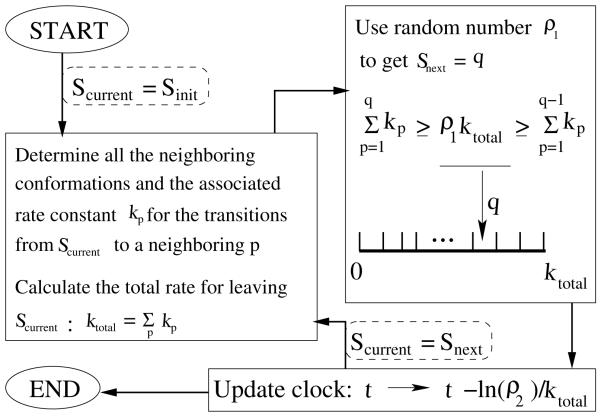
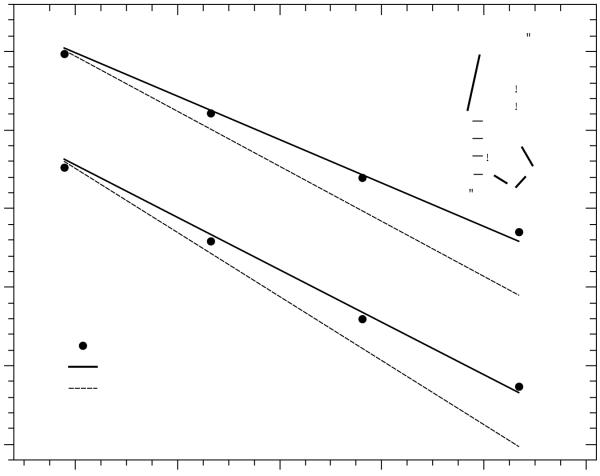
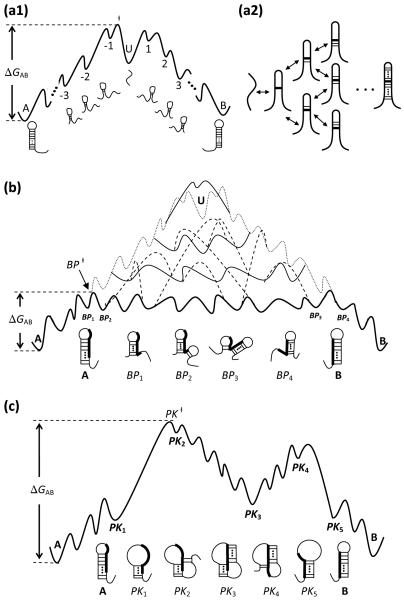
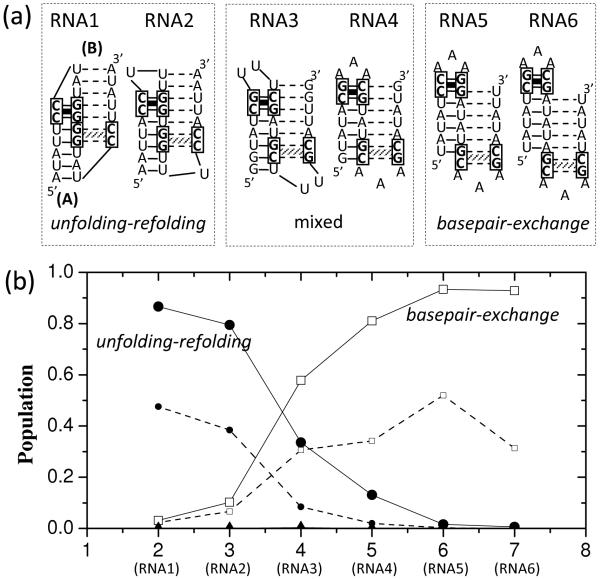
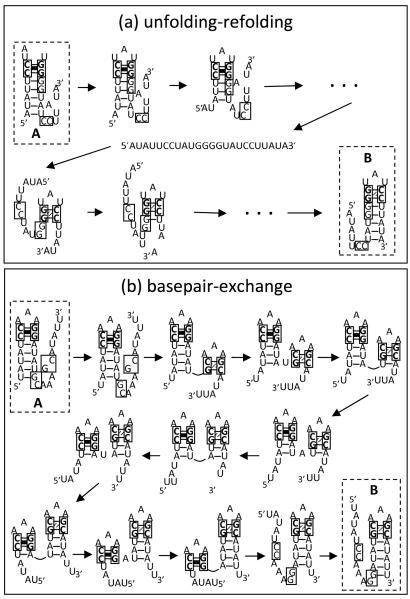
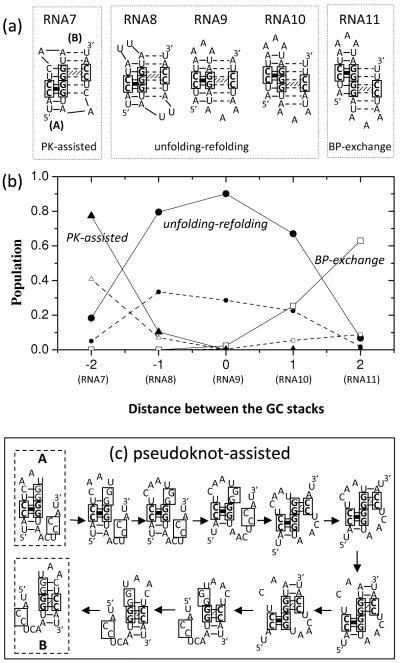
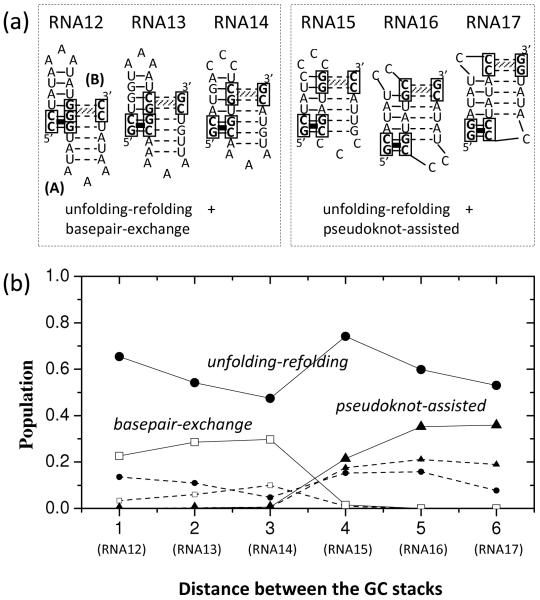
Transitions between the different conformational states play a critical role in many RNA catalytic and regulatory functions. In this study, we use the Kinetic Monte Carlo method to investigate the kinetic mechanism for the conformational switches between bistable RNA hairpins. We find three types of conformational switch pathways for RNA hairpins: refolding after complete unfolding, folding through basepair-exchange pathways and through pseudoknot-assisted pathways, respectively. The result of the competition between the three types of pathways depends mainly on the location of the rate-limiting base stacks (such as the GC base stacks) in the structures. Depending on the structural relationships between the two bistable hairpins, the conformational switch can follow single or multiple dominant pathways. The predicted folding pathways are supported by the activation energy results derived from the Arrhenius plot as well as the NMR spectroscopy data.
构象转变在许多 RNA 催化和调控功能中起着关键作用。在这项研究中,我们使用动力学蒙特卡罗方法来研究双稳态 RNA 发夹之间构象开关的动力学机制。我们发现了 RNA 发夹构象开关的三种类型的途径:完全展开后的重新折叠、通过碱基对交换途径和通过假结辅助途径的折叠。三种途径之间的竞争结果主要取决于结构中限速碱基堆积(如 GC 碱基堆积)的位置。根据两个双稳态发夹之间的结构关系,构象转换可以遵循单一或多种主导途径。预测的折叠途径得到了Arrhenius 图和 NMR 光谱数据得出的活化能结果的支持。