Helen B Taussig Children's Heart Center, Department of Pediatrics, Johns Hopkins University School of Medicine, Baltimore, Maryland, USA.
Nat Genet. 2012 Jul 8;44(8):922-7. doi: 10.1038/ng.2349.
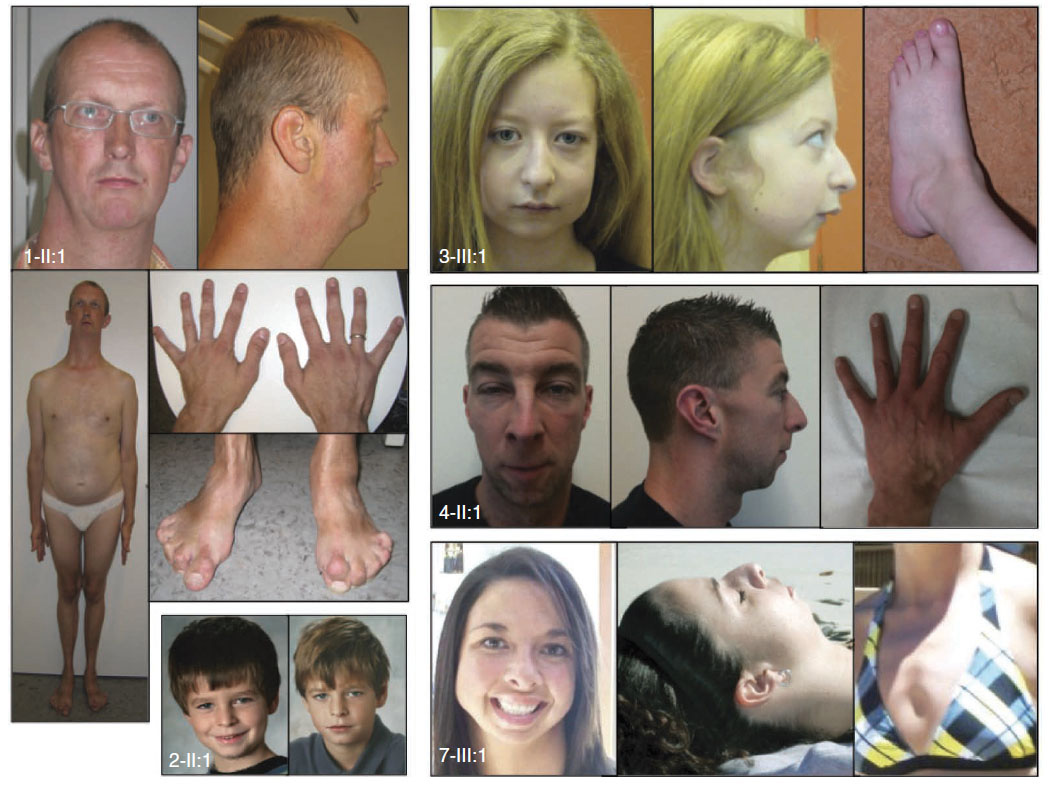
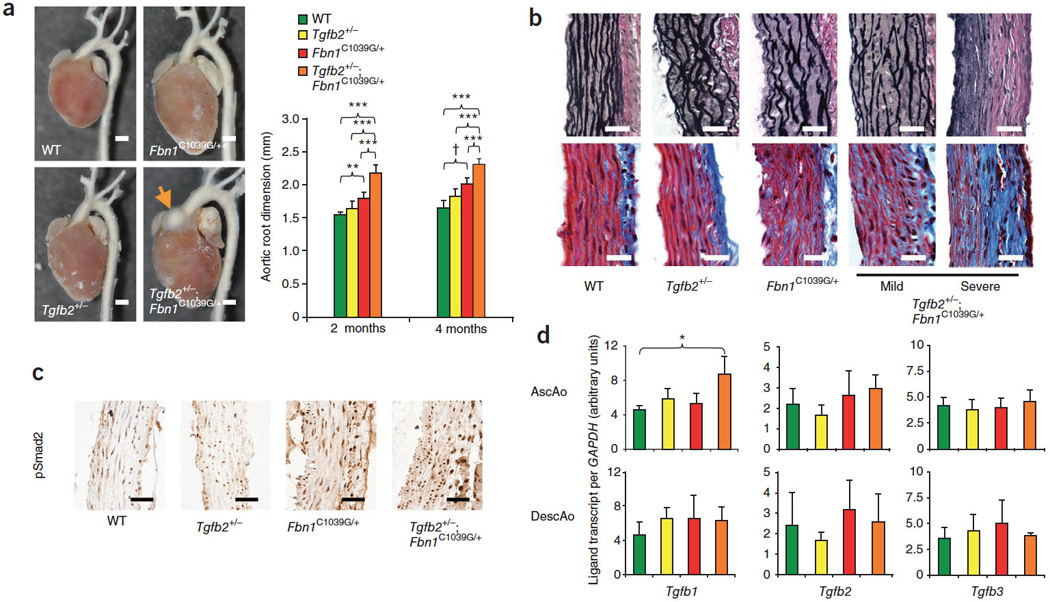
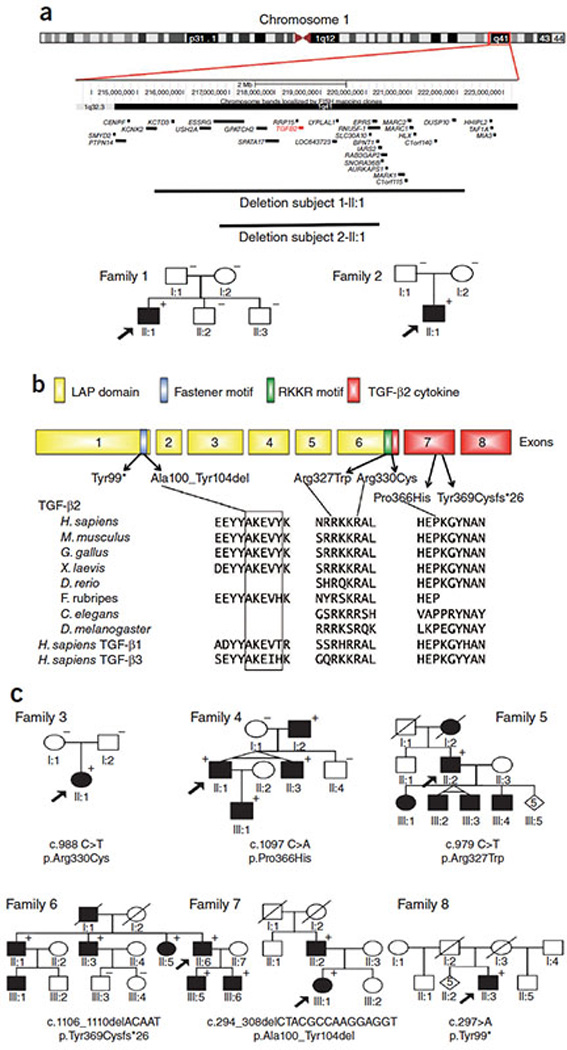
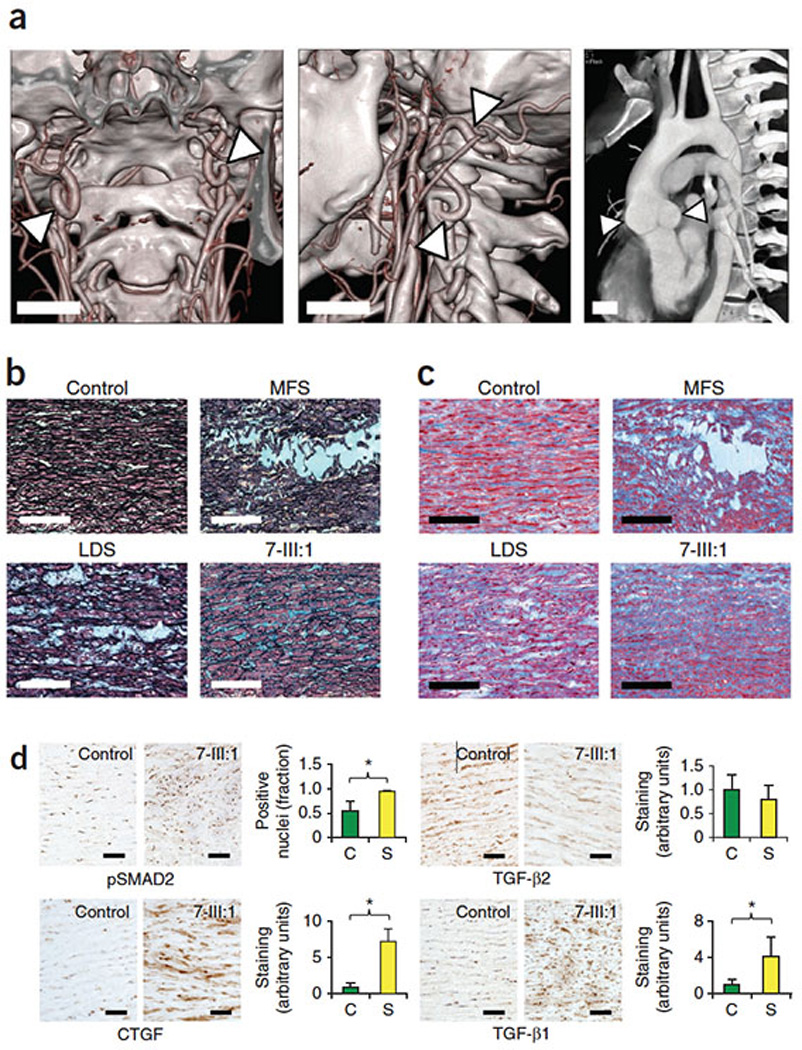
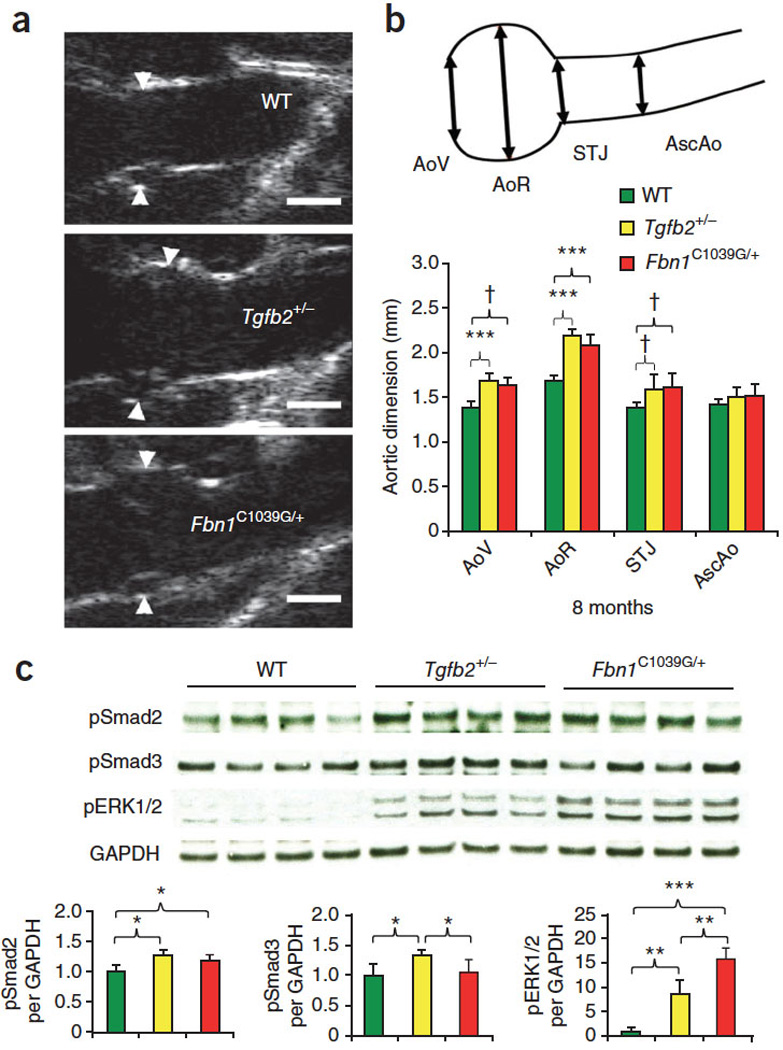
Loeys-Dietz syndrome (LDS) associates with a tissue signature for high transforming growth factor (TGF)-β signaling but is often caused by heterozygous mutations in genes encoding positive effectors of TGF-β signaling, including either subunit of the TGF-β receptor or SMAD3, thereby engendering controversy regarding the mechanism of disease. Here, we report heterozygous mutations or deletions in the gene encoding the TGF-β2 ligand for a phenotype within the LDS spectrum and show upregulation of TGF-β signaling in aortic tissue from affected individuals. Furthermore, haploinsufficient Tgfb2(+/-) mice have aortic root aneurysm and biochemical evidence of increased canonical and noncanonical TGF-β signaling. Mice that harbor both a mutant Marfan syndrome (MFS) allele (Fbn1(C1039G/+)) and Tgfb2 haploinsufficiency show increased TGF-β signaling and phenotypic worsening in association with normalization of TGF-β2 expression and high expression of TGF-β1. Taken together, these data support the hypothesis that compensatory autocrine and/or paracrine events contribute to the pathogenesis of TGF-β-mediated vasculopathies.
洛伊茨-迪茨综合征(LDS)与组织中高转化生长因子(TGF)-β信号的特征相关,但通常由 TGF-β信号的正效应子编码基因的杂合突变引起,包括 TGF-β受体或 SMAD3 的亚基,从而引发关于疾病机制的争议。在这里,我们报告了在 LDS 谱内的表型中 TGF-β2 配体编码基因的杂合突变或缺失,并显示受影响个体的主动脉组织中 TGF-β 信号的上调。此外,TGF-β2 表达不足的 Tgfb2(+/-) 小鼠具有主动脉根部动脉瘤和增加的经典和非经典 TGF-β信号的生化证据。携带突变马凡综合征(MFS)等位基因(Fbn1(C1039G/+))和 TGF-β2 表达不足的小鼠显示 TGF-β 信号增加和表型恶化,与 TGF-β2 表达的正常化和 TGF-β1 的高表达相关。总之,这些数据支持这样一种假设,即补偿性自分泌和/或旁分泌事件有助于 TGF-β 介导的血管病变的发病机制。