Gardian Katarzyna, Janczewska Sława, Olszewski Waldemar L, Durlik Marek
Mossakowski Medical Research Centre Polish Academy of Sciences, Department of Surgical Research and Transplantology 5 Pawinskiego Str, 02-106 Warsaw, POLAND.
J Cancer. 2012;3:285-91. doi: 10.7150/jca.4537. Epub 2012 Jul 1.
Research over the last twenty years has yielded much insight into pancreatic cancer biology, but it has neither improved diagnostics methods nor the way of treatment. The question remains as to what the critical deciding factor is in making pancreatic cancer such an aggressive disease.
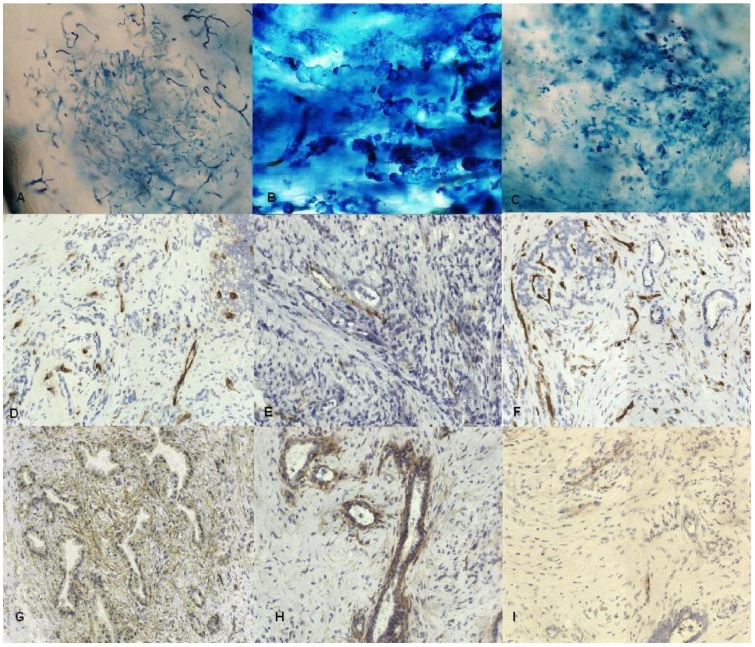
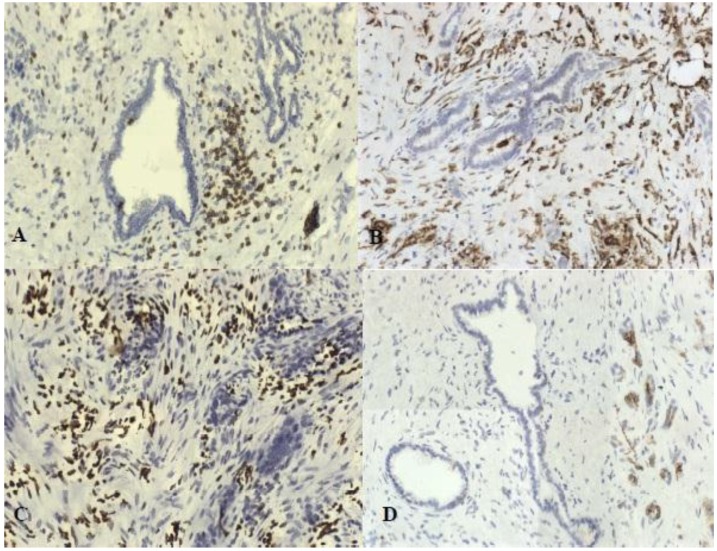
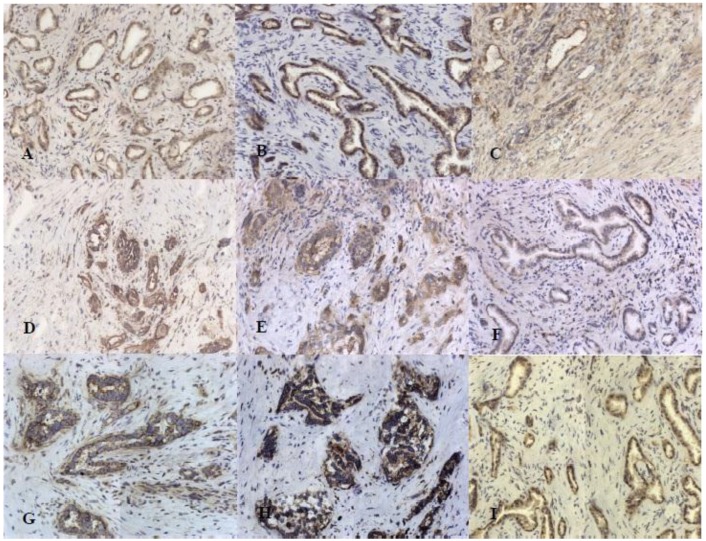
Pancreatic tumor tissue came from 36 patients. To assess lymphatic vessels color lymphangiography and immunohistochemistry were used. Activity of matrix metalloproteinases was studied with gel and in situ zymography. Expression of growth factors and infiltrating immune cells were investigated using immunohistochemistry.
Our study revealed that the structures that correspond to lymphatic vessels were not observed in tumor center but only at the edge of the tumor. All studied growth factors were present in tumor tissue. We found that the difference in expression between G2 and G3 stage was statistically relevant in cases of c-Met receptor. Inflammatory cells were present around neoplastic glands and also strongly around nerves infiltrated by cancer cells. The number of infiltrating macrophages in tumor tissue was significantly higher in group with metastases to lymph nodes.
We showed two factors that influence pancreatic cancer progression and invasion: c-Met receptors and macrophages infiltrating tumor tissue. Based on our analysis, this indicates that epithelial-mesenchymal transition might be crucial in the progression of pancreatic cancer.
过去二十年的研究对胰腺癌生物学有了深入了解,但既未改进诊断方法,也未改善治疗方式。胰腺癌为何如此具有侵袭性,关键决定因素究竟是什么,这一问题依然存在。
36例患者的胰腺肿瘤组织用于研究。采用彩色淋巴管造影和免疫组化评估淋巴管。通过凝胶和原位酶谱分析研究基质金属蛋白酶的活性。利用免疫组化研究生长因子的表达及浸润免疫细胞。
我们的研究表明,肿瘤中心未观察到与淋巴管相对应的结构,仅在肿瘤边缘发现。所有研究的生长因子均存在于肿瘤组织中。我们发现,在c-Met受体病例中,G2期和G3期之间的表达差异具有统计学意义。炎性细胞存在于肿瘤腺体周围,在癌细胞浸润的神经周围也大量存在。有淋巴结转移组的肿瘤组织中浸润巨噬细胞的数量显著更高。
我们发现了影响胰腺癌进展和侵袭的两个因素:c-Met受体和浸润肿瘤组织的巨噬细胞。基于我们的分析,这表明上皮-间质转化可能在胰腺癌进展中起关键作用。