Department of Cancer Biology, Mayo Clinic, Jacksonville, FL, United States.
Front Immunol. 2023 Aug 11;14:1237711. doi: 10.3389/fimmu.2023.1237711. eCollection 2023.
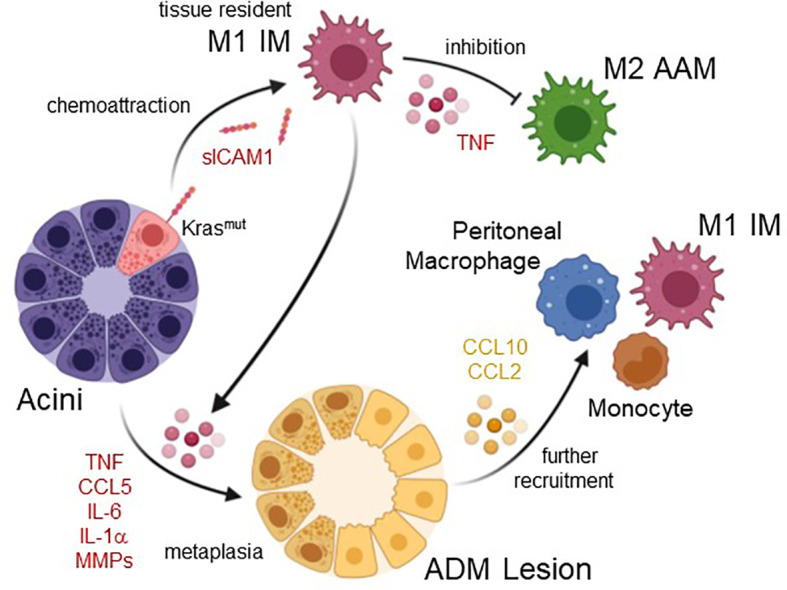
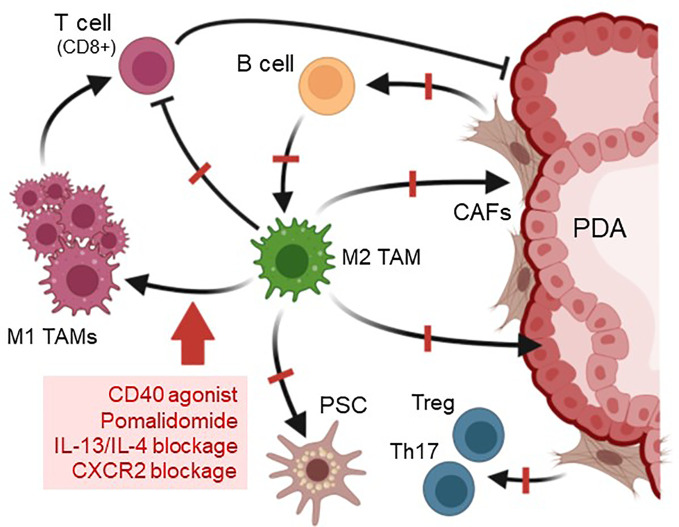
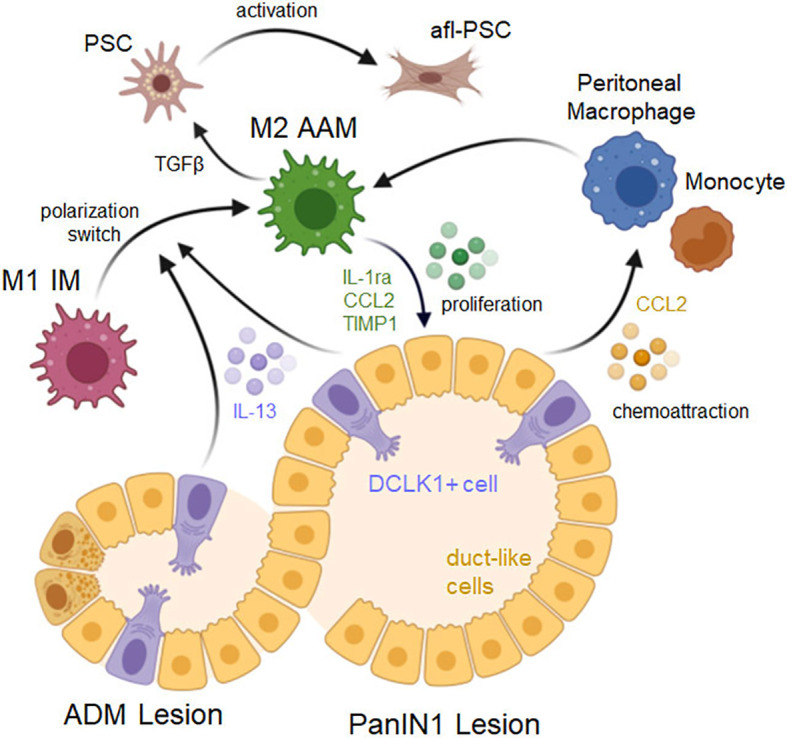
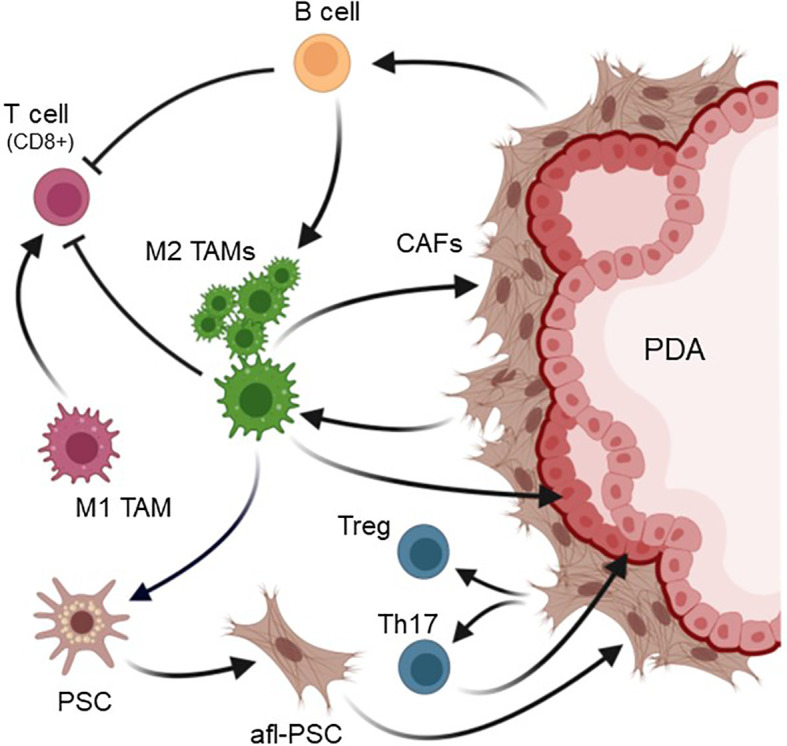
During development of pancreatic cancer macrophage-mediated inflammatory processes and the formation of cancerous lesions are tightly connected. Based on insight from mouse models we provide an overview on the functions of classically-activated pro-inflammatory and alternatively-activated anti-inflammatory macrophages in the initiation and progression of pancreatic cancer. We highlight their roles in earliest events of tumor initiation such as acinar-to-ductal metaplasia (ADM), organization of the fibrotic lesion microenvironment, and growth of low-grade (LG) lesions. We then discuss their roles as tumor-associated macrophages (TAM) in progression to high-grade (HG) lesions with a cancerous invasive phenotype and an immunosuppressive microenvironment. Another focus is on how targeting these macrophage populations can affect immunosuppression, fibrosis and responses to chemotherapy, and eventually how this knowledge could be used for novel therapy approaches for patients with pancreatic ductal adenocarcinoma (PDA).
在胰腺癌的发展过程中,巨噬细胞介导的炎症过程与癌性病变的形成紧密相连。基于从小鼠模型中获得的见解,我们概述了经典激活的促炎和选择性激活的抗炎巨噬细胞在胰腺癌的起始和进展中的作用。我们强调了它们在肿瘤起始的最早事件中的作用,如腺泡到导管的化生(ADM)、纤维病变微环境的组织、低级别(LG)病变的生长。然后,我们讨论了它们作为肿瘤相关巨噬细胞(TAM)在进展为具有癌症侵袭表型和免疫抑制微环境的高级别(HG)病变中的作用。另一个重点是如何针对这些巨噬细胞群来影响免疫抑制、纤维化和对化疗的反应,以及最终如何将这些知识用于患有胰腺导管腺癌(PDA)的患者的新的治疗方法。