Regenerative Medicine Institute, SSB 345, Los Angeles, CA 90048, USA.
Neural Dev. 2012 Jul 10;7:26. doi: 10.1186/1749-8104-7-26.
Recent findings have indicated the presence of a progenitor domain at the marginal zone/layer 1 of the cerebral cortex, and it has been suggested that these progenitors have neurogenic and gliogenic potential. However, their contribution to the histogenesis of the cortex remains poorly understood due to difficulties associated with genetically manipulating these unique cells in a population-specific manner.
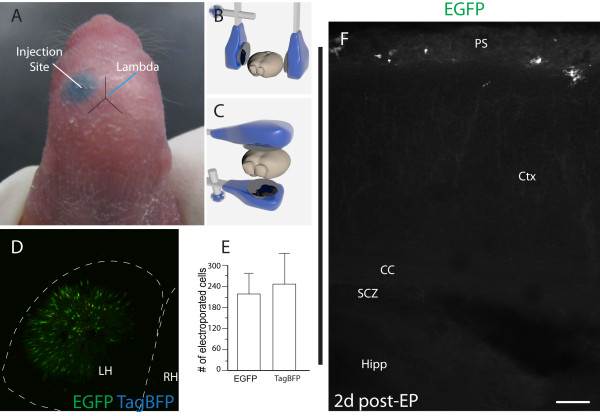
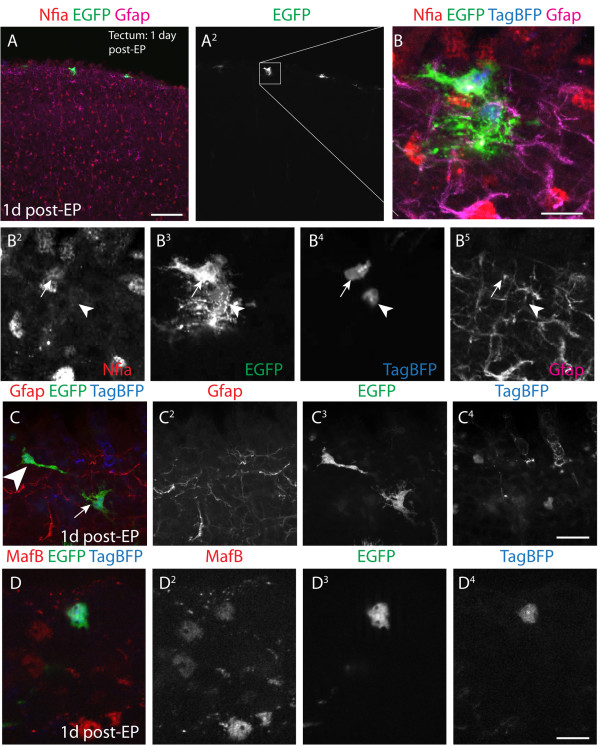
We have adapted the electroporation technique to target pial surface cells for rapid genetic manipulation at postnatal day 2. In vivo data show that most of these cells proliferate and progressively differentiate into both neuronal and glial subtypes. Furthermore, these cells localize to the superficial layers of the optic tectum and cerebral cortex prior to migration away from the surface.
We provide a foundation upon which future studies can begin to elucidate the molecular controls governing neural progenitor fate, migration, differentiation, and contribution to cortical and tectal histogenesis. Furthermore, specific genetic targeting of such neural progenitor populations will likely be of future clinical interest.
最近的研究结果表明,大脑皮层边缘区/第 1 层存在祖细胞区,这些祖细胞具有神经发生和神经胶质发生的潜力。然而,由于难以以特定于群体的方式对这些独特的细胞进行遗传操作,因此它们对皮质发生的贡献仍不清楚。
我们已经调整了电穿孔技术,以靶向软脑膜表面细胞,在出生后第 2 天进行快速基因操作。体内数据表明,这些细胞中的大多数会增殖并逐渐分化为神经元和神经胶质两种亚型。此外,这些细胞在迁移离开表面之前定位到视顶盖和大脑皮层的浅层。
我们为未来的研究提供了基础,这些研究可以开始阐明控制神经祖细胞命运、迁移、分化以及对皮质和顶盖组织发生的贡献的分子控制。此外,对这些神经祖细胞群体进行特定的遗传靶向可能是未来临床感兴趣的方向。