International Rice Research Institute, Los Baños Philippines.
J Exp Bot. 2012 Aug;63(13):4751-63. doi: 10.1093/jxb/ers150. Epub 2012 Jul 12.
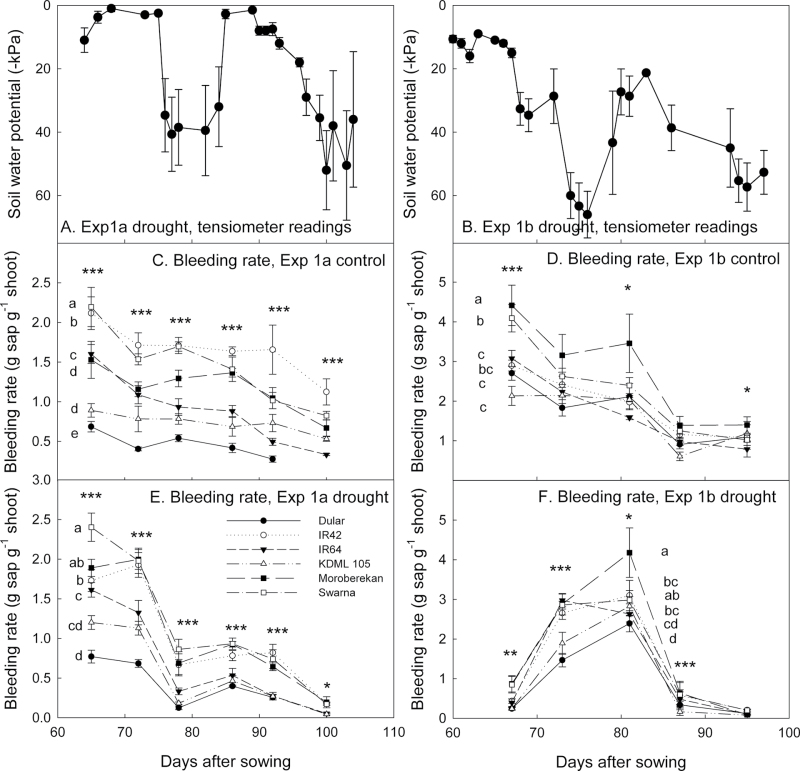
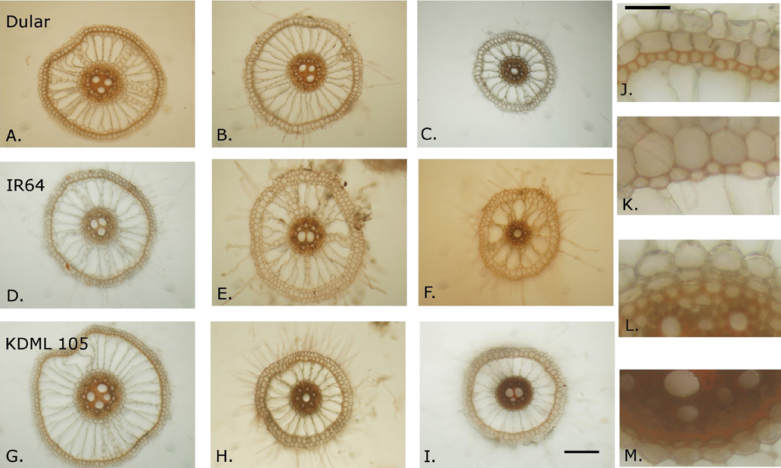
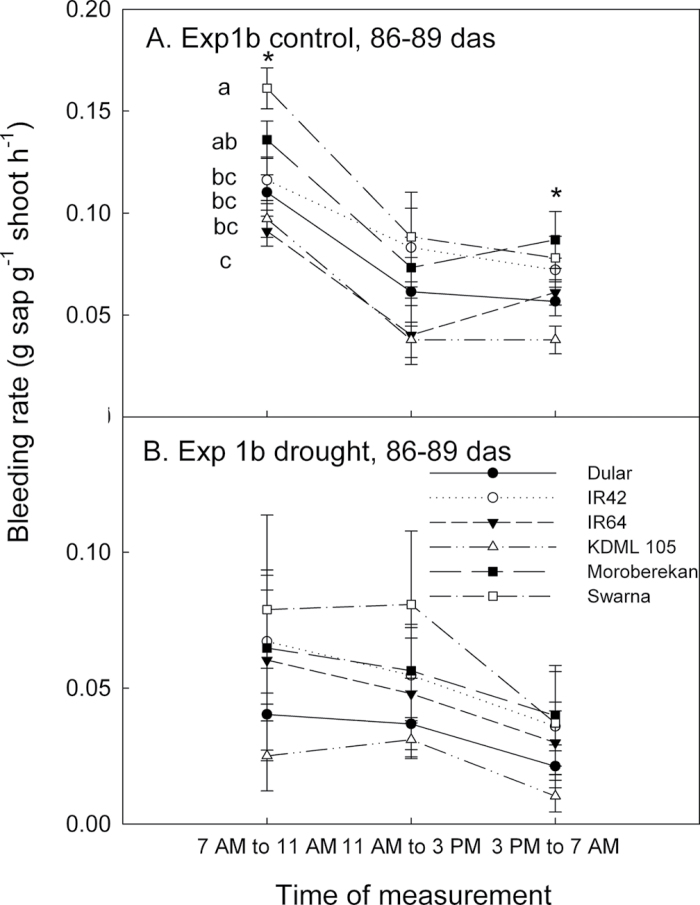
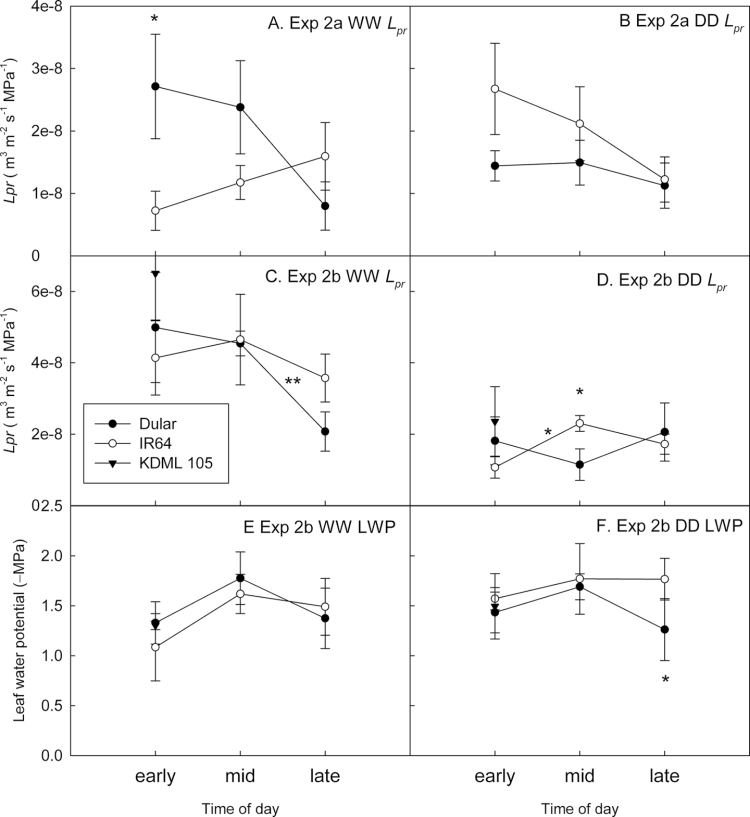
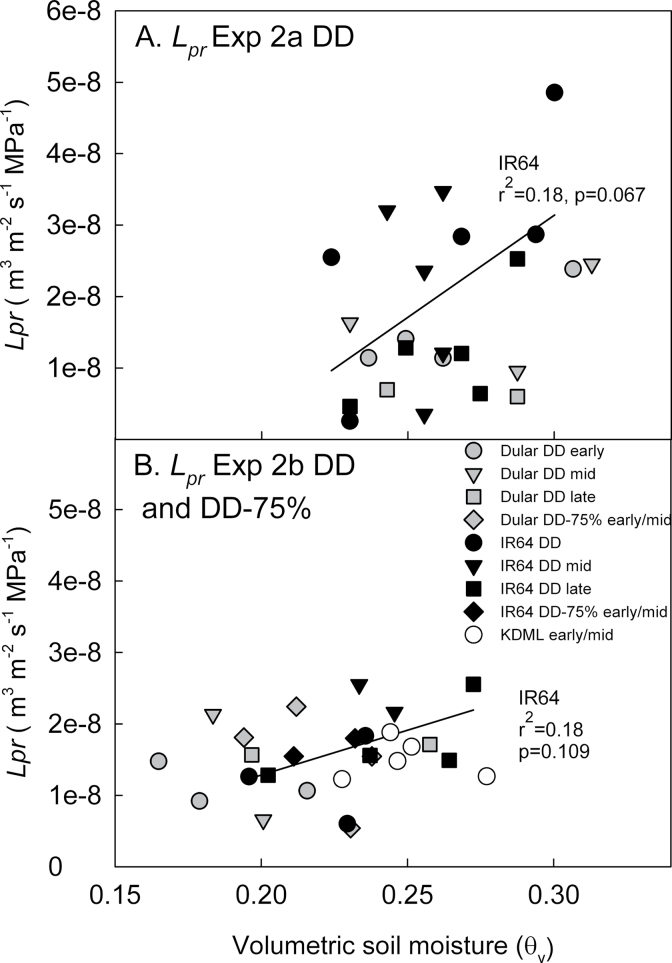
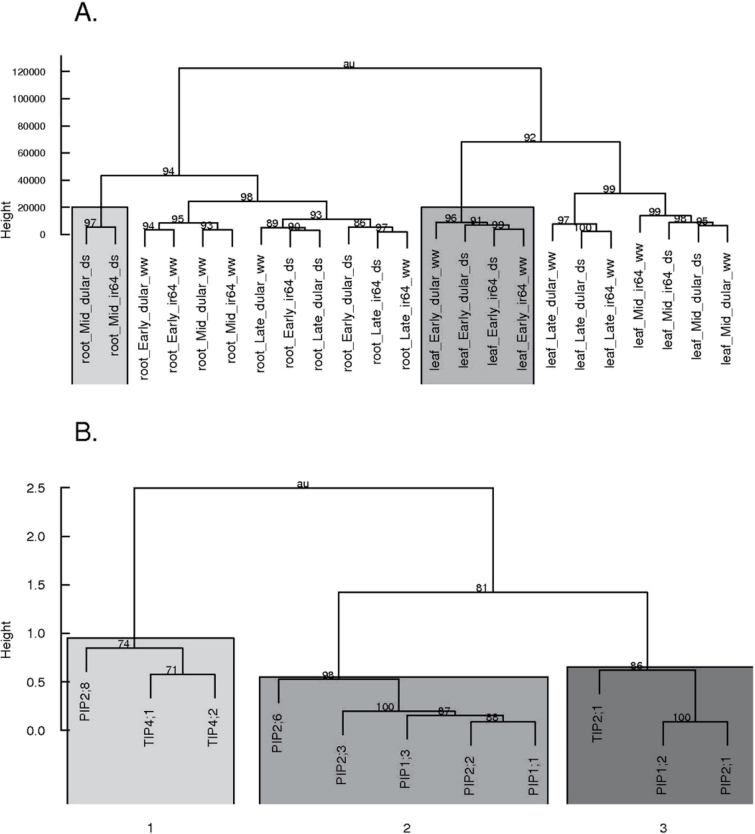
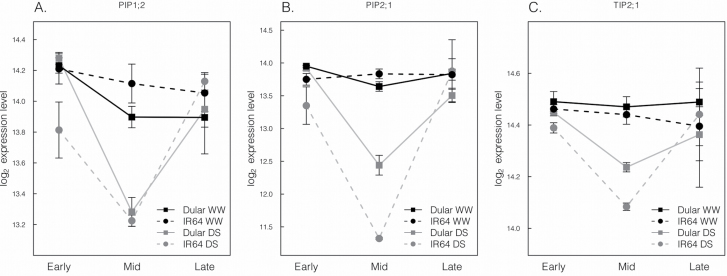
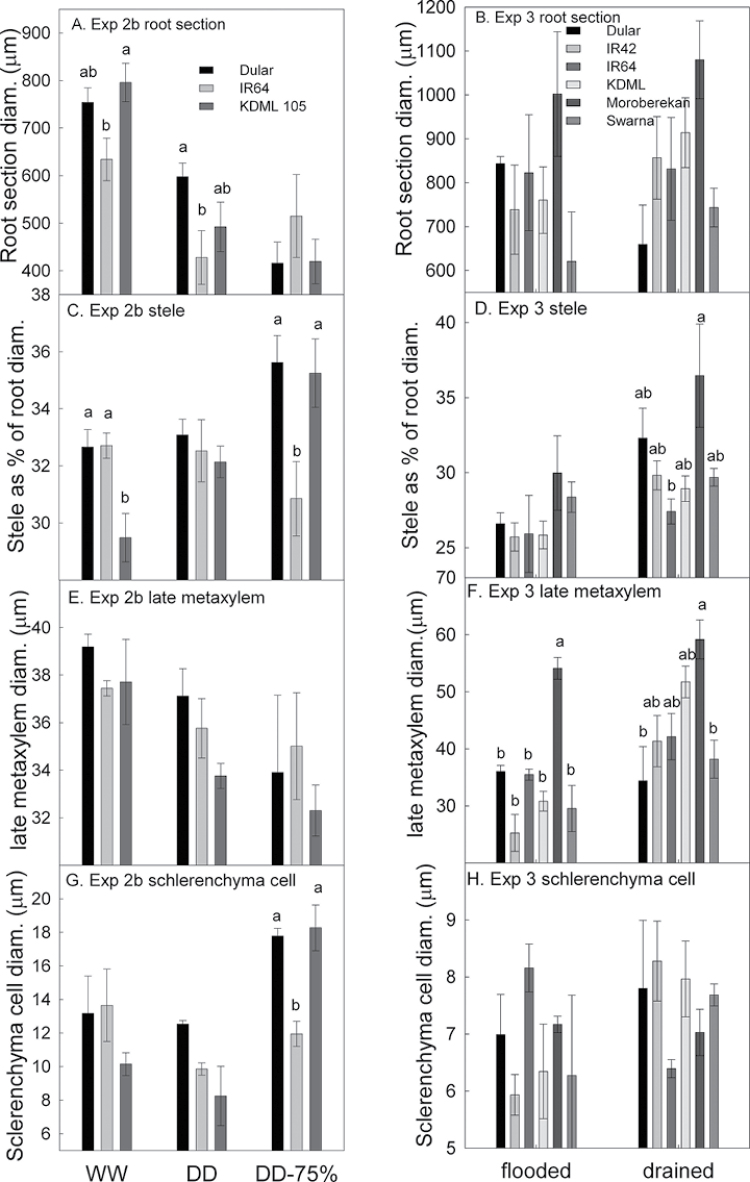
Lowland rice roots have a unique physiological response to drought because of their adaptation to flooded soil. Rice root attributes that facilitate growth under flooded conditions may affect rice response to drought, but the relative roles of root structural and functional characteristics for water uptake under drought in rice are not known. Morphological, anatomical, biochemical, and molecular attributes of soil-grown rice roots were measured to investigate the genotypic variability and genotype×environment interactions of water uptake under variable soil water regimes. Drought-resistant genotypes had the lowest night-time bleeding rates of sap from the root system in the field. Diurnal fluctuation predominated as the strongest source of variation for bleeding rates in the field and root hydraulic conductivity (Lpr) in the greenhouse, and was related to expression trends of various PIP and TIP aquaporins. Root anatomy was generally more responsive to drought treatments in drought-resistant genotypes. Suberization and compaction of sclerenchyma layer cells decreased under drought, whereas suberization of the endodermis increased, suggesting differential roles of these two cell layers for the retention of oxygen under flooded conditions (sclerenchyma layer) and retention of water under drought (endodermis). The results of this study point to the genetic variability in responsiveness to drought of rice roots in terms of morphology, anatomy, and function.
低地水稻的根系对干旱具有独特的生理响应,因为它们适应了水淹土壤。在水淹条件下促进生长的水稻根系特性可能会影响水稻对干旱的响应,但在水稻干旱条件下,根系结构和功能特性对水分吸收的相对作用尚不清楚。本研究通过测量土壤中生长的水稻根系的形态、解剖、生化和分子特性,来研究不同土壤水分条件下水分吸收的基因型变异性和基因型-环境互作。在田间,抗旱基因型的根系夜间汁液渗出率最低。昼夜波动是田间汁液渗出率和温室根系水力传导率(Lpr)变化的最强来源,与各种 PIP 和 TIP 水通道蛋白的表达趋势有关。在抗旱基因型中,根系解剖结构通常对干旱处理更为敏感。在干旱条件下,厚壁组织层细胞的木质化和紧实度降低,而内皮层的木质化增加,这表明这两个细胞层在水淹条件下(厚壁组织层)和干旱条件下(内皮层)对氧气和水分的保留有不同的作用。本研究的结果表明,水稻根系对干旱的响应在形态、解剖和功能方面存在遗传变异性。