Department of Cell Biology, University of Virginia, Charlottesville, Virginia, United States of America.
PLoS One. 2012;7(7):e40202. doi: 10.1371/journal.pone.0040202. Epub 2012 Jul 6.
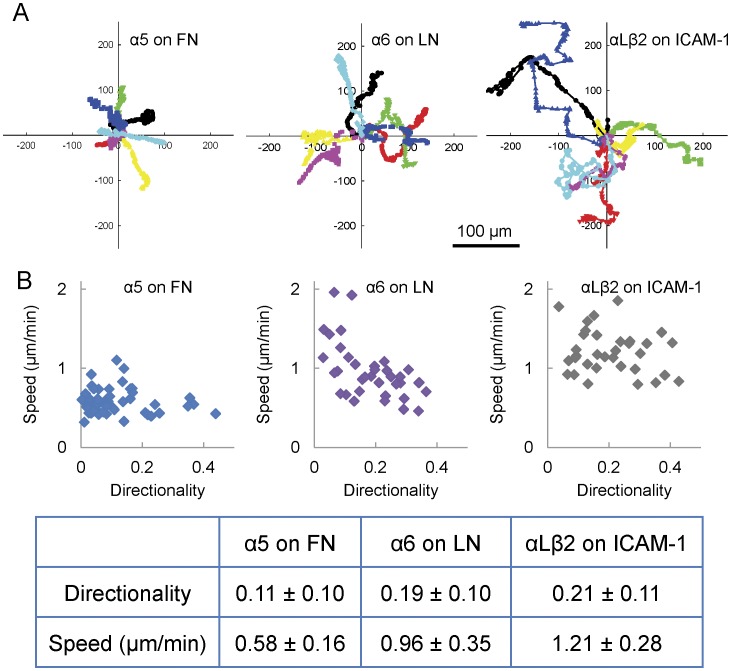
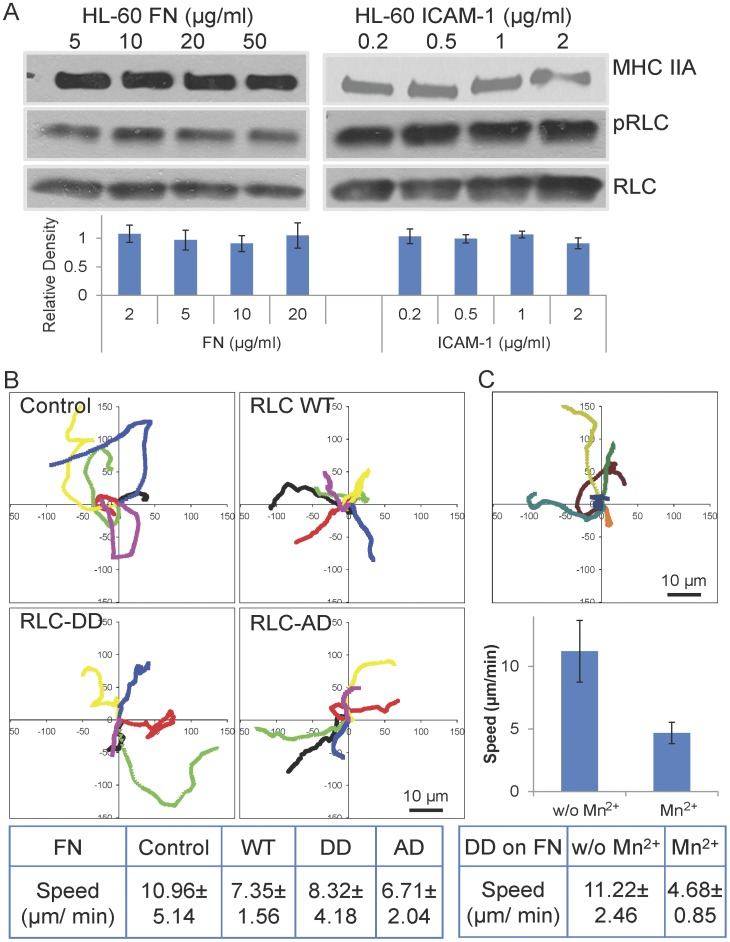
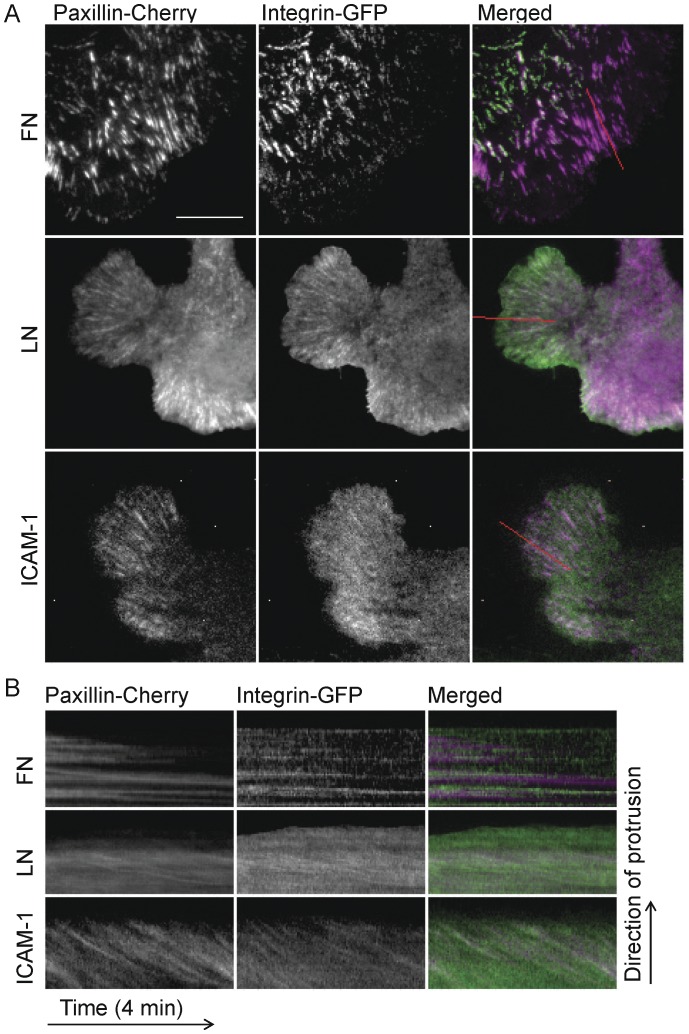
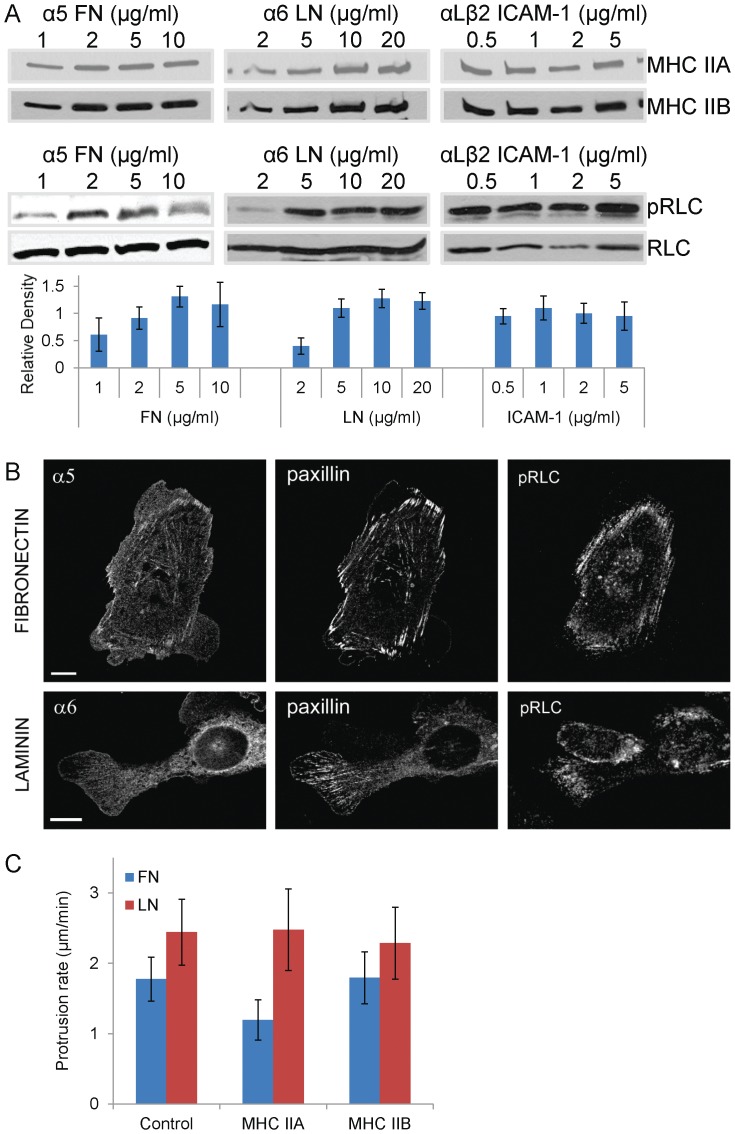
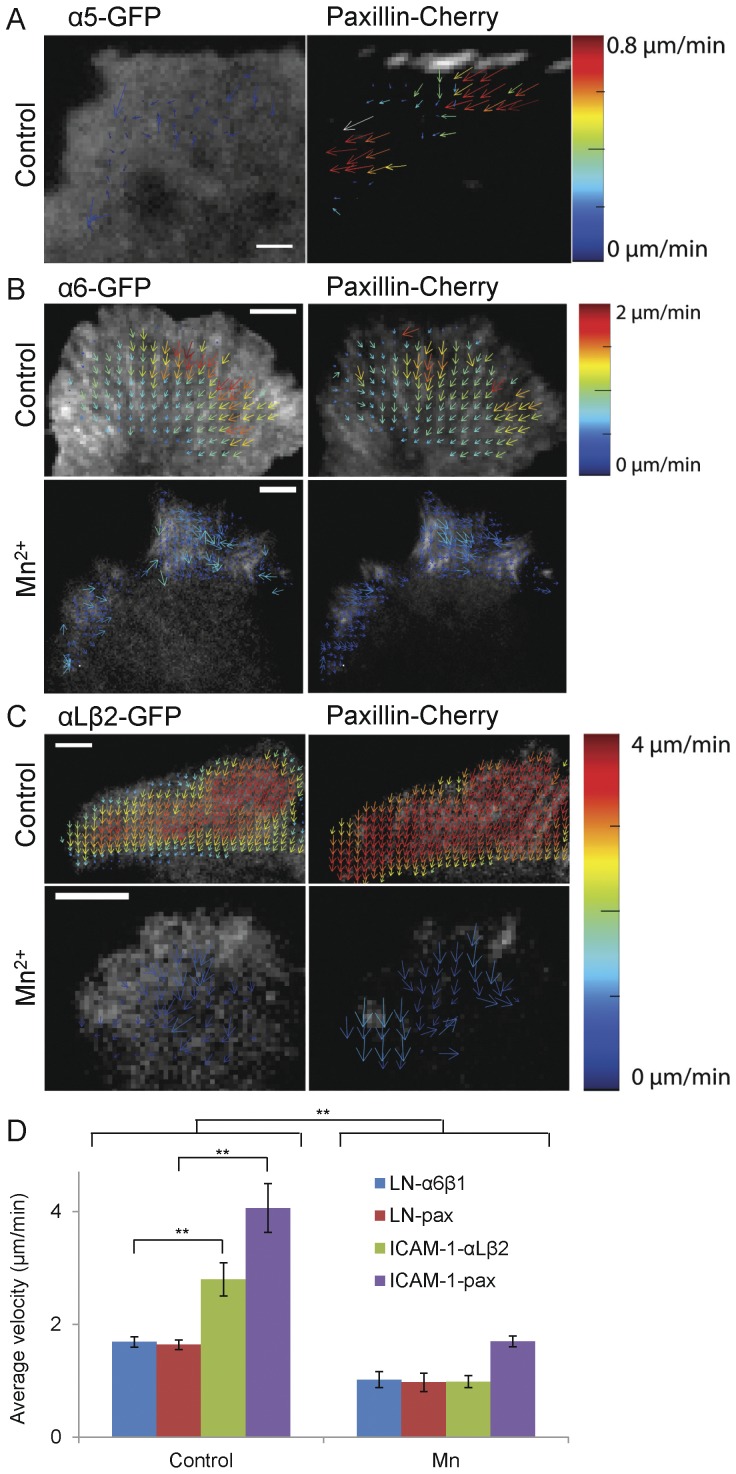
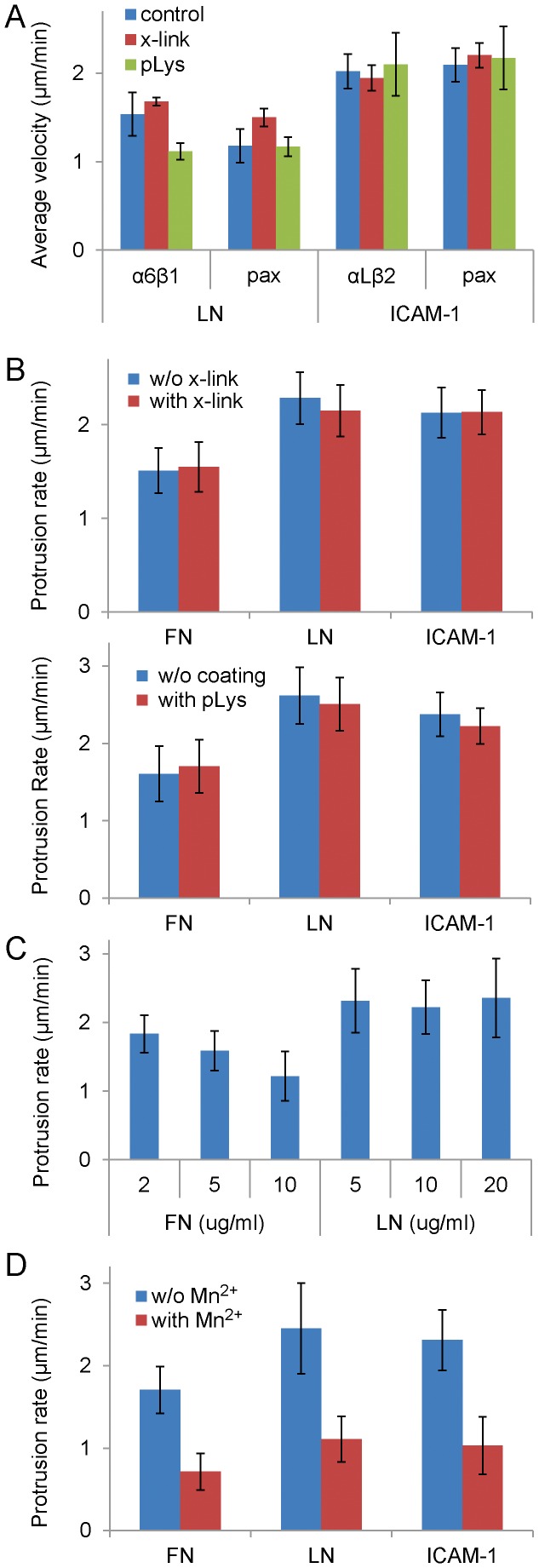
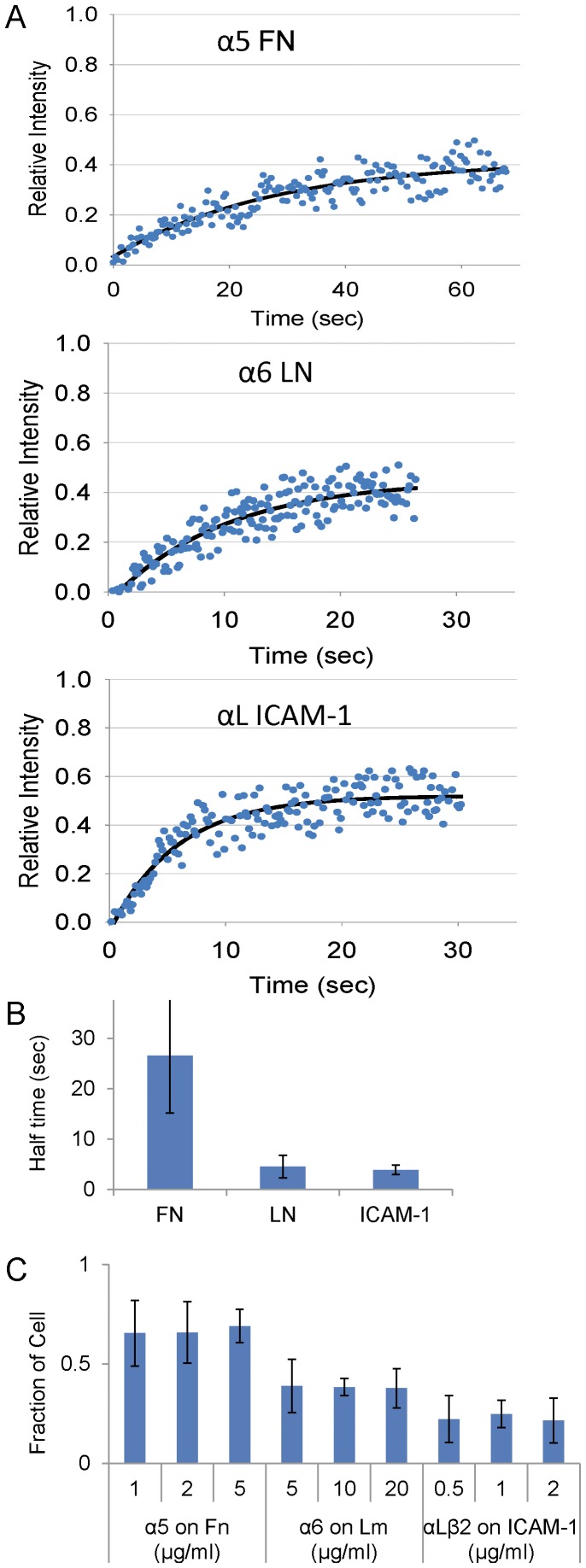
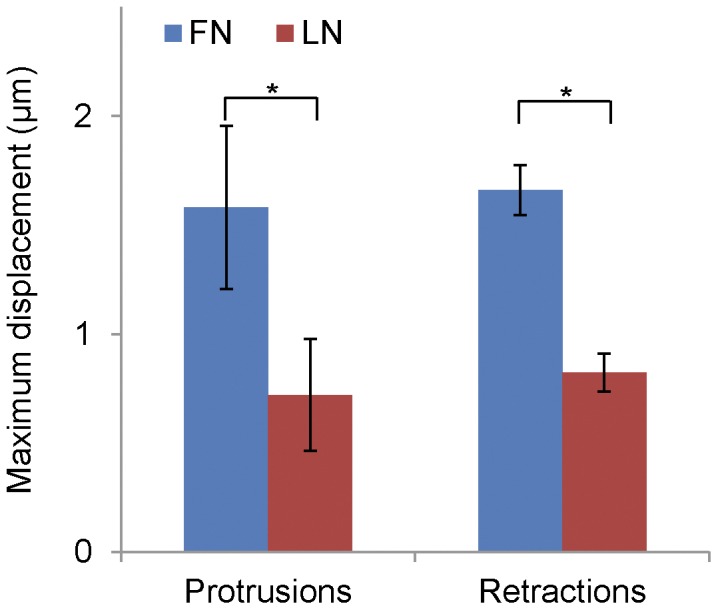
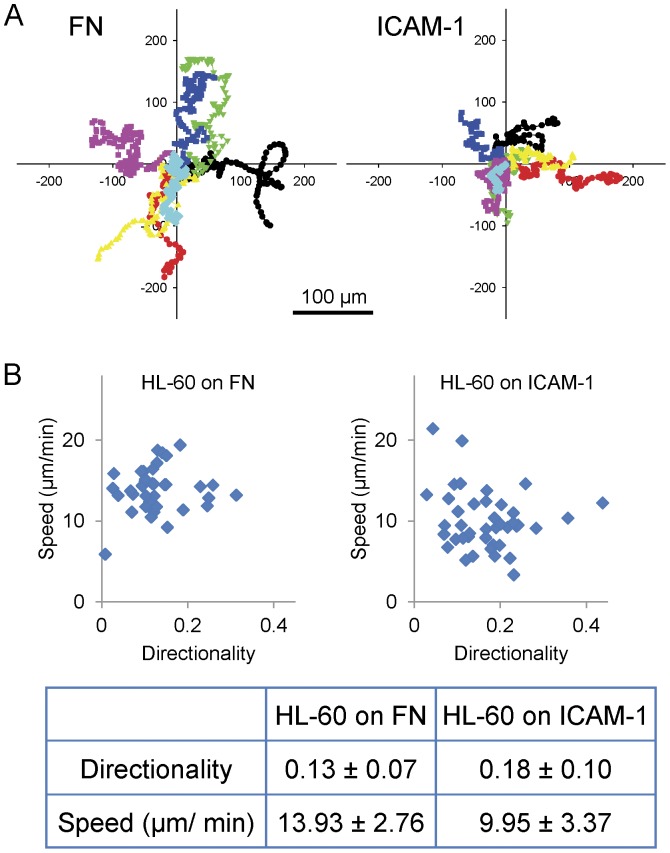
Adhesive and migratory behavior can be cell type, integrin, and substrate dependent. We have compared integrin and substrate differences using three integrin receptors: α5β1, α6β1, and αLβ2 expressed in a common cell type, CHO.B2 cells, which lack integrin α subunits, as well as in different cell types that express one or more of these integrins. We find that CHO.B2 cells expressing either α6β1 or αLβ2 integrins migrate and protrude faster and are more directionally persistent on laminin or ICAM-1, respectively, than CHO.B2 cells expressing α5β1 on fibronectin. Despite rapid adhesion maturation and the presence of large adhesions in both the α6β1- and αLβ2-expressing cells, they display robust tyrosine phosphorylation. In addition, whereas myosin II regulates adhesion maturation and turnover, protrusion rates, and polarity in cells migrating on fibronectin, surprisingly, it does not have comparable effects in cells expressing α6β1 or αLβ2. This apparent difference in the integration of myosin II activity, adhesion, and migration arises from alterations in the ligand-integrin-actin linkage (molecular clutch). The elongated adhesions in the protrusions of the α6β1-expressing cells on laminin or the αLβ2-expressing cells on ICAM-1 display a novel, rapid retrograde flux of integrin; this was largely absent in the large adhesions in protrusions of α5β1-expressing cells on fibronectin. Furthermore, the force these adhesions exert on the substrate in protrusive regions is reduced compared to similar regions in α5-expressing cells, and the adhesion strength is reduced. This suggests that intracellular forces are not efficiently transferred from actomyosin to the substratum due to altered adhesion strength, that is, avidity, affinity, or the ligand-integrin-actin interaction. Finally, we show that the migration of fast migrating leukocytes on fibronectin or ICAM-1 is also largely independent of myosin II; however, their adhesions are small and do not show retrograde fluxing suggesting other intrinsic factors determine their migration differences.
黏附和迁移行为可能依赖于细胞类型、整合素和基质。我们使用三种整合素受体(α5β1、α6β1 和 αLβ2)比较了整合素和基质的差异,这些受体在缺乏整合素 α 亚基的 CHO.B2 细胞以及表达其中一种或多种整合素的不同细胞类型中表达。我们发现,在纤连蛋白上表达α5β1 的 CHO.B2 细胞相比,表达α6β1 或αLβ2 整合素的 CHO.B2 细胞在层粘连蛋白或 ICAM-1 上迁移和伸出更快,并且方向更持久。尽管 α6β1 和 αLβ2 表达细胞的黏附迅速成熟,并且存在大的黏附物,但它们显示出强烈的酪氨酸磷酸化。此外,肌球蛋白 II 调节黏附成熟和周转、伸出率以及在纤连蛋白上迁移的细胞的极性,但令人惊讶的是,它在表达α6β1 或αLβ2 的细胞中没有类似的影响。这种肌球蛋白 II 活性、黏附和迁移整合的明显差异源于配体-整合素-肌动蛋白连接(分子离合器)的改变。在层粘连蛋白上表达α6β1 的细胞的伸出突起中的长形黏附物或在 ICAM-1 上表达αLβ2 的细胞的伸出突起中显示出新型的、快速的整合素逆行流;这在在纤连蛋白上表达α5β1 的细胞的大黏附物中基本不存在。此外,与表达α5 的细胞中相似区域相比,这些黏附物在伸出突起中对基质施加的力减小,并且黏附强度降低。这表明由于黏附强度(即亲合力、亲和力或配体-整合素-肌动蛋白相互作用)的改变,细胞内力不能有效地从肌球蛋白传递到基质。最后,我们表明,在纤连蛋白或 ICAM-1 上快速迁移的白细胞的迁移也在很大程度上独立于肌球蛋白 II;然而,它们的黏附物较小,并且没有显示逆行流,这表明其他内在因素决定了它们的迁移差异。