Institute of Clinical Medicine, School of Medicine, National Yang-Ming University, Taipei, Taiwan.
PLoS One. 2012;7(7):e40232. doi: 10.1371/journal.pone.0040232. Epub 2012 Jul 6.
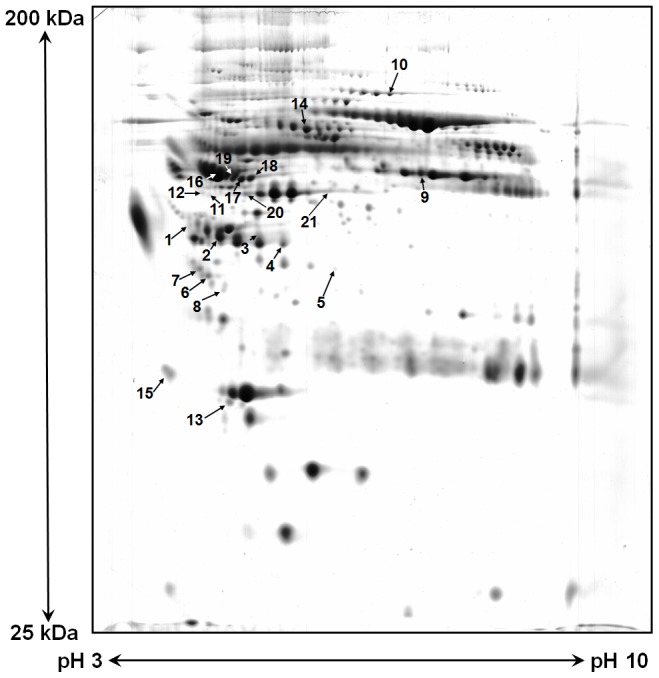
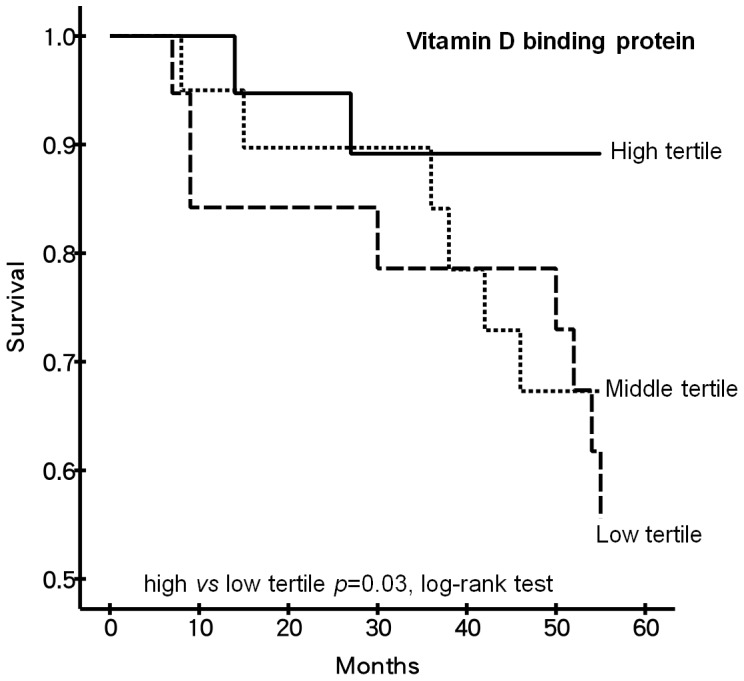
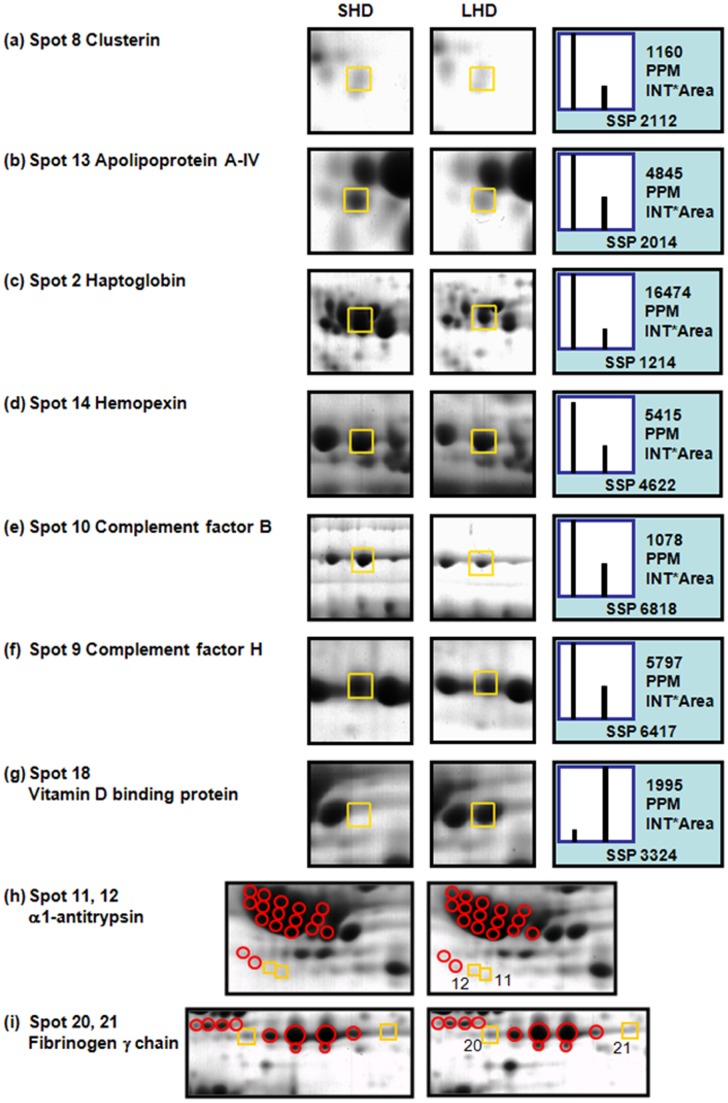
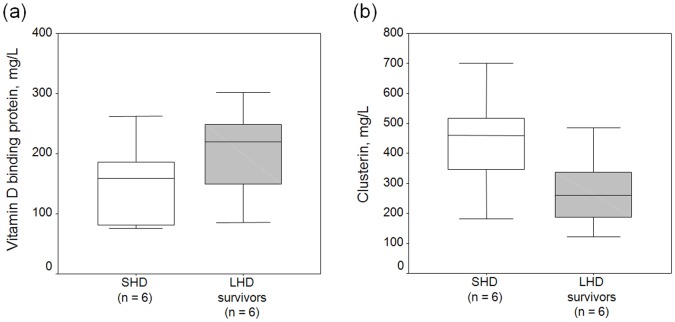
Hemodialysis (HD) patients are under recurrent circulatory stress, and hemodialysis has a high mortality rate. The characteristics of plasma proteomes in patients surviving long-term HD remain obscure, as well as the potential biomarkers in predicting prognoses. This study reports the proteome analyses of patient plasma from non-diabetic long-term HD (LHD, dialysis vintage 14.9±4.1 years, n = 6) and the age/sex/uremic etiology-comparable short-term HD (SHD, dialysis vintage 5.3±2.9 years, n = 6) using 2-DE and mass spectrometry. In addition, a 4-year longitudinal follow-up of 60 non-diabetic HD patients was subsequently conducted to analyze the baseline plasma proteins by ELISA in predicting prognosis. Compared to the SHD, the LHD survivors had increased plasma vitamin D binding proteins (DBP) and decreased clusterin, apolipoprotein A-IV, haptoglobin, hemopexin, complement factors B and H, and altered isoforms of α1-antitrypsin and fibrinogen gamma. During the 45.7±15 months for follow-up of the 60 HD patient cases, 16 patients died. Kaplan-Meier analysis demonstrated that HD patients with the lowest tertile of the baseline plasma DBP level have a significantly higher mortality rate. Multivariate Cox regression analysis further indicated that DBP is an independent predictor of mortality. In summary, the altered plasma proteins in LHD implicated accelerated atherosclerosis, defective antioxidative activity, increased inflammation/infection, and organ dysfunction. Furthermore, lower baseline plasma DBP in HD patients is related to mortality. The results suggest that the proteomic approach could help discover the potential biomarker in HD prognoses.
血液透析(HD)患者反复处于循环应激状态,且 HD 患者死亡率较高。长期 HD(透析龄 14.9±4.1 年,n=6)幸存患者的血浆蛋白质组特征以及预测预后的潜在生物标志物仍不清楚。本研究使用 2-DE 和质谱法报告了非糖尿病长期 HD(LHD)患者(透析龄 14.9±4.1 年,n=6)和年龄/性别/尿毒症病因可比短期 HD(SHD,透析龄 5.3±2.9 年,n=6)患者的血浆蛋白质组分析。此外,随后对 60 名非糖尿病 HD 患者进行了 4 年的纵向随访,通过 ELISA 分析基线血浆蛋白以预测预后。与 SHD 相比,LHD 幸存者的血浆维生素 D 结合蛋白(DBP)增加,而簇蛋白、载脂蛋白 A-IV、触珠蛋白、血红素结合蛋白、补体因子 B 和 H 以及α1-抗胰蛋白酶和纤维蛋白原γ的同工型减少。在对 60 例 HD 患者的 45.7±15 个月随访中,有 16 名患者死亡。Kaplan-Meier 分析表明,基线血浆 DBP 水平最低三分位的 HD 患者死亡率显著更高。多变量 Cox 回归分析进一步表明,DBP 是死亡率的独立预测因子。总之,LHD 中改变的血浆蛋白提示动脉粥样硬化加速、抗氧化活性缺陷、炎症/感染增加和器官功能障碍。此外,HD 患者的基线血浆 DBP 水平较低与死亡率相关。结果表明,蛋白质组学方法可以帮助发现 HD 预后的潜在生物标志物。