MRC Laboratory of Molecular Biology, Division of Protein and Nucleic Acid Chemistry, Hills Road, Cambridge CB2 0QH, UK.
Trends Immunol. 2012 Oct;33(10):475-87. doi: 10.1016/j.it.2012.06.003. Epub 2012 Jul 14.
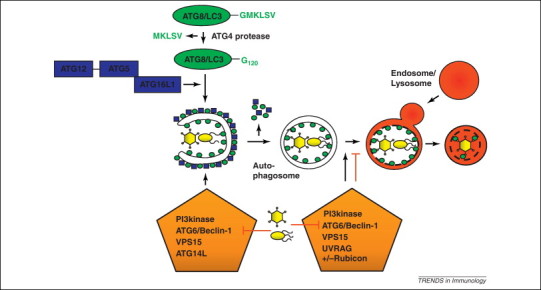
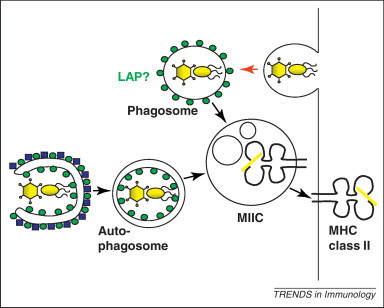
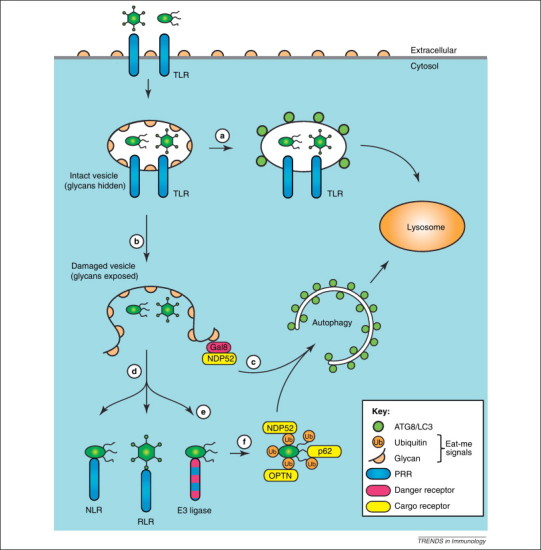
Autophagy is an evolutionarily conserved homeostatic process by which cells deliver cytoplasmic material for degradation into lysosomes. Autophagy may have evolved as a nutrient-providing homeostatic pathway induced upon starvation, but with the acquisition of cargo receptors, autophagy has become an important cellular defence mechanism as well as a generator of antigenic peptides for major histocompatibility complex (MHC) presentation. We propose that autophagy efficiently protects against microbes encountering the cytosolic environment accidentally, for example, upon phagosomal damage, whereas pathogens routinely accessing the host cytosol have evolved to avoid or even benefit from autophagy.
自噬是一种进化上保守的细胞内稳态过程,通过该过程,细胞将细胞质物质递送至溶酶体进行降解。自噬可能是在饥饿时作为提供营养的内稳态途径而进化的,但随着货物受体的获得,自噬已成为一种重要的细胞防御机制,也是主要组织相容性复合物 (MHC) 呈递的抗原肽的生成机制。我们提出,自噬可以有效地防止微生物意外进入细胞质环境,例如,在吞噬体受损时,而通常进入宿主细胞质的病原体已经进化到可以逃避甚至受益于自噬。