Centre national de la recherche scientifique, UMR-5203, Institut de Génomique Fonctionnelle, F-34000 Montpellier, Cedex 16, France.
J Cell Biol. 2012 Jul 23;198(2):251-63. doi: 10.1083/jcb.201110101. Epub 2012 Jul 16.
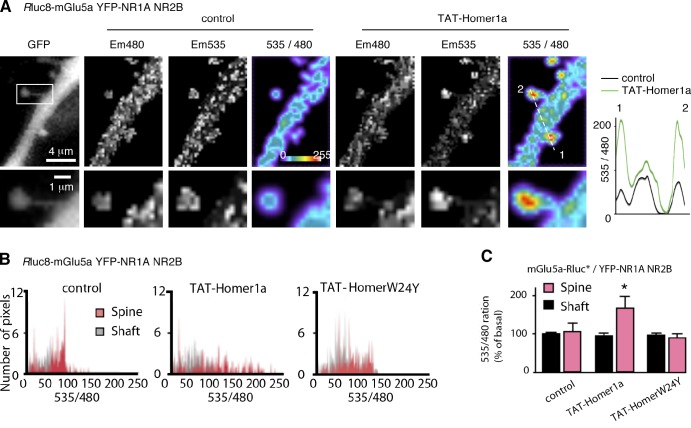
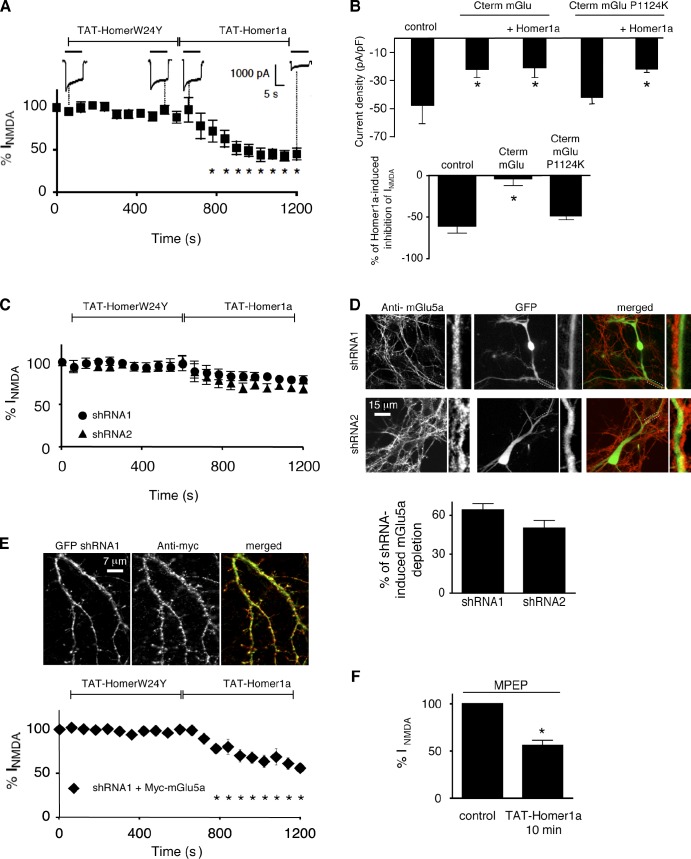
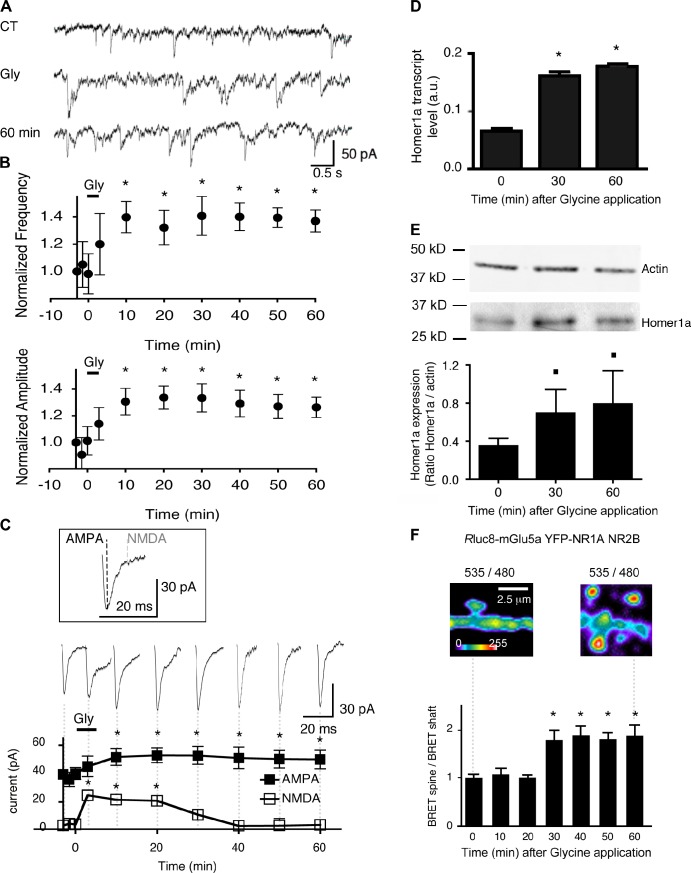
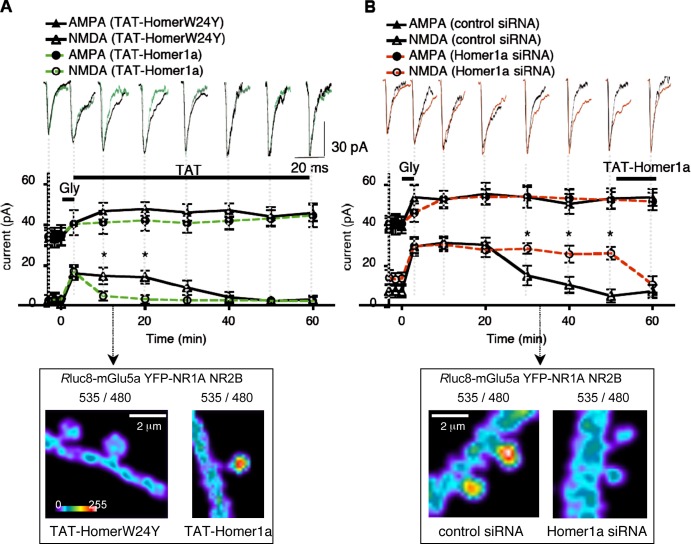
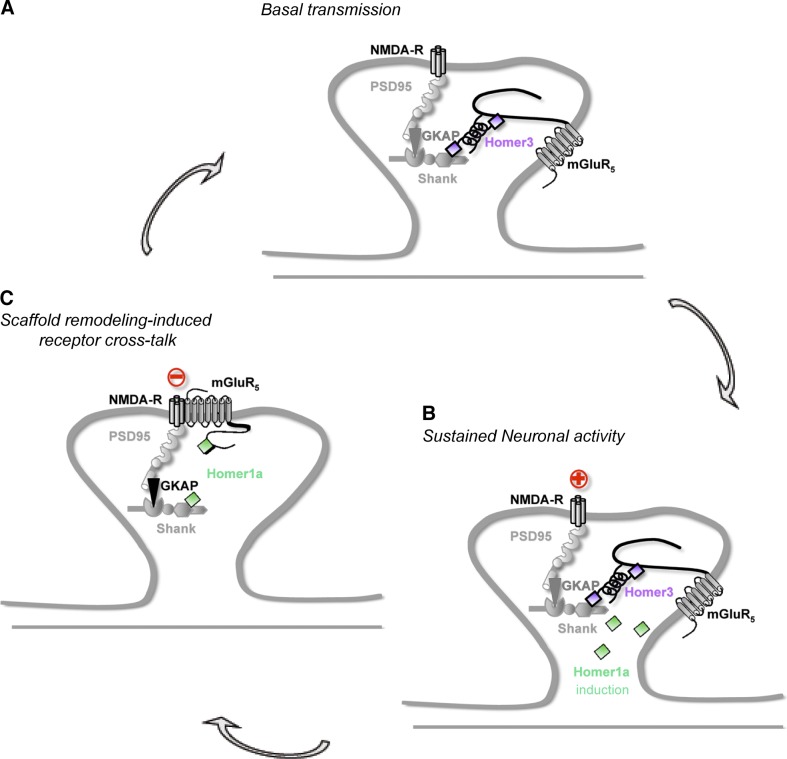
Scaffolding proteins interact with membrane receptors to control signaling pathways and cellular functions. However, the dynamics and specific roles of interactions between different components of scaffold complexes are poorly understood because of the dearth of methods available to monitor binding interactions. Using a unique combination of single-cell bioluminescence resonance energy transfer imaging in living neurons and electrophysiological recordings, in this paper, we depict the role of glutamate receptor scaffold complex remodeling in space and time to control synaptic transmission. Despite a broad colocalization of the proteins in neurons, we show that spine-confined assembly/disassembly of this scaffold complex, physiologically triggered by sustained activation of synaptic NMDA (N-methyl-d-aspartate) receptors, induces physical association between ionotropic (NMDA) and metabotropic (mGlu5a) synaptic glutamate receptors. This physical interaction results in an mGlu5a receptor-mediated inhibition of NMDA currents, providing an activity-dependent negative feedback loop on NMDA receptor activity. Such protein scaffold remodeling represents a form of homeostatic control of synaptic excitability.
支架蛋白与膜受体相互作用,以控制信号通路和细胞功能。然而,由于缺乏监测结合相互作用的方法,支架复合物中不同成分之间相互作用的动态和特定作用仍知之甚少。在这项研究中,我们使用活神经元中单细胞生物发光共振能量转移成像和电生理记录的独特组合,描绘了谷氨酸受体支架复合物重塑在空间和时间上控制突触传递的作用。尽管这些蛋白在神经元中广泛共定位,但我们发现,这种支架复合物在空间上的局限组装/解组装,是由突触 NMDA(N-甲基-D-天冬氨酸)受体的持续激活生理触发的,诱导离子型(NMDA)和代谢型(mGlu5a)突触谷氨酸受体之间的物理关联。这种物理相互作用导致 mGlu5a 受体介导的 NMDA 电流抑制,为 NMDA 受体活性提供了一种活动依赖性的负反馈回路。这种蛋白质支架重塑代表了突触兴奋性的一种自身稳态控制形式。