• 文献检索
  • 文档翻译
  • 深度研究
  • 学术资讯
  • Suppr Zotero 插件Zotero 插件
  • 邀请有礼
  • 套餐&价格
  • 历史记录
应用&插件
Suppr Zotero 插件Zotero 插件浏览器插件Mac 客户端Windows 客户端微信小程序
定价
高级版会员购买积分包购买API积分包
服务
文献检索文档翻译深度研究API 文档MCP 服务
关于我们
关于 Suppr公司介绍联系我们用户协议隐私条款
关注我们

Suppr 超能文献

核心技术专利:CN118964589B侵权必究
粤ICP备2023148730 号-1Suppr @ 2026

文献检索

告别复杂PubMed语法,用中文像聊天一样搜索,搜遍4000万医学文献。AI智能推荐,让科研检索更轻松。

立即免费搜索

文件翻译

保留排版,准确专业,支持PDF/Word/PPT等文件格式,支持 12+语言互译。

免费翻译文档

深度研究

AI帮你快速写综述,25分钟生成高质量综述,智能提取关键信息,辅助科研写作。

立即免费体验

野生型p53会削弱对化疗的反应:化不利为有利以保护正常细胞。

Wt p53 impairs response to chemotherapy: make lemonade to spare normal cells.

作者信息

Blagosklonny Mikhail V

机构信息

Department of Cell Stress Biology, Roswell Park Cancer Institute, Buffalo, NY, USA.

出版信息

Oncotarget. 2012 Jun;3(6):601-7. doi: 10.18632/oncotarget.548.

DOI:10.18632/oncotarget.548
PMID:22802145
原文链接:https://pmc.ncbi.nlm.nih.gov/articles/PMC3442293/
Abstract

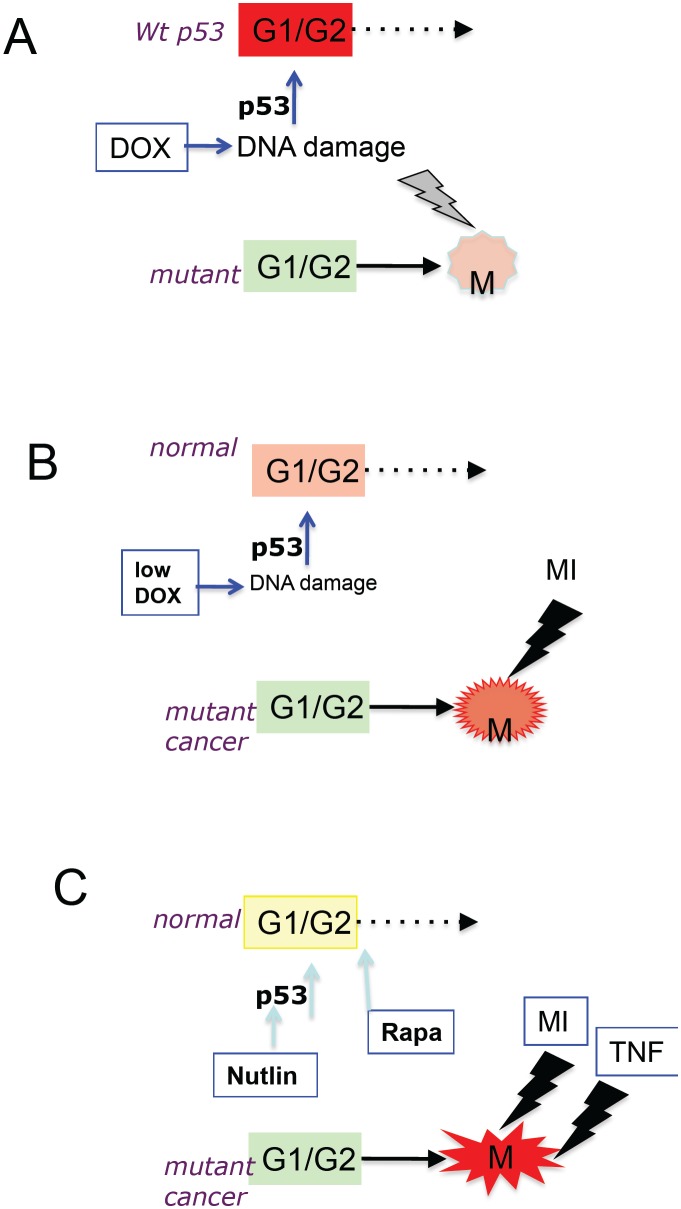
As published recently in Cancer Cell, p53 impairs the apoptotic response to chemotherapy and clinical outcome in breast cancer. I discuss that, while treating tumors lacking wt p53, this phenomenon can be exploited to protect normal cells from chemotherapy because all normal cells have wt p53. Also, several therapeutic paradigms can be reassessed, including the role of cellular senescence in cancer therapy.

摘要

正如最近发表在《癌细胞》杂志上的文章所述,p53会削弱乳腺癌对化疗的凋亡反应及临床疗效。我认为,在治疗缺乏野生型p53的肿瘤时,这一现象可被利用来保护正常细胞免受化疗影响,因为所有正常细胞都有野生型p53。此外,包括细胞衰老在癌症治疗中的作用在内的几种治疗模式都可重新评估。
https://cdn.ncbi.nlm.nih.gov/pmc/blobs/2c5c/3442293/cc50393b3e4f/oncotarget-03-601-g001.jpg

相似文献

1
Wt p53 impairs response to chemotherapy: make lemonade to spare normal cells.野生型p53会削弱对化疗的反应:化不利为有利以保护正常细胞。
Oncotarget. 2012 Jun;3(6):601-7. doi: 10.18632/oncotarget.548.
2
p53-mediated senescence impairs the apoptotic response to chemotherapy and clinical outcome in breast cancer.p53 介导的衰老会损害乳腺癌对化疗的凋亡反应和临床预后。
Cancer Cell. 2012 Jun 12;21(6):793-806. doi: 10.1016/j.ccr.2012.04.027.
3
p53 in breast cancer subtypes and new insights into response to chemotherapy.p53 在乳腺癌亚型中的作用及对化疗反应的新认识。
Breast. 2013 Aug;22 Suppl 2:S27-9. doi: 10.1016/j.breast.2013.07.005.
4
Tumor suppression and therapy sensitization of localized and metastatic breast cancer by adenovirus p53.腺病毒p53对局部和转移性乳腺癌的肿瘤抑制及治疗增敏作用
Hum Gene Ther. 2001 May 1;12(7):763-72. doi: 10.1089/104303401750148685.
5
INO-1001, a novel inhibitor of poly(ADP-ribose) polymerase, enhances tumor response to doxorubicin.INO-1001,一种新型聚(ADP-核糖)聚合酶抑制剂,可增强肿瘤对阿霉素的反应。
Invest New Drugs. 2008 Feb;26(1):1-5. doi: 10.1007/s10637-007-9072-5. Epub 2007 Jul 13.
6
Tannic acid ameliorates doxorubicin-induced cardiotoxicity and potentiates its anti-cancer activity: potential role of tannins in cancer chemotherapy.鞣酸可改善阿霉素引起的心脏毒性,并增强其抗癌活性:鞣质在癌症化疗中的潜在作用。
Toxicol Appl Pharmacol. 2011 Mar 15;251(3):191-200. doi: 10.1016/j.taap.2010.12.012. Epub 2010 Dec 29.
7
Genetic determinants of response to chemotherapy in transgenic mouse mammary and salivary tumors.转基因小鼠乳腺和唾液腺肿瘤对化疗反应的遗传决定因素。
Oncogene. 2000 Feb 21;19(8):1114-22. doi: 10.1038/sj.onc.1203275.
8
Reprogramming of the estrogen responsive transcriptome contributes to tamoxifen-dependent protection against tumorigenesis in the p53 null mammary epithelial cells.重编程雌激素反应转录组有助于 p53 缺失的乳腺上皮细胞中他莫昔芬依赖的肿瘤发生保护。
PLoS One. 2018 Mar 28;13(3):e0194913. doi: 10.1371/journal.pone.0194913. eCollection 2018.
9
Benzodiazepinedione inhibitors of the Hdm2:p53 complex suppress human tumor cell proliferation in vitro and sensitize tumors to doxorubicin in vivo.Hdm2:p53复合物的苯二氮卓二酮抑制剂在体外抑制人肿瘤细胞增殖,并在体内使肿瘤对多柔比星敏感。
Mol Cancer Ther. 2006 Jan;5(1):160-9. doi: 10.1158/1535-7163.MCT-05-0199.
10
P53 genotype as a determinant of ER expression and tamoxifen response in the MMTV-Wnt-1 model of mammary carcinogenesis.P53 基因型作为 ER 表达和他莫昔芬反应的决定因素在 MMTV-Wnt-1 乳腺肿瘤发生模型中的作用。
Breast Cancer Res Treat. 2011 Nov;130(2):399-408. doi: 10.1007/s10549-010-1308-y. Epub 2010 Dec 30.

引用本文的文献

1
The imidazoacridinone C-1311 induces p53-dependent senescence or p53-independent apoptosis and sensitizes cancer cells to radiation.咪唑并吖啶酮C-1311可诱导p53依赖性衰老或p53非依赖性凋亡,并使癌细胞对辐射敏感。
Oncotarget. 2017 May 9;8(19):31187-31198. doi: 10.18632/oncotarget.16102.
2
Silencing of CDK2, but not CDK1, separates mitogenic from anti-apoptotic signaling, sensitizing p53 defective cells for synthetic lethality.沉默细胞周期蛋白依赖性激酶2(CDK2)而非细胞周期蛋白依赖性激酶1(CDK1),可将促有丝分裂信号与抗凋亡信号分离,使p53缺陷细胞对合成致死敏感。
Cell Cycle. 2016 Dec;15(23):3203-3209. doi: 10.1080/15384101.2016.1241915. Epub 2016 Nov 10.
3

本文引用的文献

1
Therapeutic response to CDK4/6 inhibition in breast cancer defined by ex vivo analyses of human tumors.基于对人源肿瘤的体外分析定义乳腺癌对 CDK4/6 抑制的治疗反应。
Cell Cycle. 2012 Jul 15;11(14):2756-61. doi: 10.4161/cc.21195.
2
p53-mediated senescence impairs the apoptotic response to chemotherapy and clinical outcome in breast cancer.p53 介导的衰老会损害乳腺癌对化疗的凋亡反应和临床预后。
Cancer Cell. 2012 Jun 12;21(6):793-806. doi: 10.1016/j.ccr.2012.04.027.
3
An evaluation of small-molecule p53 activators as chemoprotectants ameliorating adverse effects of anticancer drugs in normal cells.
Cooperation of Nutlin-3a and a Wip1 inhibitor to induce p53 activity.
Nutlin-3a与Wip1抑制剂协同诱导p53活性。
Oncotarget. 2016 May 31;7(22):31623-38. doi: 10.18632/oncotarget.9302.
4
Mdm2 inhibition confers protection of p53-proficient cells from the cytotoxic effects of Wee1 inhibitors.Mdm2抑制可使p53功能正常的细胞免受Wee1抑制剂的细胞毒性作用。
Oncotarget. 2015 Oct 20;6(32):32339-52. doi: 10.18632/oncotarget.5891.
5
Exploiting replicative stress to treat cancer.利用复制压力治疗癌症。
Nat Rev Drug Discov. 2015 Jun;14(6):405-23. doi: 10.1038/nrd4553. Epub 2015 May 8.
6
Deregulation of the EGFR/PI3K/PTEN/Akt/mTORC1 pathway in breast cancer: possibilities for therapeutic intervention.乳腺癌中表皮生长因子受体/磷脂酰肌醇-3激酶/磷酸酶和张力蛋白同源物/蛋白激酶B/哺乳动物雷帕霉素靶蛋白复合物1信号通路的失调:治疗干预的可能性
Oncotarget. 2014 Jul 15;5(13):4603-50. doi: 10.18632/oncotarget.2209.
7
Silencing of Dicer1 temporally separates pro- and anti-apoptotic signaling and confers susceptibility to chemotherapy in p53 mutated cells.Dicer1基因沉默在时间上分离了促凋亡信号和抗凋亡信号,并赋予p53突变细胞对化疗的敏感性。
Cell Cycle. 2014;13(14):2192-8. doi: 10.4161/cc.29216. Epub 2014 May 20.
8
ETV1 positively regulates transcription of tumor suppressor ARF.ETV1正向调控肿瘤抑制因子ARF的转录。
Cancer Biol Ther. 2013 Dec;14(12):1167-73. doi: 10.4161/cbt.26883. Epub 2013 Oct 23.
9
Molecular dynamics of the full-length p53 monomer.全长 p53 单体的分子动力学。
Cell Cycle. 2013 Sep 15;12(18):3098-108. doi: 10.4161/cc.26162. Epub 2013 Sep 5.
10
Battle of the eternal rivals: restoring functional p53 and inhibiting Polo-like kinase 1 as cancer therapy.永恒对手之间的较量:恢复功能性p53并抑制Polo样激酶1作为癌症治疗方法
Oncotarget. 2013 Jul;4(7):958-71. doi: 10.18632/oncotarget.1096.
小分子 p53 激活剂作为化学保护剂,评价其对正常细胞中抗癌药物不良反应的改善作用。
Cell Cycle. 2012 May 1;11(9):1851-61. doi: 10.4161/cc.20254.
4
Cell cycle arrest is not yet senescence, which is not just cell cycle arrest: terminology for TOR-driven aging.细胞周期停滞并非衰老,衰老不仅仅是细胞周期停滞:关于TOR驱动衰老的术语。
Aging (Albany NY). 2012 Mar;4(3):159-65. doi: 10.18632/aging.100443.
5
Fasting cycles retard growth of tumors and sensitize a range of cancer cell types to chemotherapy.禁食周期会延缓肿瘤生长,并使多种癌细胞类型对化疗更敏感。
Sci Transl Med. 2012 Mar 7;4(124):124ra27. doi: 10.1126/scitranslmed.3003293. Epub 2012 Feb 8.
6
Multiple roles of cyclin-dependent kinase 4/6 inhibitors in cancer therapy.细胞周期蛋白依赖性激酶 4/6 抑制剂在癌症治疗中的多重作用。
J Natl Cancer Inst. 2012 Mar 21;104(6):476-87. doi: 10.1093/jnci/djs002. Epub 2012 Feb 1.
7
NCI's provocative questions on cancer: some answers to ignite discussion.美国国立癌症研究所关于癌症的引发思考的问题:一些引发讨论的答案。
Oncotarget. 2011 Dec;2(12):1352-67. doi: 10.18632/oncotarget.432.
8
Molecular damage in cancer: an argument for mTOR-driven aging.癌症中的分子损伤:mTOR驱动衰老的一个论据。
Aging (Albany NY). 2011 Dec;3(12):1130-41. doi: 10.18632/aging.100422.
9
TLR9 agonist protects mice from radiation-induced gastrointestinal syndrome.TLR9 激动剂可保护小鼠免受辐射诱导的胃肠道综合征。
PLoS One. 2012;7(1):e29357. doi: 10.1371/journal.pone.0029357. Epub 2012 Jan 4.
10
Intermittent supplementation with rapamycin as a dietary restriction mimetic.间歇性补充雷帕霉素作为一种模拟饮食限制的方法。
Aging (Albany NY). 2011 Nov;3(11):1039-40. doi: 10.18632/aging.100401.