Department of Pharmaceutical Sciences and Technology, University of Turin, Turin, Italy.
Int J Nanomedicine. 2012;7:3309-18. doi: 10.2147/IJN.S30912. Epub 2012 Jun 29.
The development of nonviral gene delivery systems is one of the most intriguing topics in nanomedicine. However, despite the advances made in recent years, several key issues remain unsettled. One of the main problems relates to the difficulty in designing nanodevices for targeted delivery of genes and other drugs to specific anatomic sites. In this study, we describe the development of a novel chitosan nanobubble-based gene delivery system for ultrasound-triggered release.
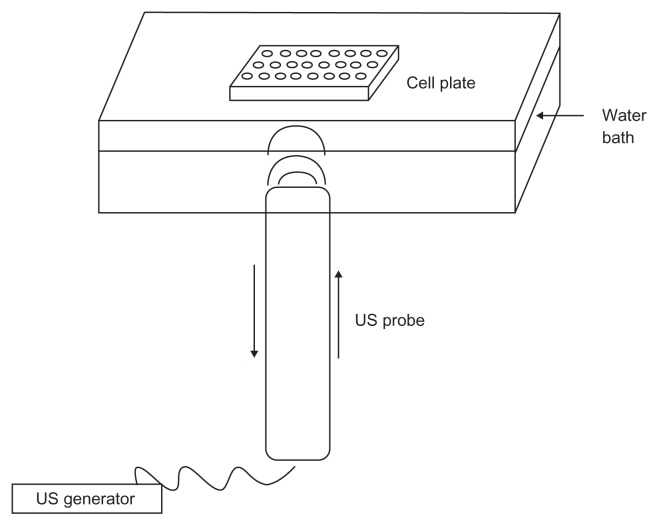
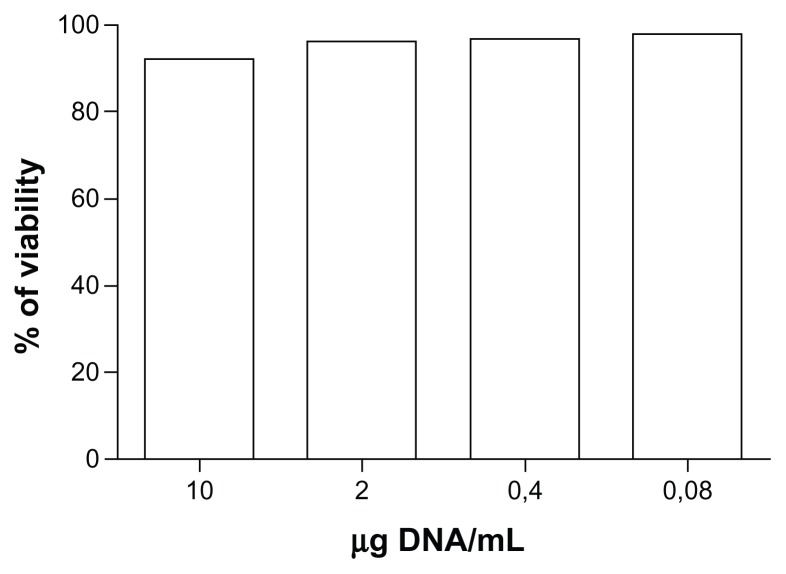
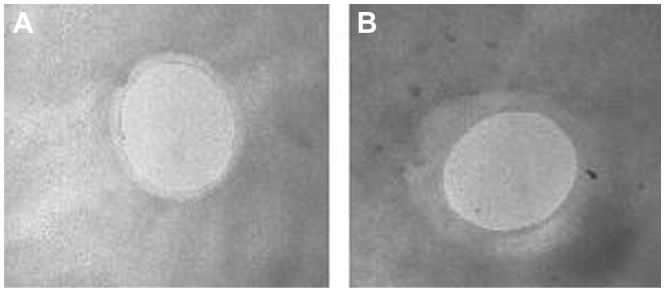
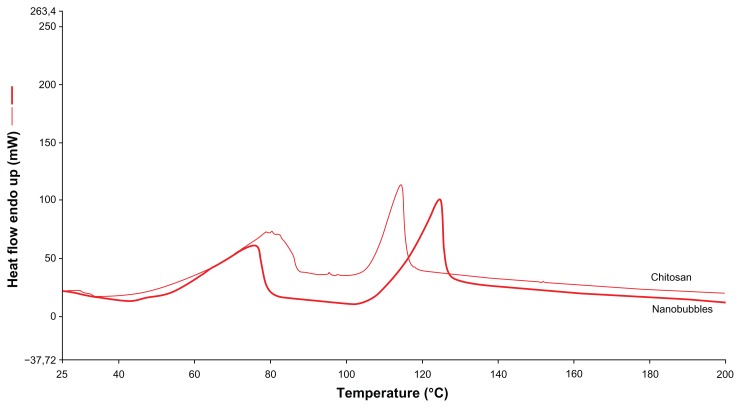
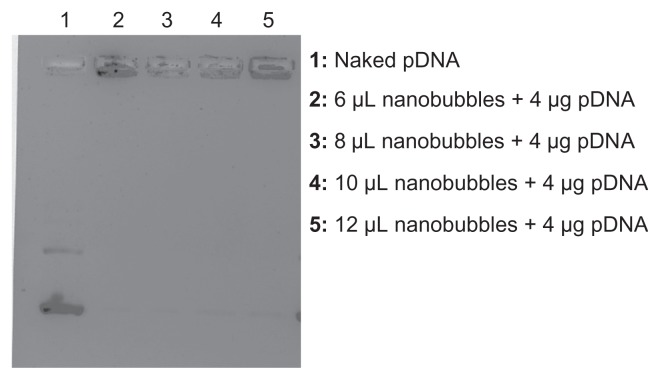
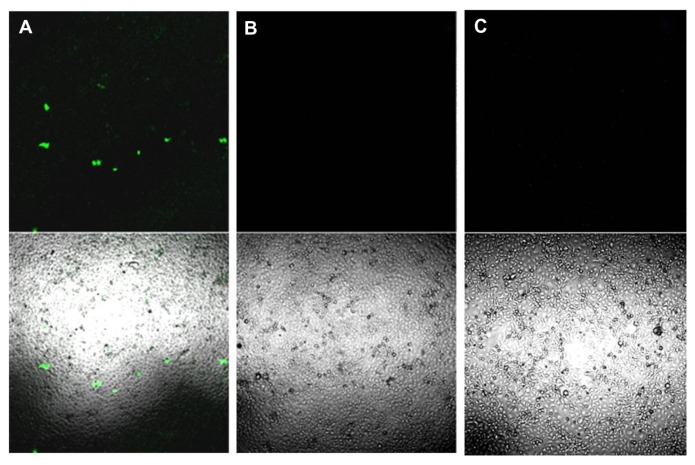
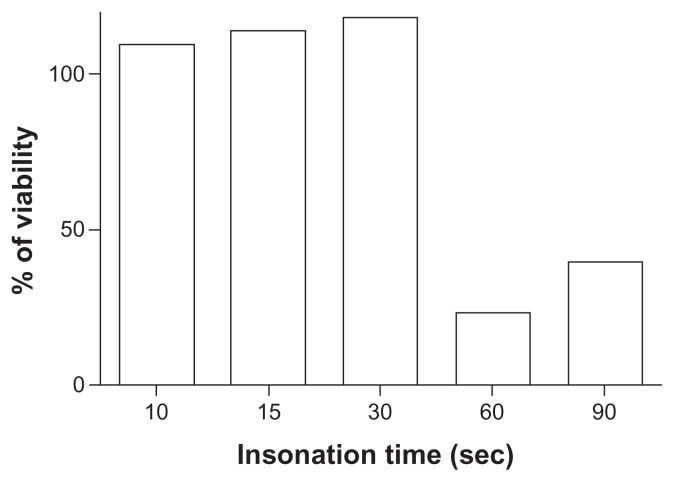
Chitosan was selected for the nanobubble shell because of its low toxicity, low immunogenicity, and excellent biocompatibility, while the core consisted of perfluoropentane. DNA-loaded chitosan nanobubbles were formed with a mean diameter of less than 300 nm and a positive surface charge. Transmission electron microscopic analysis confirmed composition of the core-shell structure. The ability of the chitosan nanobubbles to complex with and protect DNA was confirmed by agarose gel assay. Chitosan nanobubbles were found to be stable following insonation (2.5 MHz) for up to 3 minutes at 37°C. DNA release was evaluated in vitro in both the presence and absence of ultrasound. The release of chitosan nanobubble-bound plasmid DNA occurred after just one minute of insonation. In vitro transfection experiments were performed by exposing adherent COS7 cells to ultrasound in the presence of different concentrations of plasmid DNA-loaded nanobubbles. In the absence of ultrasound, nanobubbles failed to trigger transfection at all concentrations tested. In contrast, 30 seconds of ultrasound promoted a moderate degree of transfection. Cell viability experiments demonstrated that neither ultrasound nor the nanobubbles affected cell viability under these experimental conditions.
Based on these results, chitosan nanobubbles have the potential to be promising tools for ultrasound-mediated DNA delivery.
非病毒基因传递系统的发展是纳米医学中最引人关注的课题之一。然而,尽管近年来取得了进展,但仍有几个关键问题尚未解决。其中一个主要问题涉及到设计纳米器件以将基因和其他药物靶向递送到特定解剖部位的困难。在本研究中,我们描述了一种新型基于壳聚糖纳米气泡的超声触发释放基因传递系统的开发。
壳聚糖因其低毒性、低免疫原性和优良的生物相容性而被选为纳米气泡壳,而核心则由全氟戊烷组成。载 DNA 的壳聚糖纳米气泡的平均直径小于 300nm,表面带正电荷。透射电子显微镜分析证实了核壳结构的组成。琼脂糖凝胶分析证实了壳聚糖纳米气泡与 DNA 结合并保护 DNA 的能力。壳聚糖纳米气泡在 37°C 下经超声处理 3 分钟仍保持稳定。在有或没有超声的情况下,评估了壳聚糖纳米气泡结合的质粒 DNA 的体外释放情况。在超声作用仅 1 分钟后,壳聚糖纳米气泡结合的质粒 DNA 发生了释放。通过将贴壁的 COS7 细胞暴露于不同浓度的载质粒 DNA 的纳米气泡存在下的超声中,进行了体外转染实验。在没有超声的情况下,纳米气泡在所有测试浓度下均未能引发转染。相比之下,30 秒的超声促进了适度的转染。细胞活力实验表明,在这些实验条件下,超声和纳米气泡均不影响细胞活力。
基于这些结果,壳聚糖纳米气泡有可能成为超声介导 DNA 传递的有前途的工具。