Informatics and Analysis, Merck Research Laboratories, Merck & Co., Inc., West Point, PA 19486, USA.
Mol Syst Biol. 2012 Jul 17;8:594. doi: 10.1038/msb.2012.24.
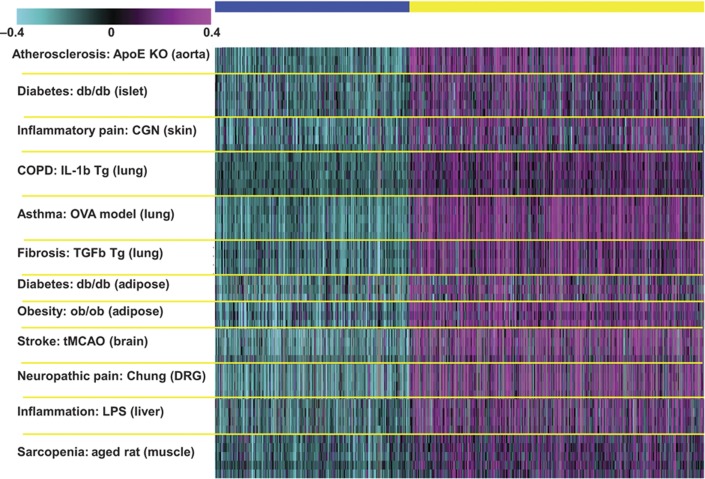
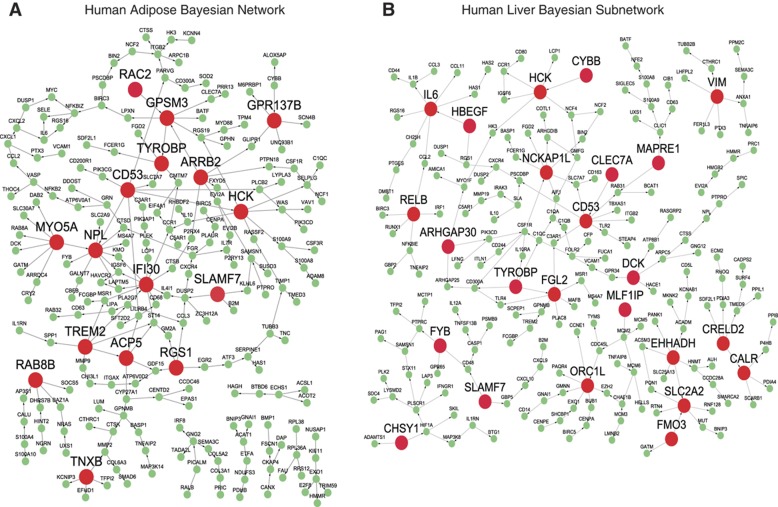
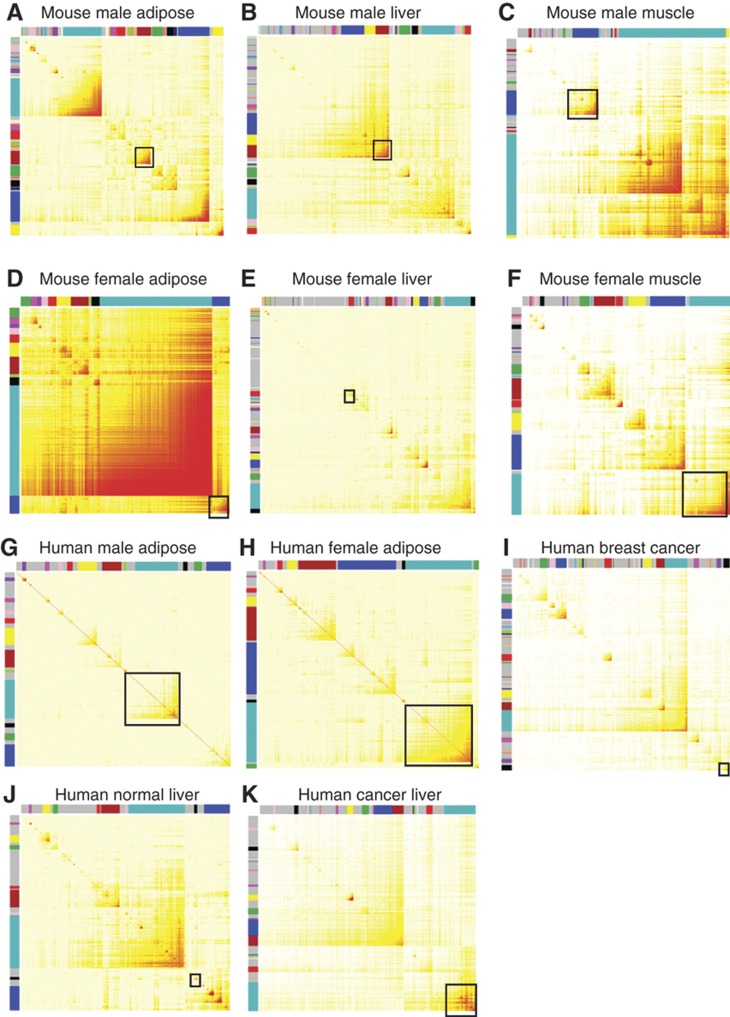
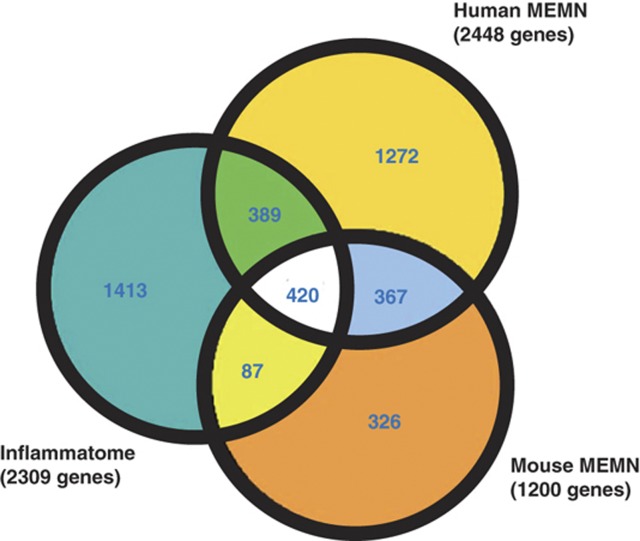
Common inflammatome gene signatures as well as disease-specific signatures were identified by analyzing 12 expression profiling data sets derived from 9 different tissues isolated from 11 rodent inflammatory disease models. The inflammatome signature significantly overlaps with known drug targets and co-expressed gene modules linked to metabolic disorders and cancer. A large proportion of genes in this signature are tightly connected in tissue-specific Bayesian networks (BNs) built from multiple independent mouse and human cohorts. Both the inflammatome signature and the corresponding consensus BNs are highly enriched for immune response-related genes supported as causal for adiposity, adipokine, diabetes, aortic lesion, bone, muscle, and cholesterol traits, suggesting the causal nature of the inflammatome for a variety of diseases. Integration of this inflammatome signature with the BNs uncovered 151 key drivers that appeared to be more biologically important than the non-drivers in terms of their impact on disease phenotypes. The identification of this inflammatome signature, its network architecture, and key drivers not only highlights the shared etiology but also pinpoints potential targets for intervention of various common diseases.
通过分析源自 11 种不同啮齿类动物炎症疾病模型的 9 种不同组织的 12 个表达谱数据集,鉴定出了常见炎症组基因特征以及疾病特异性特征。炎症组特征与已知药物靶点以及与代谢紊乱和癌症相关的共表达基因模块显著重叠。该特征中的很大一部分基因在由多个独立的小鼠和人类队列构建的组织特异性贝叶斯网络(BNs)中紧密相连。炎症组特征和相应的共识 BNs 都高度富集了与肥胖、脂肪因子、糖尿病、主动脉病变、骨骼、肌肉和胆固醇特征相关的免疫反应基因,这表明炎症组对多种疾病具有因果关系。将该炎症组特征与 BNs 集成,揭示了 151 个关键驱动因素,这些因素在对疾病表型的影响方面似乎比非驱动因素更为重要。该炎症组特征、其网络架构和关键驱动因素的鉴定不仅突出了共同的病因,而且还指出了各种常见疾病干预的潜在靶点。