Center for Models of Life, Niels Bohr Institute, University of Copenhagen, Copenhagen, Denmark.
mBio. 2012 Jul 17;3(4):e00126-12. doi: 10.1128/mBio.00126-12. Print 2012.
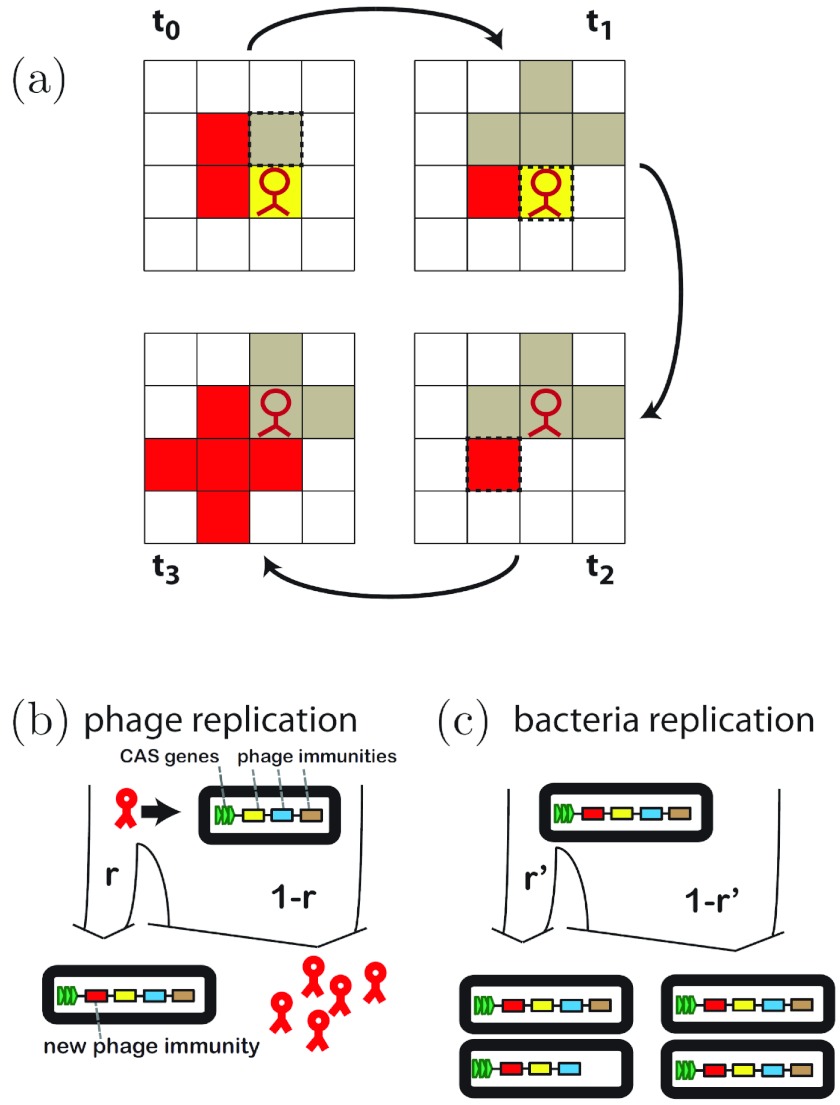
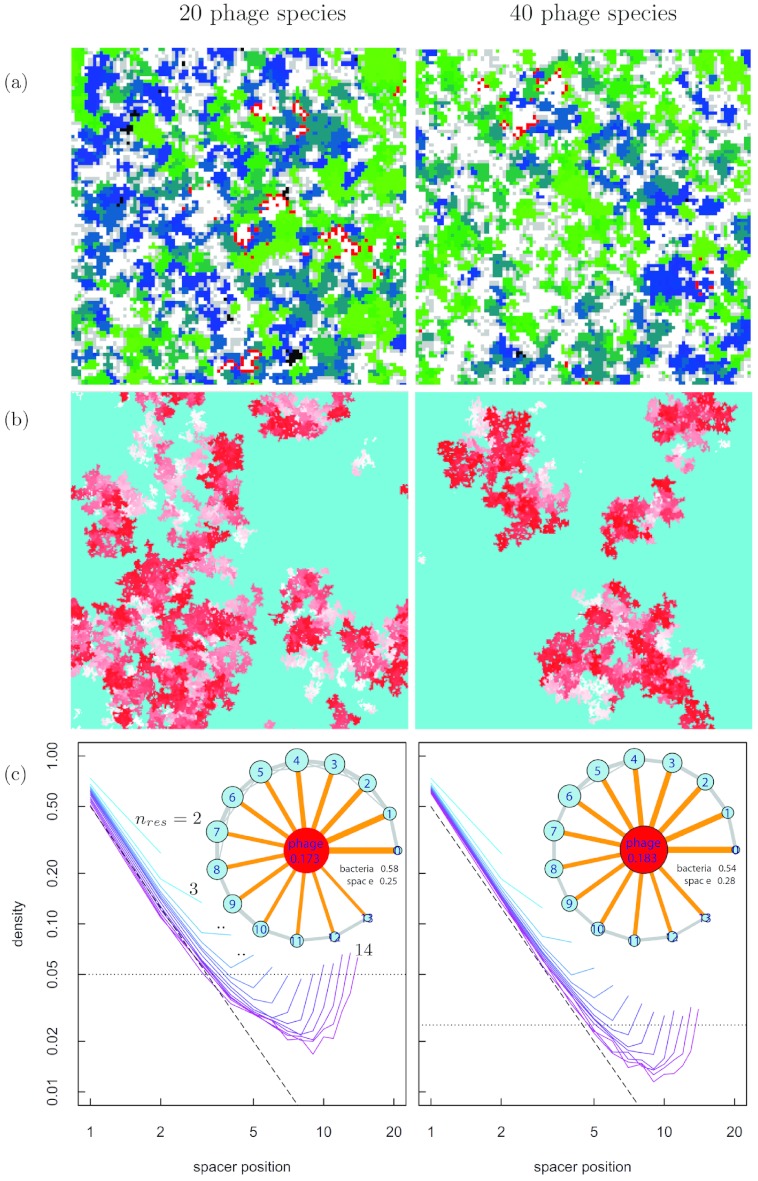
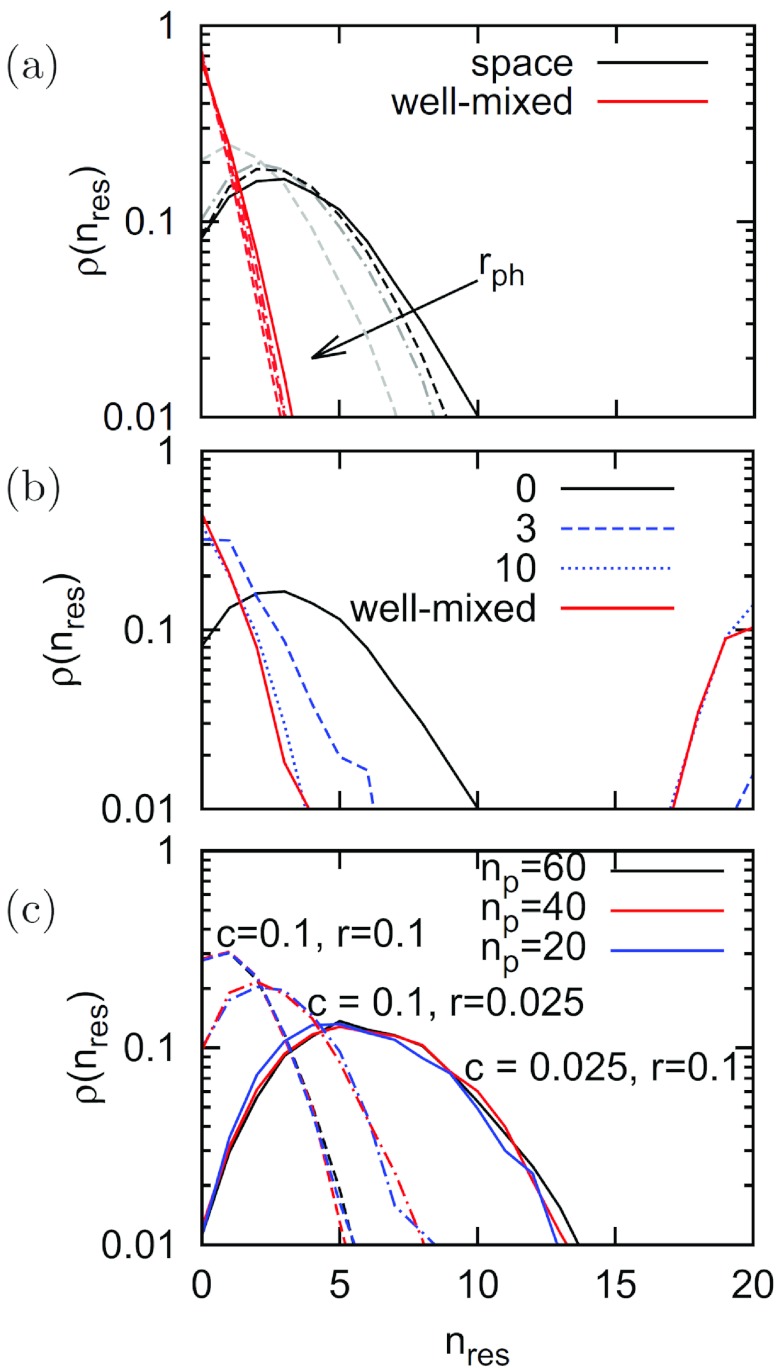
Even within similar bacterial strains, it has been found that the clustered, regularly interspaced short palindromic repeat (CRISPR) shows a large variability of spacers. Modeling bacterial strains with different levels of immunity to infection by a single virulent phage, we find that coexistence in a well-mixed environment is possible only when these levels are distinctly different. When bacterial strains are similar, one subpopulation collapses. In the case of bacteria with various levels of CRISPR immunity to a range of phages, small differences in spacer composition will accordingly be suppressed under well-mixed conditions. Using a numerical model of populations spreading in space, we predict that it is the Lamarckian nature of CRISPR evolution that combines with spatial correlations to sustain the experimentally observed distribution of spacer diversity.
即使在相似的细菌菌株中,也发现成簇的、规律间隔的短回文重复序列(CRISPR)显示出大量间隔区的可变性。通过对具有不同水平抗单一毒性噬菌体感染能力的细菌菌株进行建模,我们发现,只有当这些水平明显不同时,在充分混合的环境中才能够共存。当细菌菌株相似时,一个亚群就会崩溃。在具有各种水平的 CRISPR 对一系列噬菌体的免疫能力的细菌的情况下,在充分混合的条件下,间隔区组成的微小差异将受到抑制。我们使用种群在空间中扩散的数值模型预测,正是 CRISPR 进化的拉马克主义性质与空间相关性相结合,维持了实验观察到的间隔多样性分布。