Hale Caryn R, Zhao Peng, Olson Sara, Duff Michael O, Graveley Brenton R, Wells Lance, Terns Rebecca M, Terns Michael P
Department of Biochemistry, University of Georgia, Athens, GA 30602, USA.
Cell. 2009 Nov 25;139(5):945-56. doi: 10.1016/j.cell.2009.07.040.
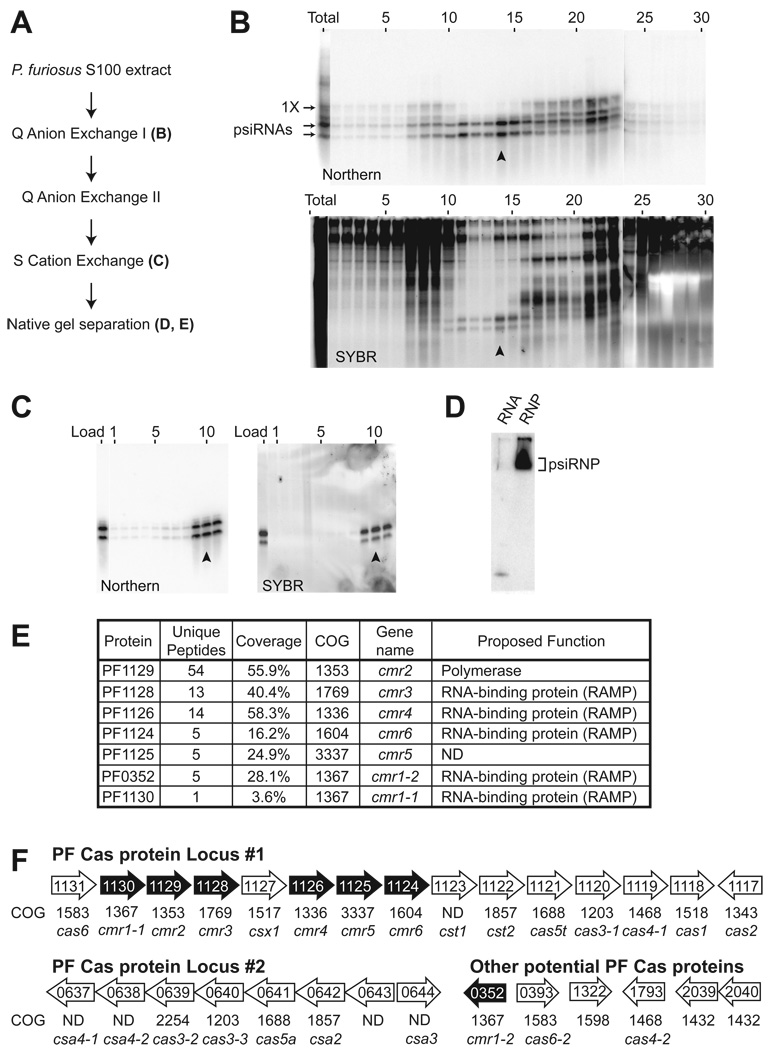
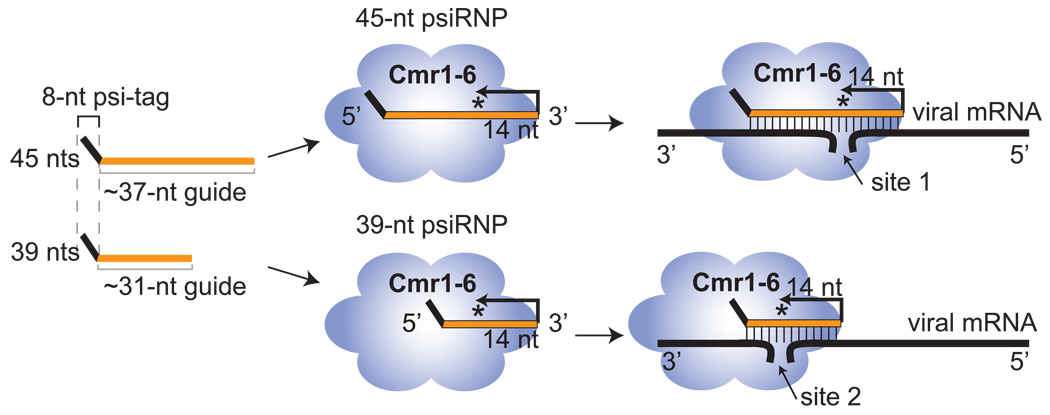
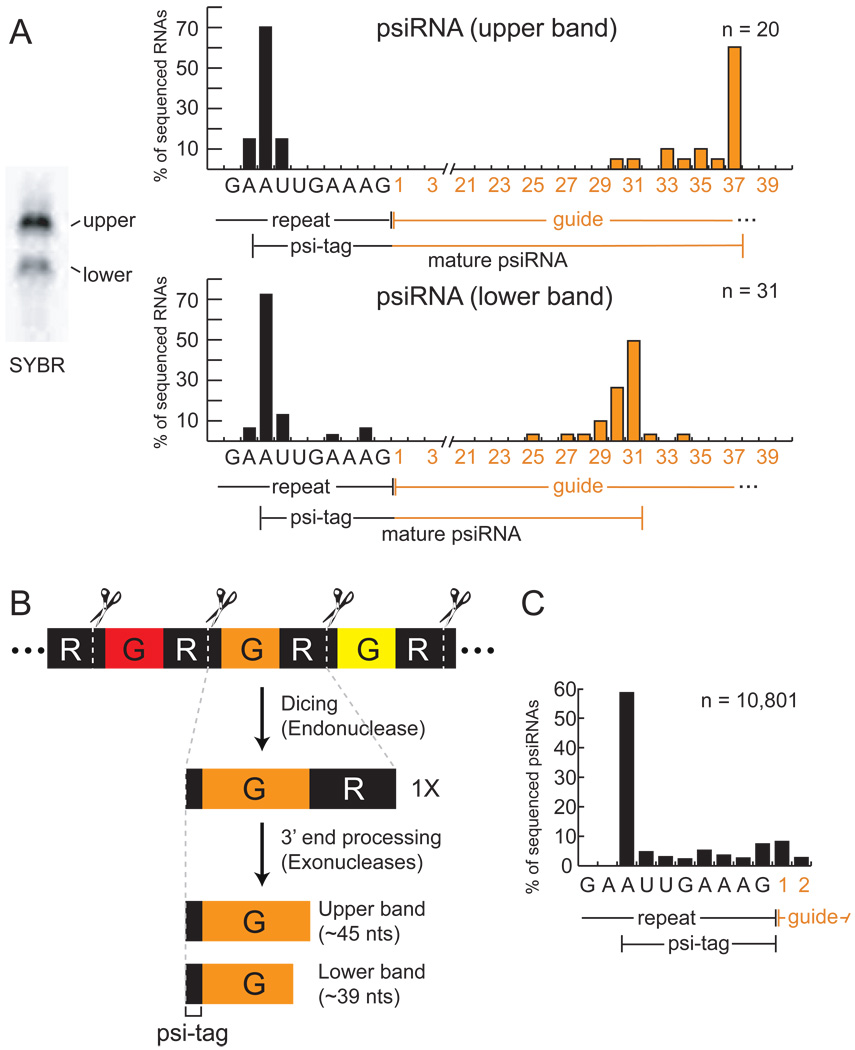
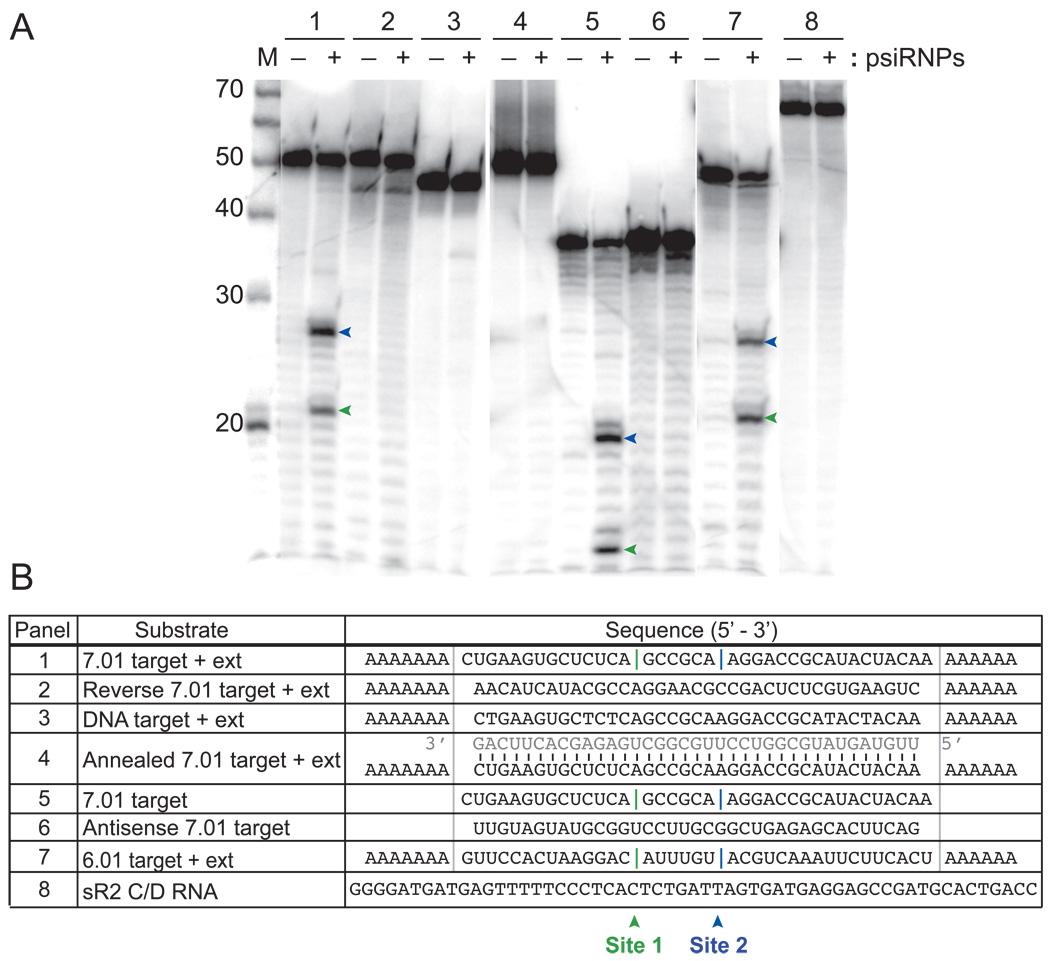
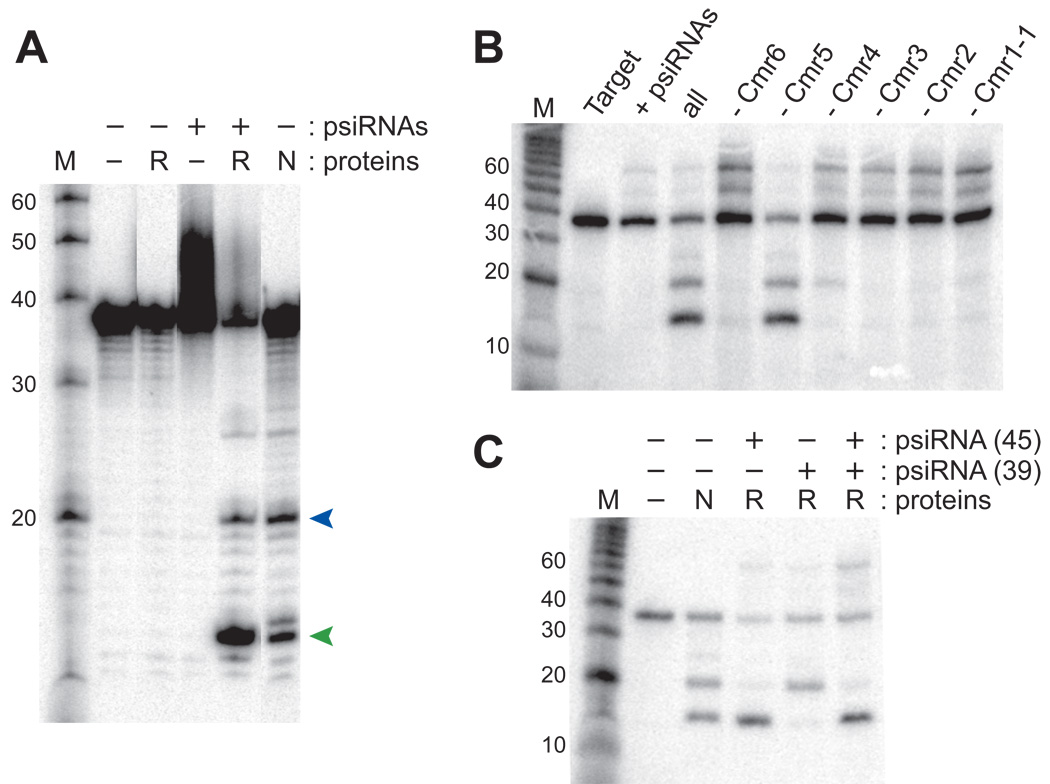
Compelling evidence indicates that the CRISPR-Cas system protects prokaryotes from viruses and other potential genome invaders. This adaptive prokaryotic immune system arises from the clustered regularly interspaced short palindromic repeats (CRISPRs) found in prokaryotic genomes, which harbor short invader-derived sequences, and the CRISPR-associated (Cas) protein-coding genes. Here, we have identified a CRISPR-Cas effector complex that is comprised of small invader-targeting RNAs from the CRISPR loci (termed prokaryotic silencing (psi)RNAs) and the RAMP module (or Cmr) Cas proteins. The psiRNA-Cmr protein complexes cleave complementary target RNAs at a fixed distance from the 3' end of the integral psiRNAs. In Pyrococcus furiosus, psiRNAs occur in two size forms that share a common 5' sequence tag but have distinct 3' ends that direct cleavage of a given target RNA at two distinct sites. Our results indicate that prokaryotes possess a unique RNA silencing system that functions by homology-dependent cleavage of invader RNAs.
有力证据表明,CRISPR-Cas系统可保护原核生物免受病毒和其他潜在基因组入侵者的侵害。这种适应性原核生物免疫系统源自原核生物基因组中发现的成簇规律间隔短回文重复序列(CRISPRs),其中含有短的源自入侵者的序列,以及CRISPR相关(Cas)蛋白质编码基因。在此,我们鉴定出一种CRISPR-Cas效应复合物,它由来自CRISPR位点的靶向小入侵者RNA(称为原核生物沉默(psi)RNA)和RAMP模块(或Cmr)Cas蛋白组成。psiRNA-Cmr蛋白复合物在距完整psiRNA 3'末端固定距离处切割互补靶RNA。在激烈热球菌中,psiRNA以两种大小形式出现,它们共享一个共同的5'序列标签,但具有不同的3'末端,可在两个不同位点指导对给定靶RNA的切割。我们的结果表明,原核生物拥有一种独特的RNA沉默系统,其通过同源依赖性切割入侵者RNA发挥作用。