Department of Animal and Plant Sciences, University of Sheffield, Sheffield, United Kingdom.
PLoS One. 2012;7(7):e39200. doi: 10.1371/journal.pone.0039200. Epub 2012 Jul 11.
Fitness in birds has been shown to be negatively associated with anthropogenic noise, but the underlying mechanisms remain obscure. It is however crucial to understand the mechanisms of how urban noise impinges on fitness to obtain a better understanding of the role of chronic noise in urban ecology. Here, we examine three hypotheses on how noise might reduce reproductive output in passerine birds: (H1) by impairing mate choice, (H2) by reducing territory quality and (H3) by impeding chick development.
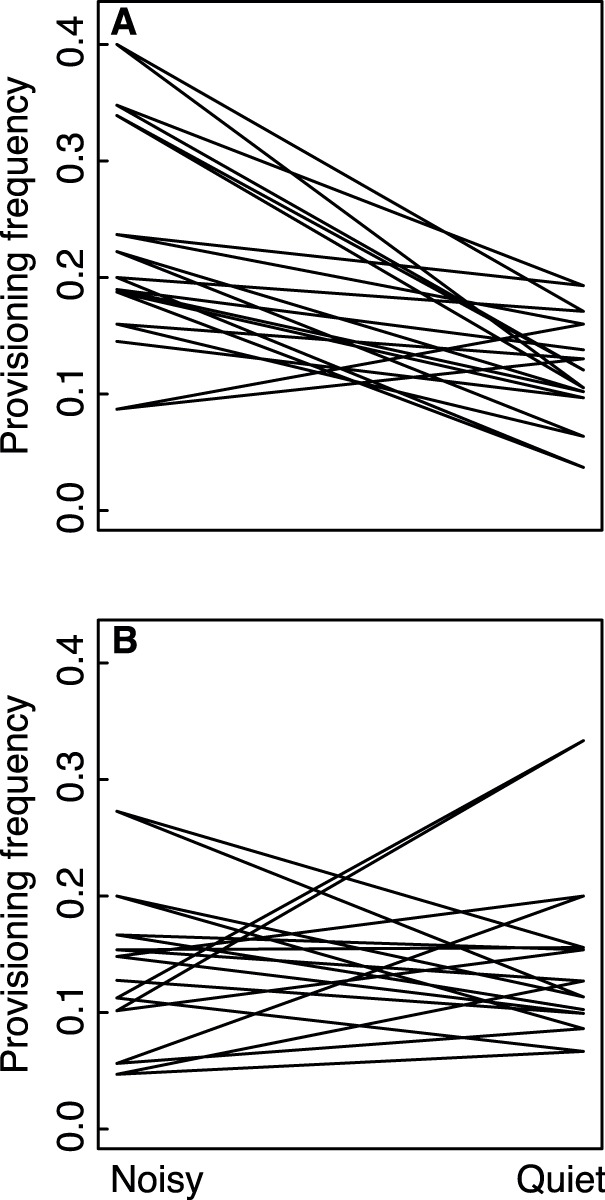
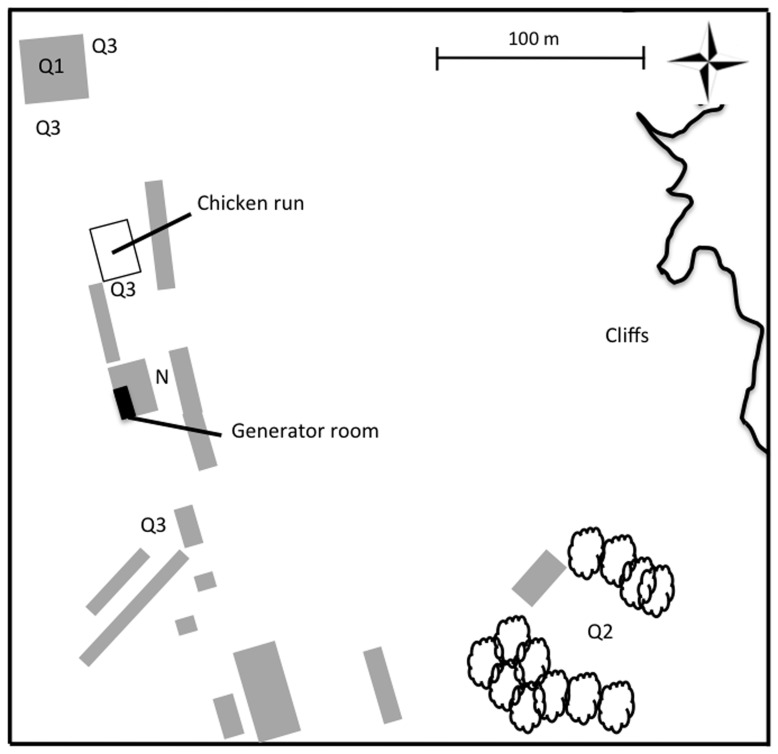
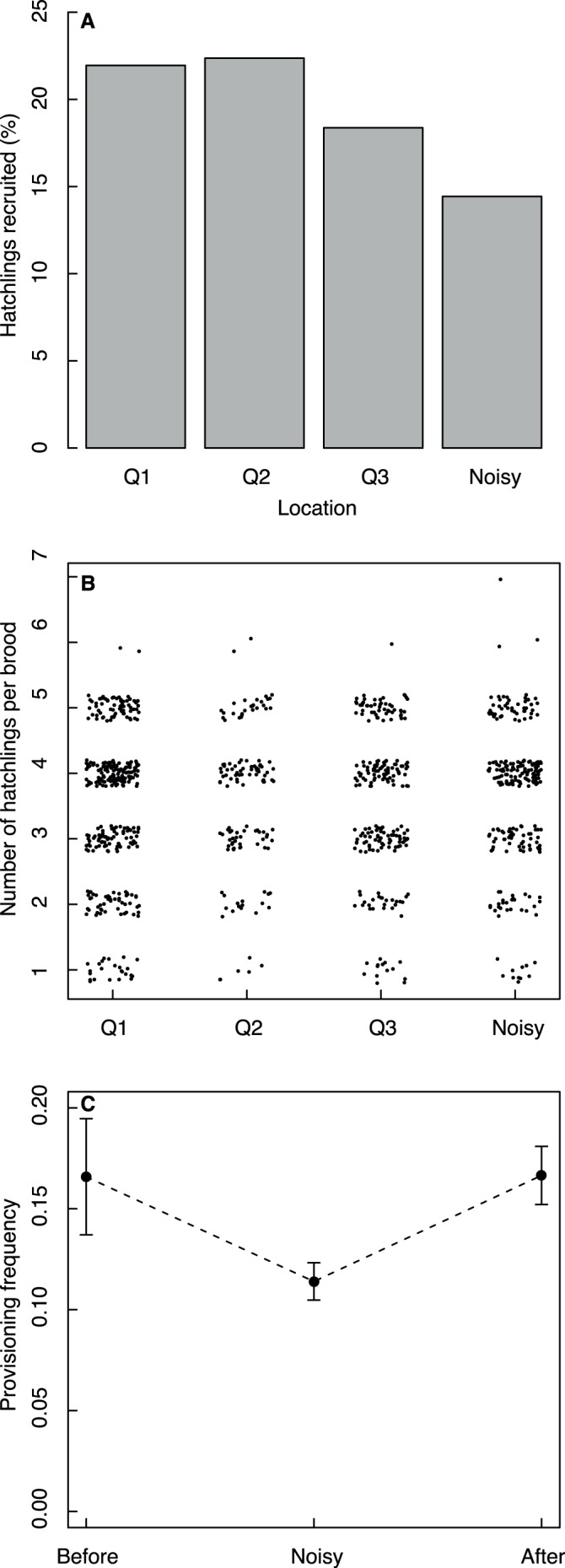
METHODOLOGY/PRINCIPAL FINDINGS: We used long-term data from an island population of house sparrows, Passer domesticus, in which we can precisely estimate fitness. We found that nests in an area affected by the noise from large generators produced fewer young, of lower body mass, and fewer recruits, even when we corrected statistically for parental genetic quality using a cross-fostering set-up, supporting H3. Also, individual females provided their young with food less often when they bred in the noisy area compared to breeding attempts by the same females elsewhere. Furthermore, we show that females reacted flexibly to increased noise levels by adjusting their provisioning rate in the short term, which suggests that noise may be a causal factor that reduces reproductive output. We rejected H1 and H2 because nestbox occupancy, parental body mass, age and reproductive investment did not differ significantly between noisy and quiet areas.
CONCLUSIONS/SIGNIFICANCE: OUR RESULTS SUGGEST A PREVIOUSLY UNDESCRIBED MECHANISM TO EXPLAIN HOW ENVIRONMENTAL NOISE CAN REDUCE FITNESS IN PASSERINE BIRDS: by acoustically masking parent-offspring communication. More importantly, using a cross-fostering set-up, our results demonstrate that birds breeding in a noisy environment experience significant fitness costs. Chronic noise is omnipresent around human habitation and may produces similar fitness consequences in a wide range of urban bird species.
鸟类的健康状况已被证明与人为噪声呈负相关,但潜在机制尚不清楚。然而,了解城市噪声对健康的影响机制对于更好地理解慢性噪声在城市生态学中的作用至关重要。在这里,我们检验了三种关于噪声如何降低雀形目鸟类繁殖成功率的假说:(H1)通过损害配偶选择,(H2)通过降低领地质量,以及(H3)通过阻碍雏鸟发育。
方法/主要发现:我们使用来自一个岛屿的家麻雀(Passer domesticus)的长期数据,这些麻雀的繁殖成功率可以精确估计。我们发现,受大型发电机噪声影响的区域中的鸟巢产生的幼鸟数量较少、体重较低,且招募的幼鸟数量较少,即使我们通过交叉养育的设置从统计学上校正了亲鸟的遗传质量,这支持假说 3。此外,与在其他地方的繁殖尝试相比,个体雌鸟在嘈杂区域繁殖时,给幼鸟喂食的频率较低。此外,我们还表明,雌性通过在短期内灵活调整其喂养率来应对噪音水平的增加,这表明噪音可能是降低繁殖成功率的一个因果因素。我们拒绝了假说 1 和假说 2,因为巢箱占用率、亲鸟体重、年龄和繁殖投资在嘈杂和安静区域之间没有显著差异。
结论/意义:我们的研究结果表明,一种先前未描述的机制可以解释环境噪声如何降低雀形目鸟类的健康状况:通过声音掩蔽亲鸟与幼鸟的交流。更重要的是,通过使用交叉养育的设置,我们的研究结果表明,在嘈杂环境中繁殖的鸟类会经历显著的健康成本。慢性噪声在人类栖息地周围无处不在,可能会对广泛的城市鸟类物种产生类似的健康后果。