Airway Inflammation Research Group, Department of Physiology and Pharmacology, Snyder Institute for Chronic Diseases, University of Calgary Faculty of Medicine, Calgary, Alberta, Canada.
PLoS One. 2012;7(7):e40762. doi: 10.1371/journal.pone.0040762. Epub 2012 Jul 12.
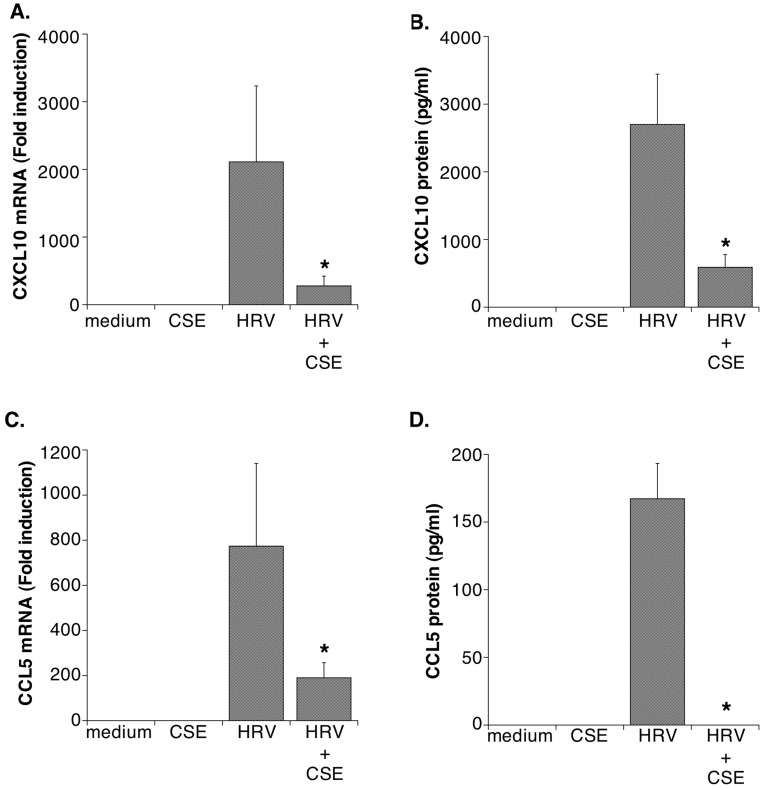
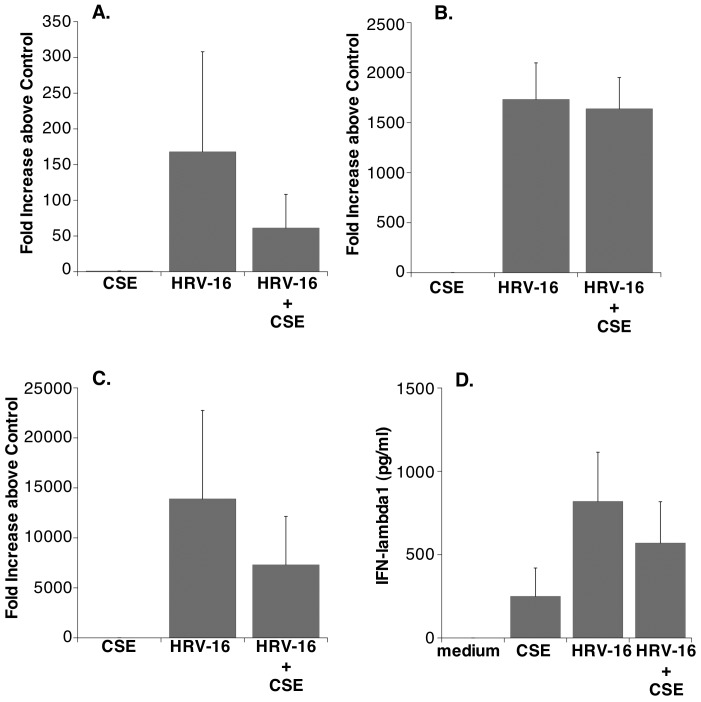
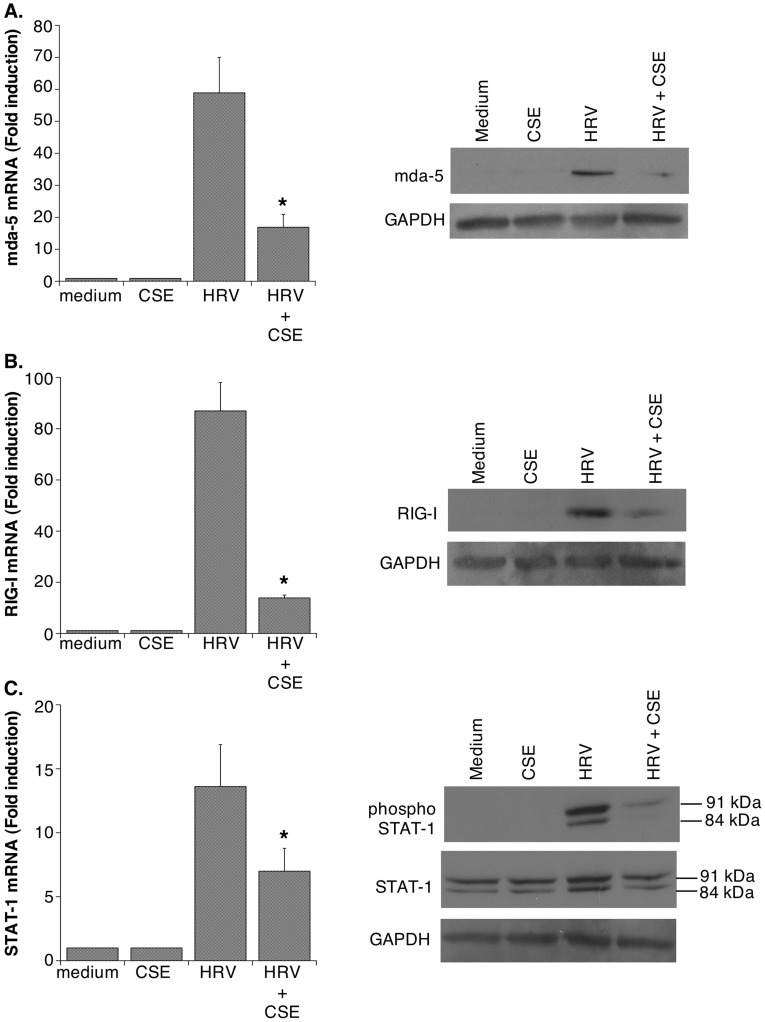
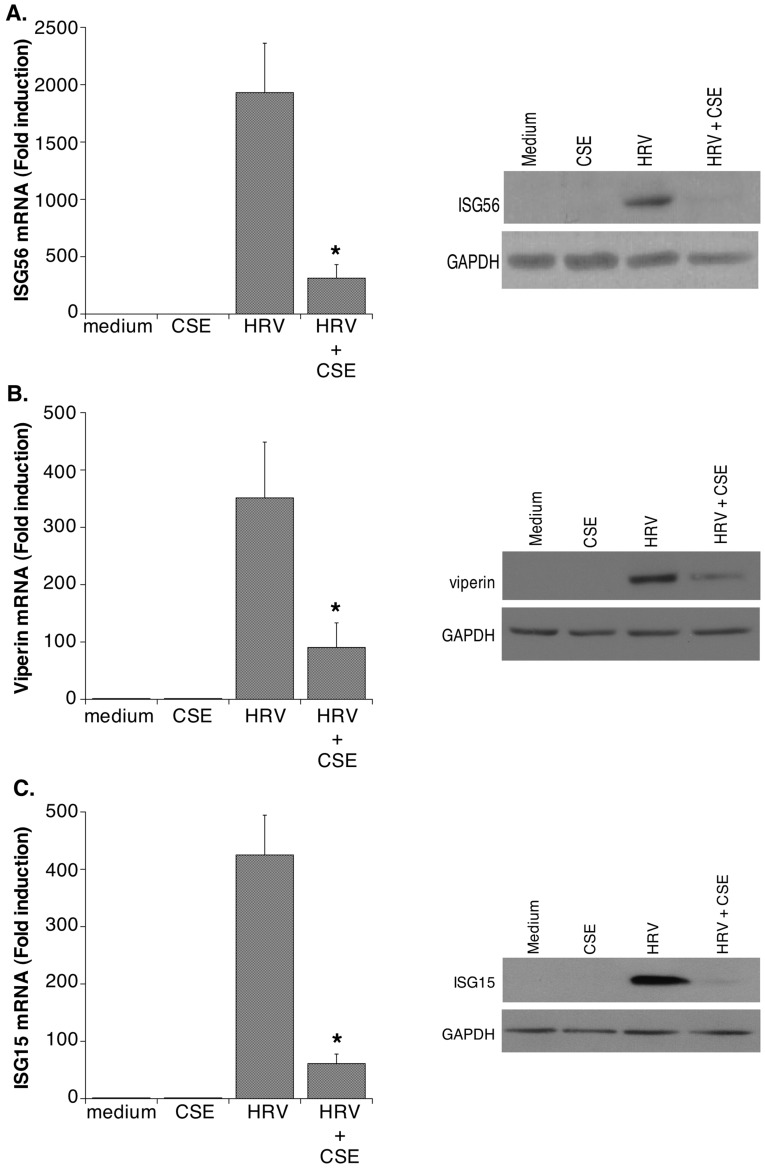
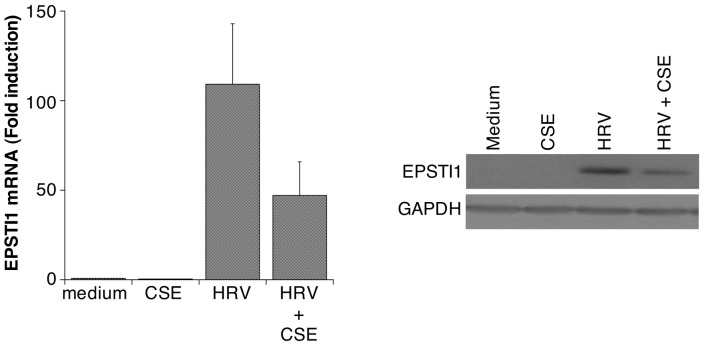
Human rhinovirus (HRV) infections trigger acute exacerbations of chronic obstructive pulmonary disease (COPD) and asthma. The human airway epithelial cell is the primary site of HRV infection and responds to infection with altered expression of multiple genes, the products of which could regulate the outcome to infection. Cigarette smoking aggravates asthma symptoms, and is also the predominant risk factor for the development and progression of COPD. We, therefore, examined whether cigarette smoke extract (CSE) modulates viral responses by altering HRV-induced epithelial gene expression. Primary cultures of human bronchial epithelial cells were exposed to medium alone, CSE alone, purified HRV-16 alone or to HRV-16+ CSE. After 24 h, supernatants were collected and total cellular RNA was isolated. Gene array analysis was performed to examine mRNA expression. Additional experiments, using real-time RT-PCR, ELISA and/or western blotting, validated altered expression of selected gene products. CSE and HRV-16 each induced groups of genes that were largely independent of each other. When compared to gene expression in response to CSE alone, cells treated with HRV+CSE showed no obvious differences in CSE-induced gene expression. By contrast, compared to gene induction in response to HRV-16 alone, cells exposed to HRV+CSE showed marked suppression of expression of a number of HRV-induced genes associated with various functions, including antiviral defenses, inflammation, viral signaling and airway remodeling. These changes were not associated with altered expression of type I or type III interferons. Thus, CSE alters epithelial responses to HRV infection in a manner that may negatively impact antiviral and host defense outcomes.
人鼻病毒(HRV)感染可引发慢性阻塞性肺疾病(COPD)和哮喘的急性加重。人呼吸道上皮细胞是 HRV 感染的主要部位,对感染的反应是多种基因表达改变,这些基因的产物可能调节感染的结果。吸烟会加重哮喘症状,也是 COPD 发生和发展的主要危险因素。因此,我们研究了香烟烟雾提取物(CSE)是否通过改变 HRV 诱导的上皮细胞基因表达来调节病毒反应。将原代人支气管上皮细胞暴露于培养基、CSE 单独、纯化的 HRV-16 单独或 HRV-16+CSE 中。24 小时后,收集上清液并分离总细胞 RNA。通过基因芯片分析检查 mRNA 表达。使用实时 RT-PCR、ELISA 和/或 Western blot 等额外实验验证了选定基因产物表达的改变。CSE 和 HRV-16 各自诱导的基因群在很大程度上彼此独立。与单独用 CSE 处理相比,用 HRV+CSE 处理的细胞在 CSE 诱导的基因表达中没有明显差异。相比之下,与单独用 HRV-16 诱导的基因相比,用 HRV+CSE 处理的细胞显示出许多与各种功能相关的 HRV 诱导基因表达的明显抑制,包括抗病毒防御、炎症、病毒信号和气道重塑。这些变化与 I 型或 III 型干扰素的表达改变无关。因此,CSE 以可能对抗病毒和宿主防御结果产生负面影响的方式改变上皮细胞对 HRV 感染的反应。