Molecular Immunology and Pharmacology Group, State Key Laboratory of Bioactive Substances and Functions of Natural Medicines, Institute of Materia Medica, Chinese Academy of Medical Sciences & Peking Union Medical College, Beijing, People's Republic of China.
PLoS One. 2012;7(7):e40763. doi: 10.1371/journal.pone.0040763. Epub 2012 Jul 13.
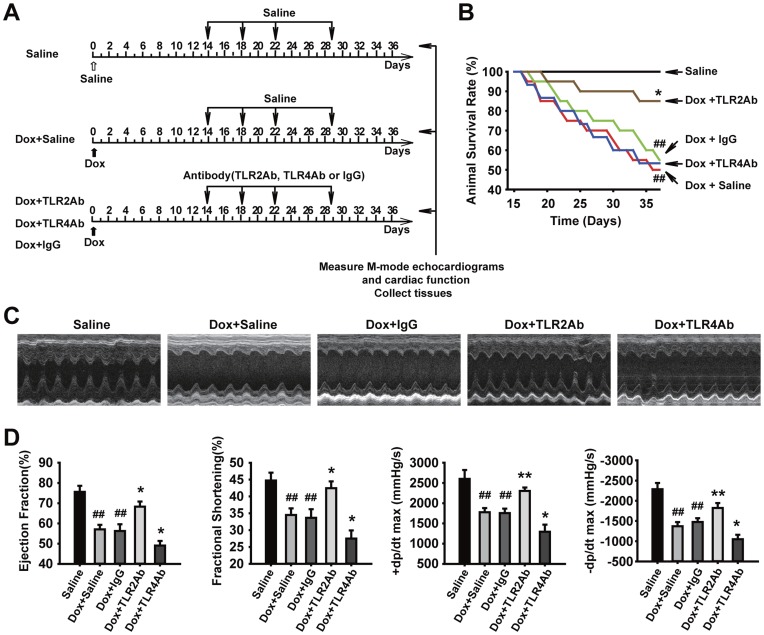
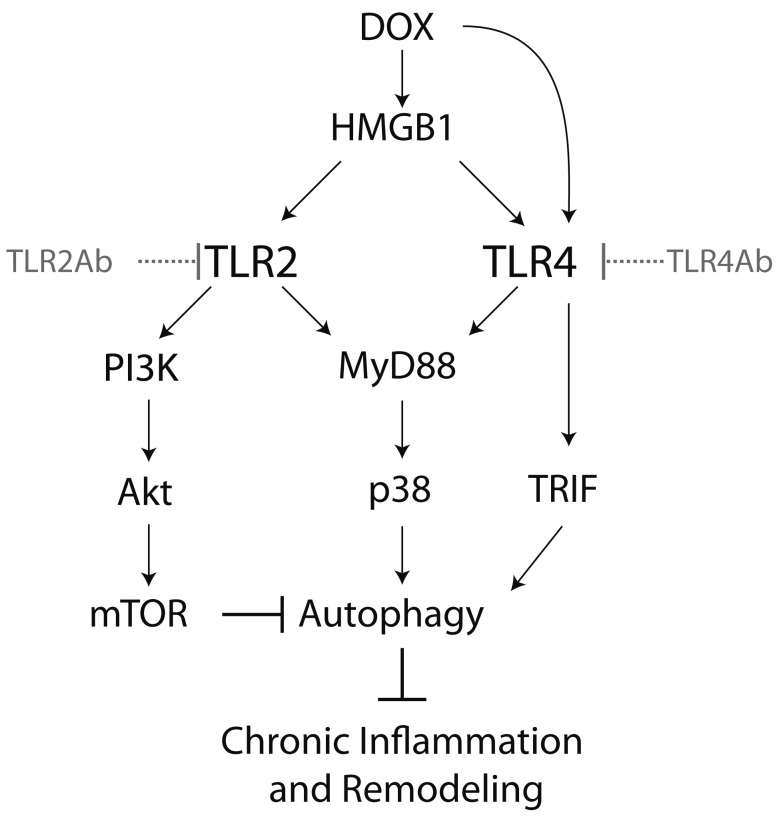
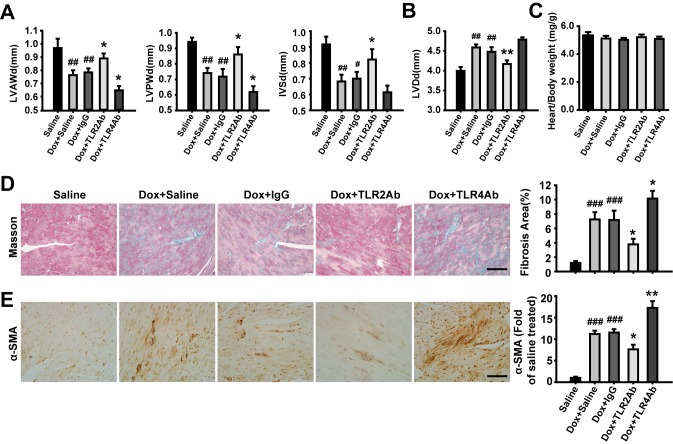
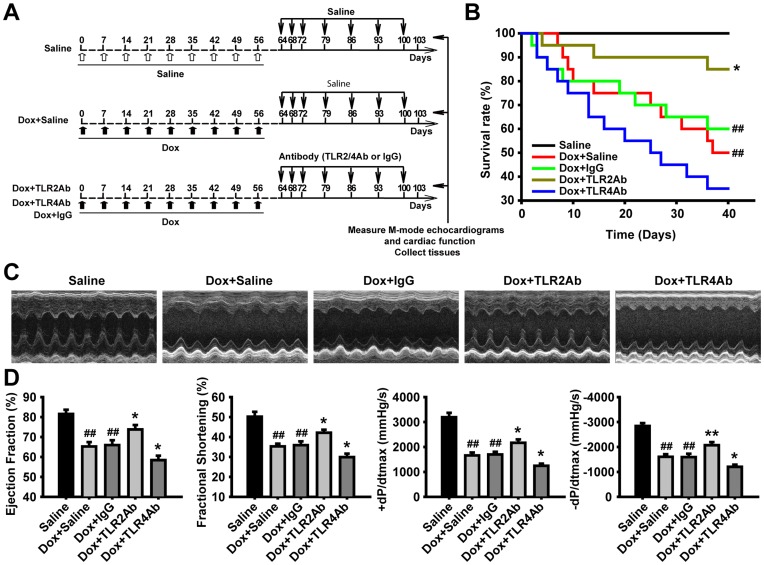
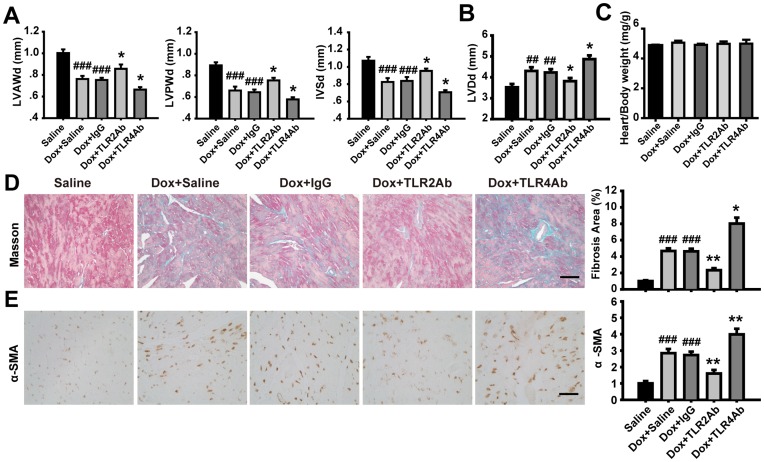
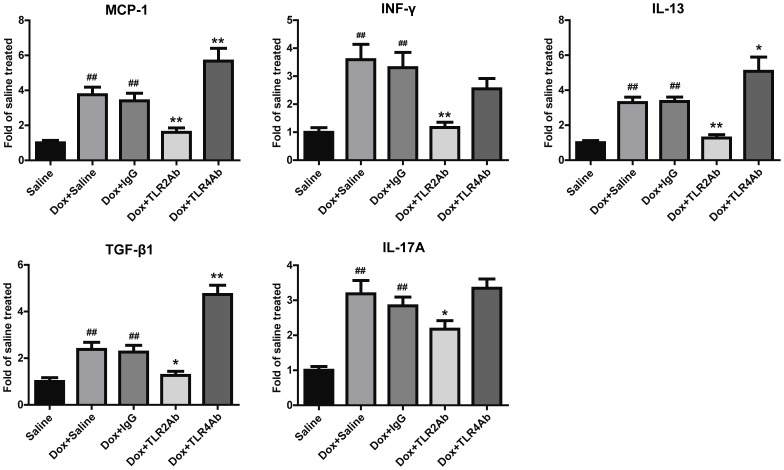
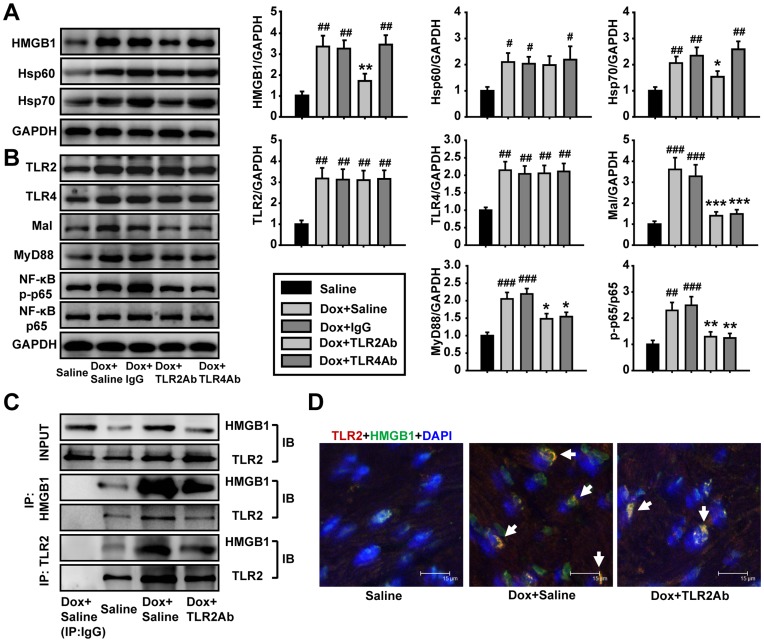
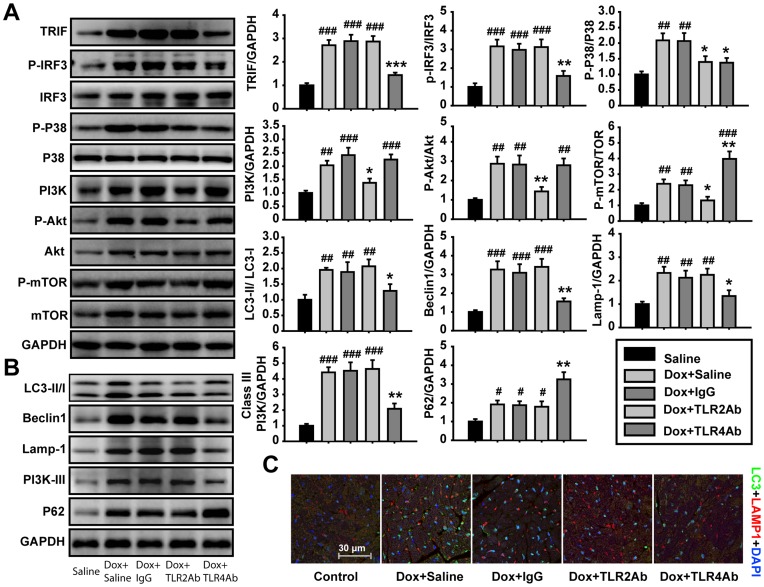
Recent evidence indicates that toll-like receptor (TLR) 2 and 4 are involved in the pathogenesis of dilated cardiomyopathy (DCM), but the exact mechanisms of their actions have not been elucidated. We explored the therapeutic potential of blocking TLRs in mice with established cardiomyopathy. Cardiomyopathy was generated by a single intraperitoneal injection of doxorubicin (10 mg/kg). Two weeks later, the mice were treated with TLR2 or TLR4 neutralizing antibody. Blocking TLR2, but not TLR4, activity not only reduced mortality, but also attenuated doxorubicin-induced cardiac dysfunction by 20% and inhibited myocardial fibrosis. To determine the differential effects of blocking TLR2 and TLR4 in chronic cardiomyopathy, mice were injected with doxorubicin (3.5 mg/kg) once a week for 8 weeks, followed by treatment with TLR2 or TLR4 neutralizing antibody for 40 days. Blocking TLR2 activity blunted cardiac dysfunction by 13% and inhibited cardiac fibrosis, which was associated with a significant suppression of myocardial inflammation. The underlying mechanism involved interrupting the interaction of TLR2 with its endogenous ligands, resulting in attenuation of inflammation and fibrosis. In contrast, blocking TLR4 exacerbated cardiac dysfunction and fibrosis by amplifying inflammation and suppressing autophagy. Our studies demonstrate that TLR2 and TLR4 play distinct roles in the progression of doxorubicin-induced DCM. TLR4 activity is crucial for the resolution of inflammation and cardiac fibrosis, while blocking TLR2 activity has therapeutic potential for the treatment of DCM.
最近的证据表明,Toll 样受体 (TLR) 2 和 4 参与了扩张型心肌病 (DCM) 的发病机制,但它们的作用的确切机制尚未阐明。我们在已患有心肌病的小鼠中探索了阻断 TLR 的治疗潜力。心肌病是通过单次腹腔注射阿霉素 (10mg/kg) 产生的。两周后,用 TLR2 或 TLR4 中和抗体对小鼠进行治疗。阻断 TLR2,但不阻断 TLR4,不仅降低了死亡率,还使阿霉素诱导的心脏功能障碍降低了 20%,并抑制了心肌纤维化。为了确定阻断 TLR2 和 TLR4 在慢性心肌病中的差异效应,小鼠每周接受一次阿霉素 (3.5mg/kg) 注射,持续 8 周,然后用 TLR2 或 TLR4 中和抗体治疗 40 天。阻断 TLR2 活性使心脏功能障碍降低了 13%,并抑制了心肌纤维化,这与心肌炎症的显著抑制有关。其潜在机制涉及中断 TLR2 与其内源性配体的相互作用,从而减轻炎症和纤维化。相比之下,阻断 TLR4 通过放大炎症和抑制自噬来加剧心脏功能障碍和纤维化。我们的研究表明,TLR2 和 TLR4 在阿霉素诱导的 DCM 进展中发挥着不同的作用。TLR4 活性对于炎症和心脏纤维化的解决至关重要,而阻断 TLR2 活性具有治疗 DCM 的治疗潜力。