Department of Hematology, The Second Military Medical University, Changhai Hospital, Shanghai, People's Republic of China.
PLoS One. 2012;7(7):e40849. doi: 10.1371/journal.pone.0040849. Epub 2012 Jul 13.
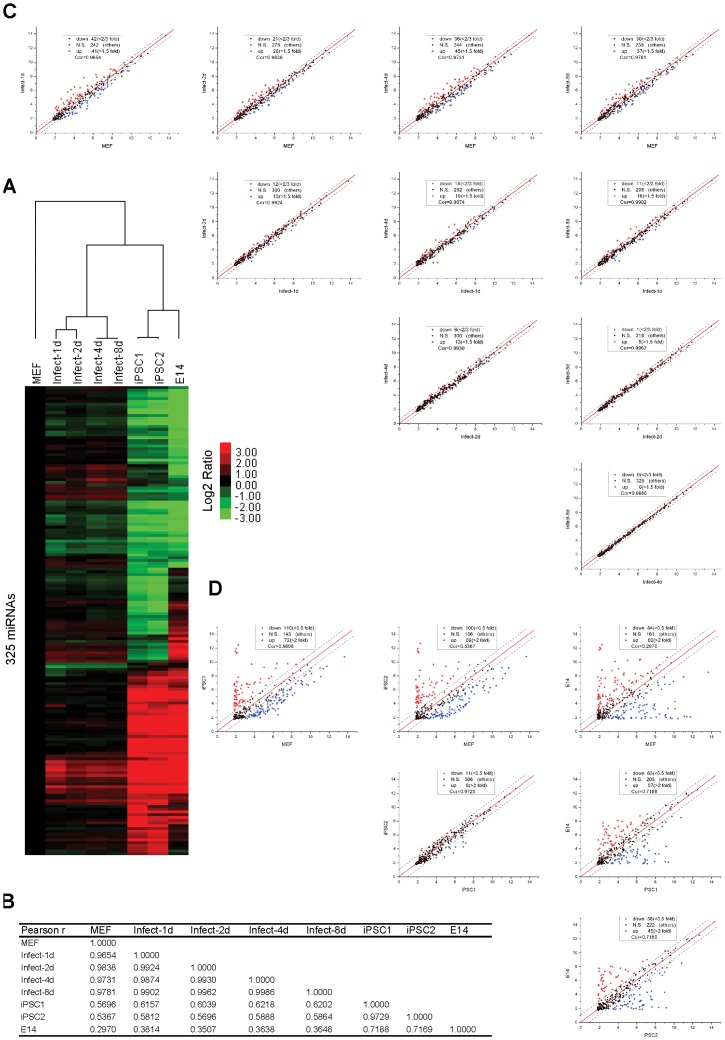
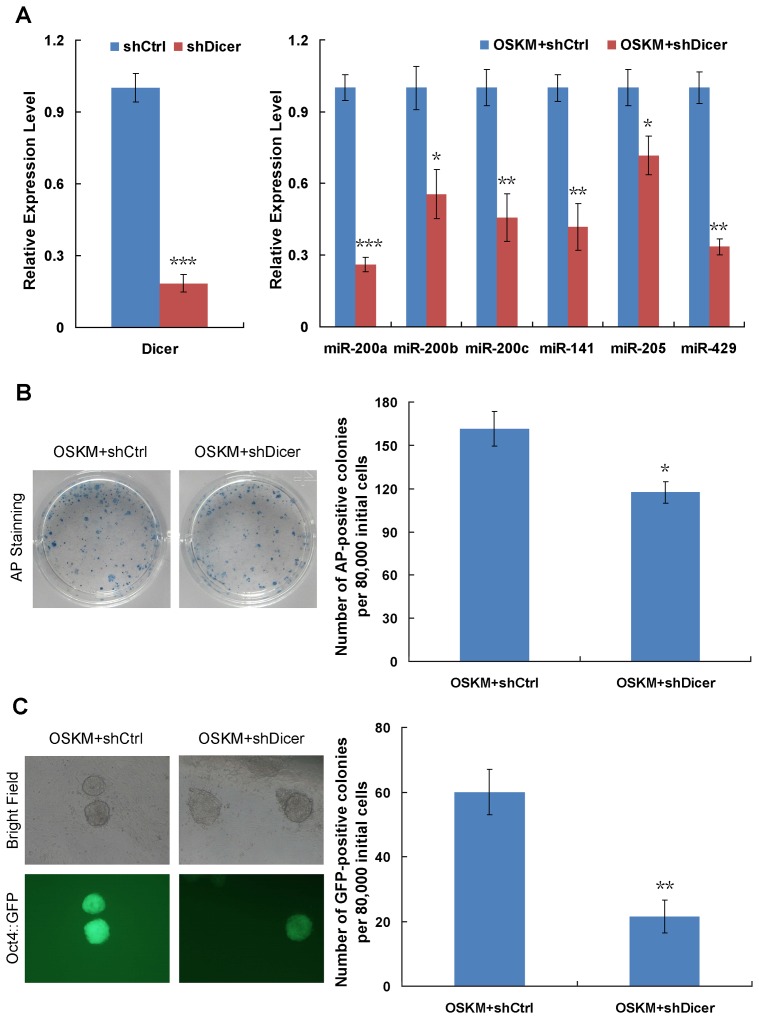
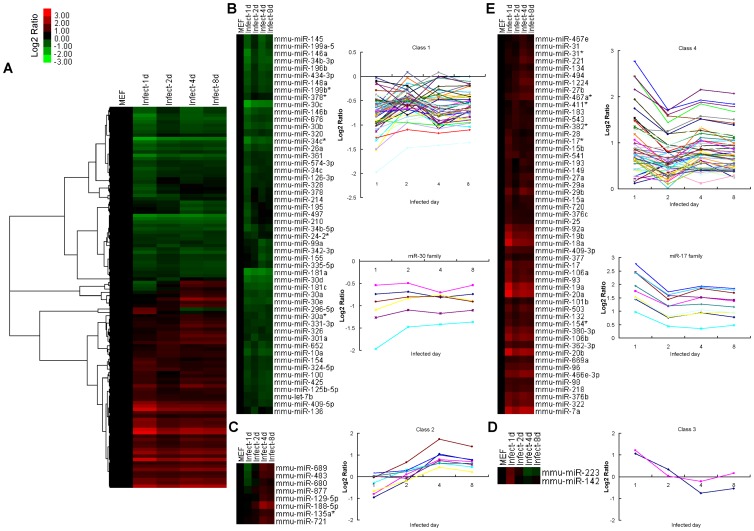
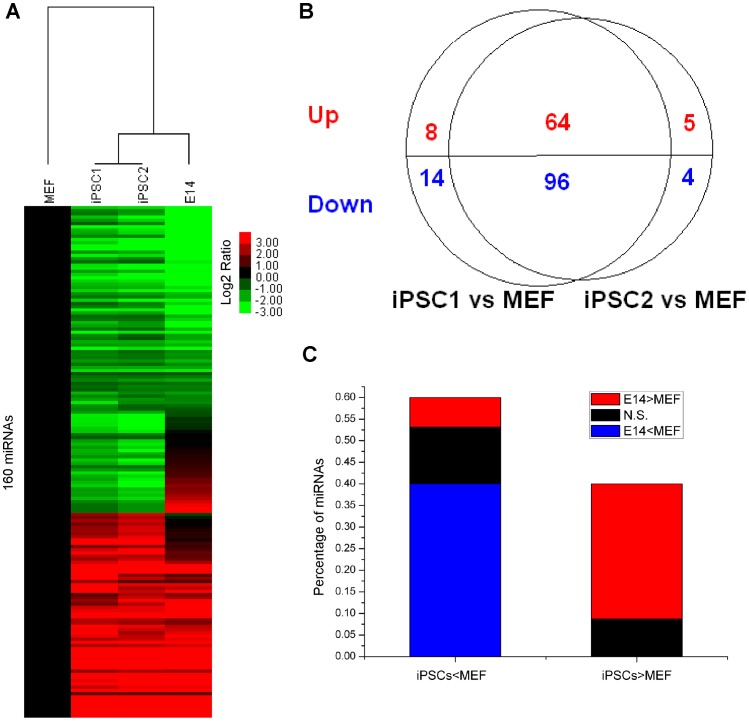
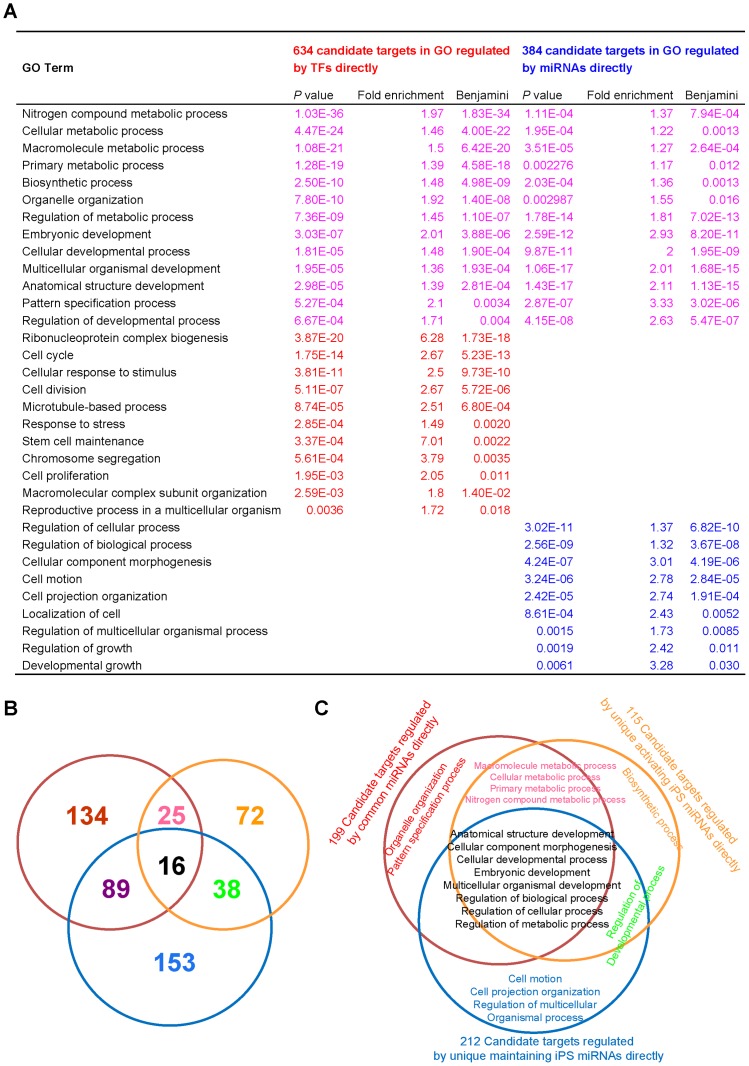
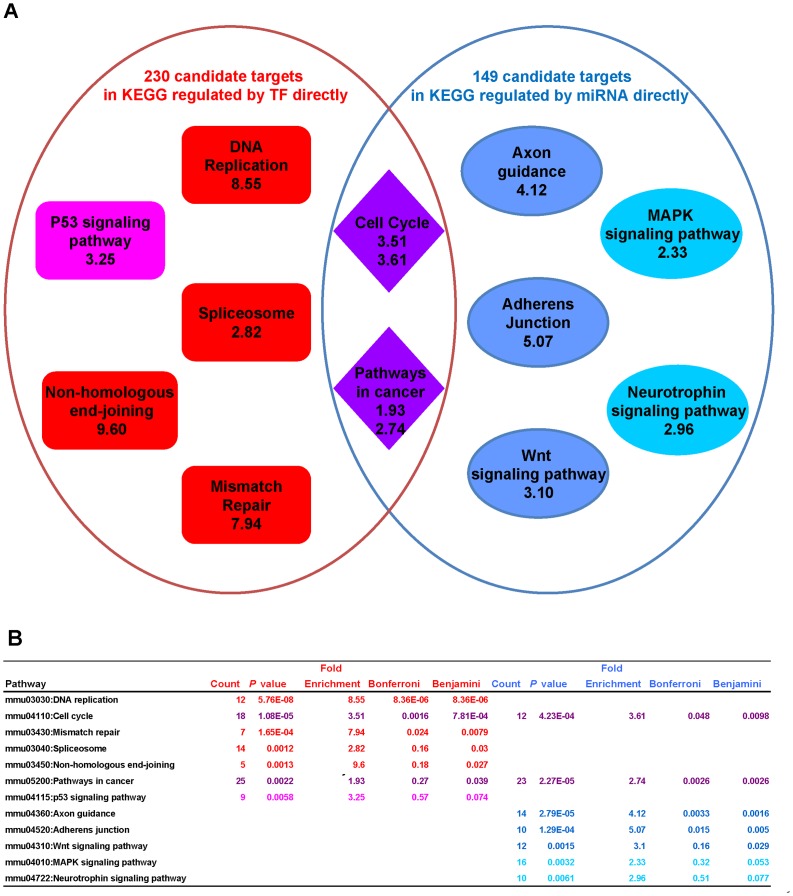
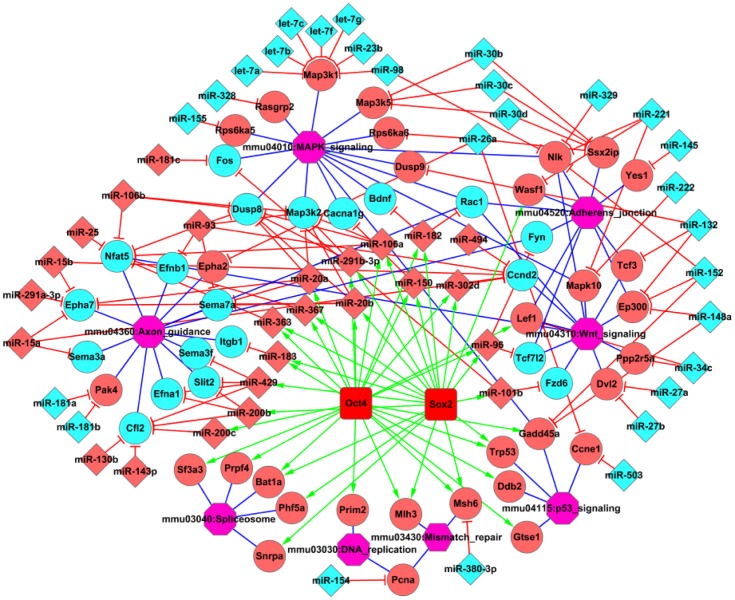
Induced pluripotent stem (iPS) cells were first generated by forced expression of transcription factors (TFs) in fibroblasts. Recently, iPS cells have been generated more rapidly and efficiently using miRNAs with or without other transcription factors. However, the specific and collaborative roles of miRNAs and transcription factors in pluripotency acquisition and maintenance remain to be further investigated. Here, based on the miRNA profiling in mouse embryonic fibroblasts (MEFs), MEFs infected with Oct3/4, Sox2, Klf4 and c-Myc (OSKM) for 1, 2, 4, or 8 day, two iPS cell lines and ES cells, representing iPS activation and maintenance steps, we found that two unique miRNA sets are responsible for different steps of iPS generation, and the miRNA expression profiles of iPS cells are very similar to that of ES cells. Furthermore, we searched for transcription factors binding sites at the promoter regions of up-regulated miRNAs, and found that up-regulated miRNAs such as the miR-429-200 and miR-17 clusters are directly activated by exogenous TFs. The GO and pathway enrichment for candidate target gene sets of miRNAs or OSKM provided a clear picture of division and collaboration between miRNAs and OSKM during completion of the iPS process. Compared with the pathways regulated by OSKM, we found that miRNAs play critical roles in regulating iPS-specific pathways, such as the adherens junction and Wnt signaling pathways. Furthermore, we blocked miRNA expression using Dicer knockdown, and found that the level of miRNAs was decreased following this treatment, and the efficiency of iPS generation was significantly repressed. By combining high-throughput analysis, biostatistical analysis and functional experiments, this study provides new ideas for investigating the important roles of miRNAs, the mechanisms of miRNAs and related signaling pathways, and the potential for many more applications of miRNAs in somatic cell reprogramming.
诱导多能干细胞(iPS 细胞)最初是通过在成纤维细胞中强制表达转录因子(TFs)产生的。最近,使用 miRNA 或 miRNA 与其他转录因子一起,可以更快、更有效地产生 iPS 细胞。然而,miRNA 和转录因子在获得和维持多能性中的特定和协作作用仍有待进一步研究。在这里,基于小鼠胚胎成纤维细胞(MEF)中的 miRNA 谱,感染 Oct3/4、Sox2、Klf4 和 c-Myc(OSKM)的 MEF 在 1、2、4 或 8 天后,两个 iPS 细胞系和 ES 细胞,代表 iPS 激活和维持步骤,我们发现两个独特的 miRNA 集负责 iPS 生成的不同步骤,并且 iPS 细胞的 miRNA 表达谱与 ES 细胞非常相似。此外,我们在启动子区域寻找上调 miRNA 的转录因子结合位点,发现上调的 miRNA,如 miR-429-200 和 miR-17 簇,直接由外源 TFs 激活。miRNA 或 OSKM 的候选靶基因集的 GO 和途径富集为 miRNA 和 OSKM 在完成 iPS 过程中的分工和协作提供了清晰的图景。与 OSKM 调节的途径相比,我们发现 miRNA 在调节 iPS 特异性途径中起着关键作用,例如黏着连接和 Wnt 信号通路。此外,我们使用 Dicer 敲低阻断 miRNA 表达,发现该处理后 miRNA 的水平降低,并且 iPS 生成的效率受到显著抑制。通过结合高通量分析、生物统计学分析和功能实验,本研究为研究 miRNA 的重要作用、miRNA 的机制和相关信号通路提供了新的思路,以及在体细胞重编程中应用 miRNA 的更多可能性。