Nateghpour M, Mavi S Ayazian, Keshavarz H, Rezaei S, Abedi F, Edrissian Gh, Raeisi A
Department of Parasitology and Mycology, School of Public Health, Tehran University of Medical Sciences, Iran.
Iran J Arthropod Borne Dis. 2010;4(1):24-30. Epub 2010 Jun 30.
The aim was to evaluate the relapse risk of vivax malaria in patients who received radical treatment in Hormozgan Province, a malarious area located on southeast of Iran.
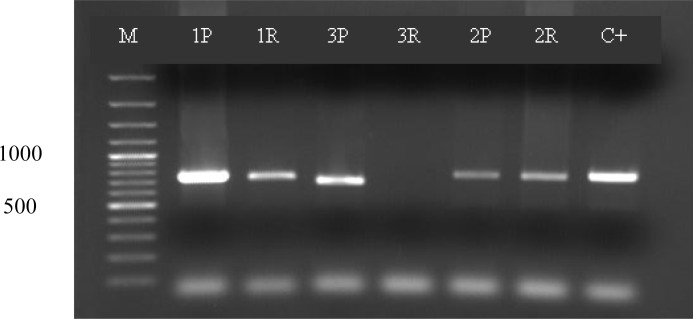
A total of 95 symptomatic vivax malaria infected patients were enrolled in urban health centers of Bandar-Abbas, Minab, Bandar-Jask and Bashagard districts of Hormozgan Province, southeast of Iran from January 2008 to March 2009 for consideration as a case- series study. DNA was extracted from parasite infected whole blood samples. A polymorphic region of Plasmodium vivax merozoite surface protein 1 (pvMSP1) was selected and a PCR method was employed for all the samples to amplify the specific variable gene fragment. The obtained fragments in primary and secondary samples were sequenced. Both nucleotide and amino acid sequences of the samples were investigated for returned patients.
3.2% of the patients experienced a second attack between 83-199 days after the initial episode of infection. Alignment of nucleotide and their deduced amino acid sequences between pair sequences of primary and secondary isolates revealed 8 and 6 dissimilarities respectively for the first case, and 9 and 7 dissimilarities for the second case. Although microscopical examination of recurrent thick blood smear of the third patient confirmed new P. vivax infection, the venous blood sample was accidentally missed. Sequencing results of primary and returned isolates 1P, 1S, 2P, 2S and 3P in this study showed an identity with BP13, T117, BP13, TC28 and Chesson genotypes respectively.
The returned (secondary) isolates may account to be for the sake of reinfection.
目的是评估在伊朗东南部疟疾流行地区霍尔木兹甘省接受根治性治疗的间日疟患者的复发风险。
2008年1月至2009年3月,在伊朗东南部霍尔木兹甘省阿巴斯港、米纳卜、贾斯克港和巴沙加尔德区的城市卫生中心,共纳入95例有症状的间日疟感染患者,作为病例系列研究对象。从感染寄生虫的全血样本中提取DNA。选择间日疟原虫裂殖子表面蛋白1(pvMSP1)的一个多态性区域,采用聚合酶链反应(PCR)方法对所有样本进行扩增,以获得特定的可变基因片段。对初次和二次样本中获得的片段进行测序。对复发患者的样本核苷酸和氨基酸序列均进行研究。
3.2%的患者在初次感染发作后83 - 199天之间经历了第二次发作。初次和二次分离株的成对序列之间的核苷酸及其推导的氨基酸序列比对显示,第一例分别有8个和6个差异,第二例分别有9个和7个差异。尽管对第三位患者复发时的厚血涂片进行显微镜检查证实有新的间日疟感染,但静脉血样本意外遗漏。本研究中初次和复发分离株1P、1S、2P、2S和3P的测序结果分别与BP13、T117、BP13、TC28和切森基因型一致。
复发(二次)分离株可能是再次感染所致。