Department of Human Anatomy, Histology and Forensic Medicine, University of Florence, Florence, Italy.
PLoS One. 2012;7(7):e37512. doi: 10.1371/journal.pone.0037512. Epub 2012 Jul 16.
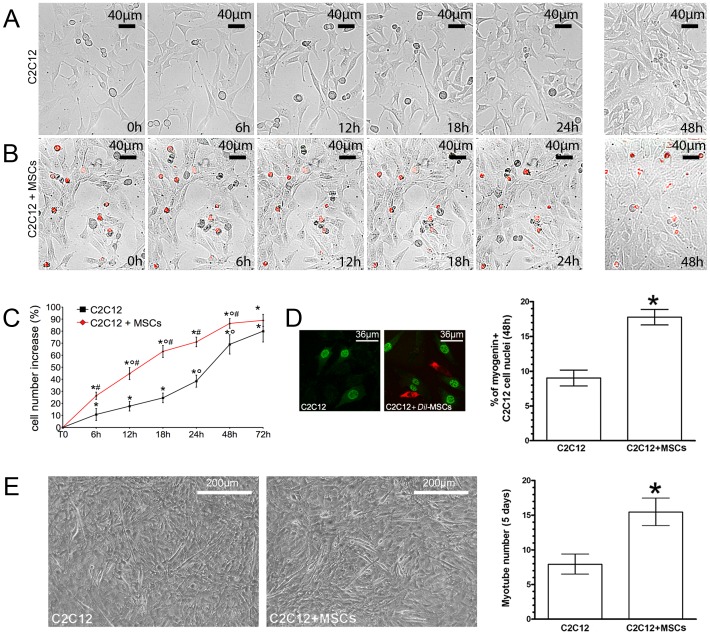
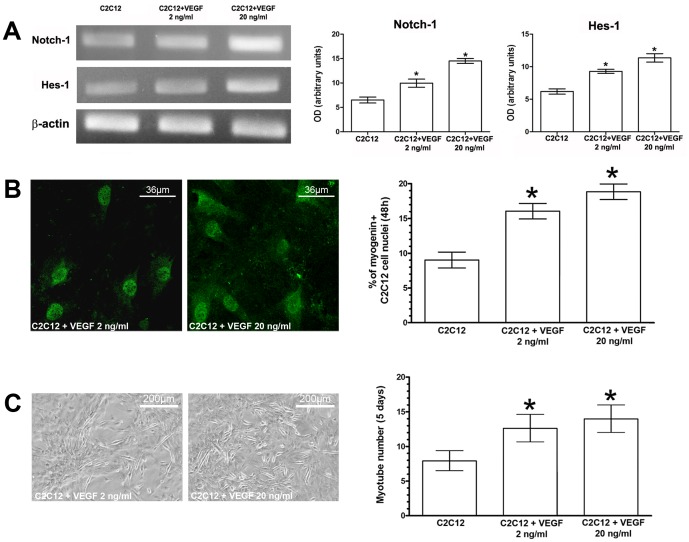
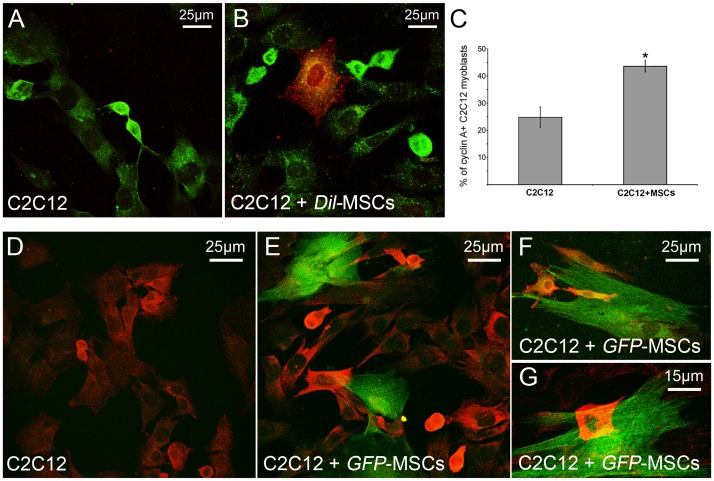
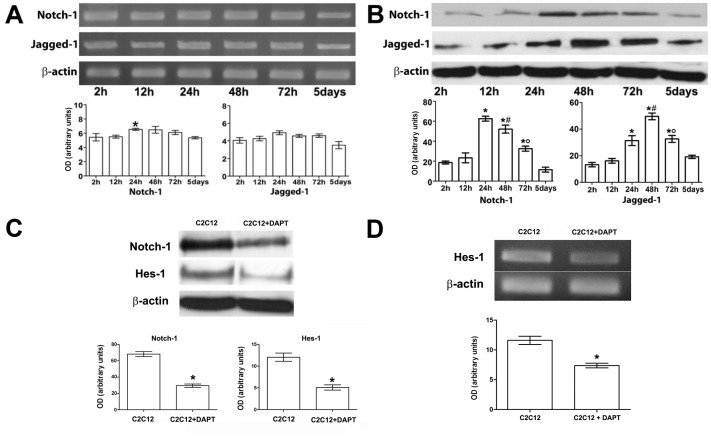
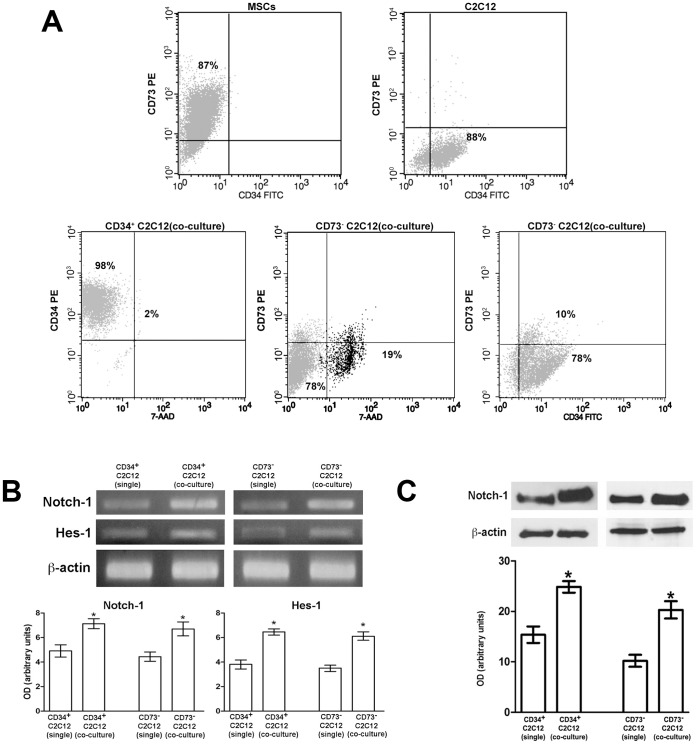
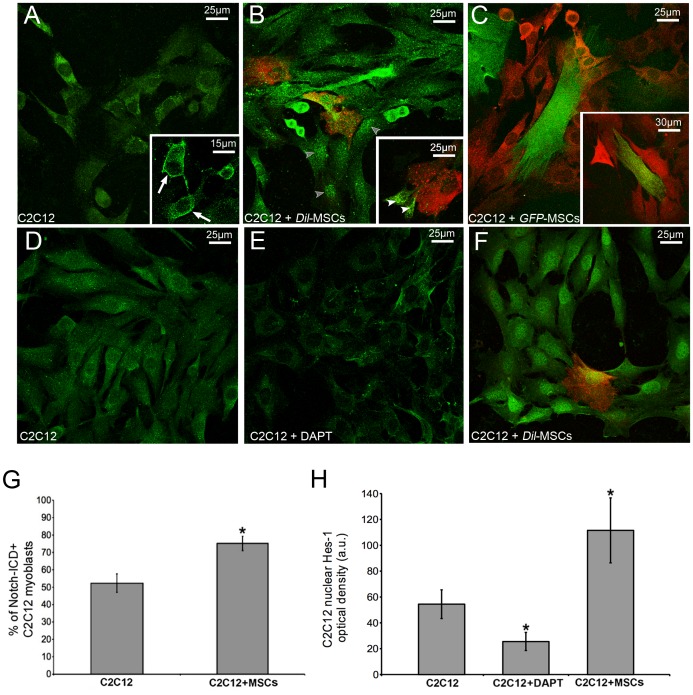
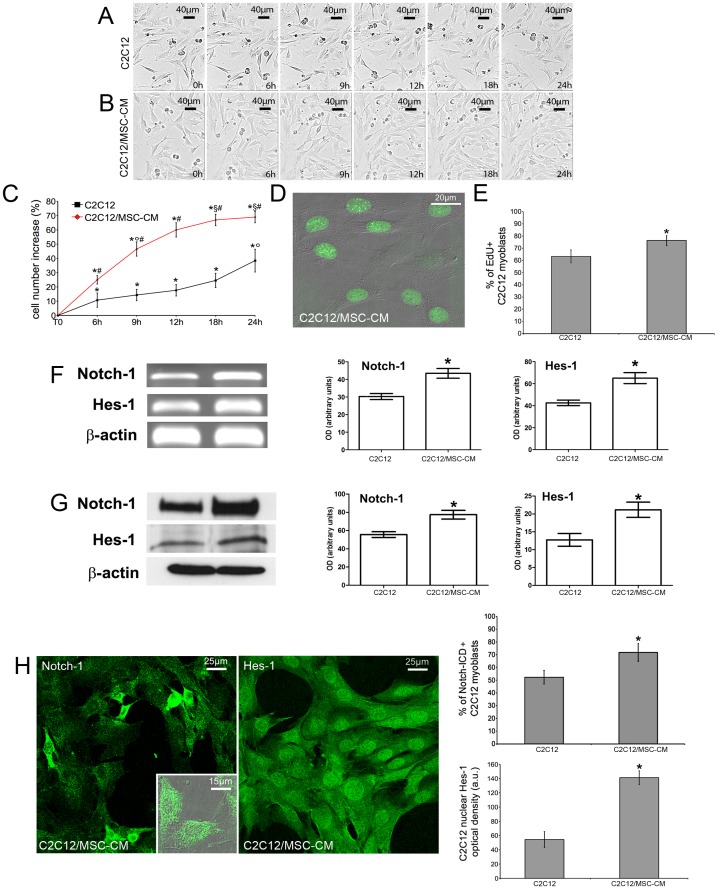
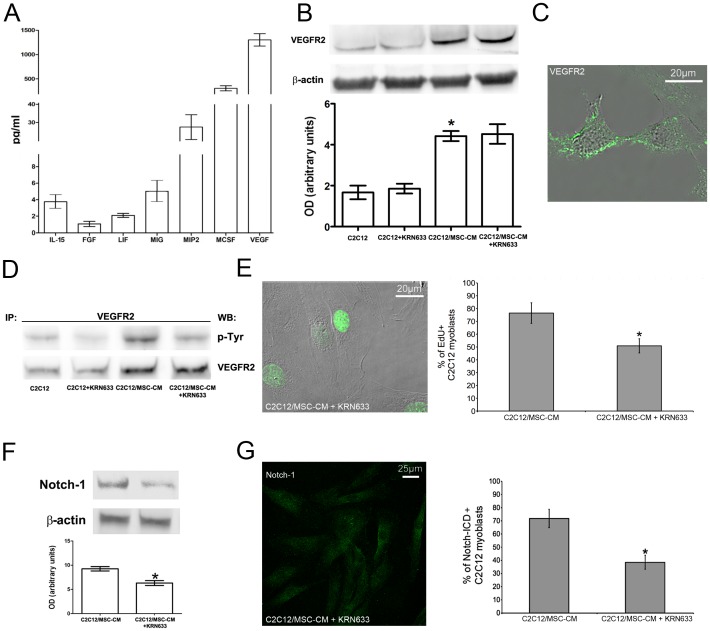
Mesenchymal stromal cells (MSCs) are the leading cell candidates in the field of regenerative medicine. These cells have also been successfully used to improve skeletal muscle repair/regeneration; however, the mechanisms responsible for their beneficial effects remain to be clarified. On this basis, in the present study, we evaluated in a co-culture system, the ability of bone-marrow MSCs to influence C2C12 myoblast behavior and analyzed the cross-talk between the two cell types at the cellular and molecular level. We found that myoblast proliferation was greatly enhanced in the co-culture as judged by time lapse videomicroscopy, cyclin A expression and EdU incorporation. Moreover, myoblasts immunomagnetically separated from MSCs after co-culture expressed higher mRNA and protein levels of Notch-1, a key determinant of myoblast activation and proliferation, as compared with the single culture. Notch-1 intracellular domain and nuclear localization of Hes-1, a Notch-1 target gene, were also increased in the co-culture. Interestingly, the myoblastic response was mainly dependent on the paracrine release of vascular endothelial growth factor (VEGF) by MSCs. Indeed, the addition of MSC-derived conditioned medium (CM) to C2C12 cells yielded similar results as those observed in the co-culture and increased the phosphorylation and expression levels of VEGFR. The treatment with the selective pharmacological VEGFR inhibitor, KRN633, resulted in a marked attenuation of the receptor activation and concomitantly inhibited the effects of MSC-CM on C2C12 cell growth and Notch-1 signaling. In conclusion, this study provides novel evidence for a role of MSCs in stimulating myoblast cell proliferation and suggests that the functional interaction between the two cell types may be exploited for the development of new and more efficient cell-based skeletal muscle repair strategies.
间充质基质细胞(MSCs)是再生医学领域的主要候选细胞。这些细胞也已成功用于改善骨骼肌修复/再生;然而,负责其有益效果的机制仍需阐明。在此基础上,本研究在共培养体系中评估了骨髓间充质基质细胞影响 C2C12 成肌细胞行为的能力,并在细胞和分子水平上分析了两种细胞类型之间的串扰。我们发现,通过延时视频显微镜、细胞周期蛋白 A 表达和 EdU 掺入判断,共培养中肌母细胞的增殖大大增强。此外,与单一培养相比,从共培养后的 MSC 免疫磁珠分离的肌母细胞表达更高水平的 Notch-1 mRNA 和蛋白,Notch-1 是肌母细胞激活和增殖的关键决定因素。共培养中 Notch-1 细胞内结构域和 Hes-1 的核定位也增加,Hes-1 是 Notch-1 的靶基因。有趣的是,肌母细胞的反应主要依赖于 MSC 旁分泌释放血管内皮生长因子(VEGF)。事实上,将 MSC 衍生的条件培养基(CM)添加到 C2C12 细胞中会产生与共培养中观察到的相似结果,并增加 VEGFR 的磷酸化和表达水平。用选择性 VEGFR 抑制剂 KRN633 处理可显著减弱受体激活,并同时抑制 MSC-CM 对 C2C12 细胞生长和 Notch-1 信号的影响。总之,本研究为 MSC 刺激肌母细胞增殖的作用提供了新的证据,并表明两种细胞类型之间的功能相互作用可能被用于开发新的、更有效的基于细胞的骨骼肌修复策略。