CAS key laboratory of genome sciences and information, Beijing Institute of Genomics, Chinese Academy of Sciences, Beijing, China.
PLoS One. 2012;7(7):e40498. doi: 10.1371/journal.pone.0040498. Epub 2012 Jul 16.
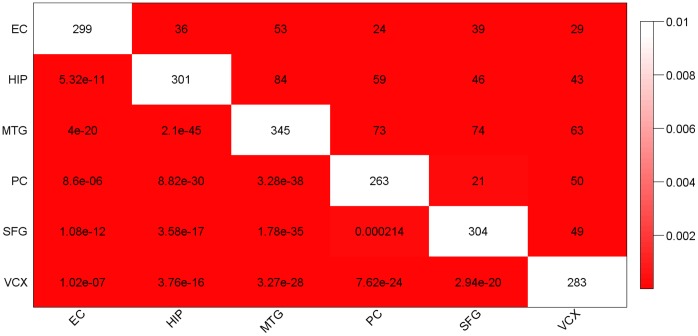
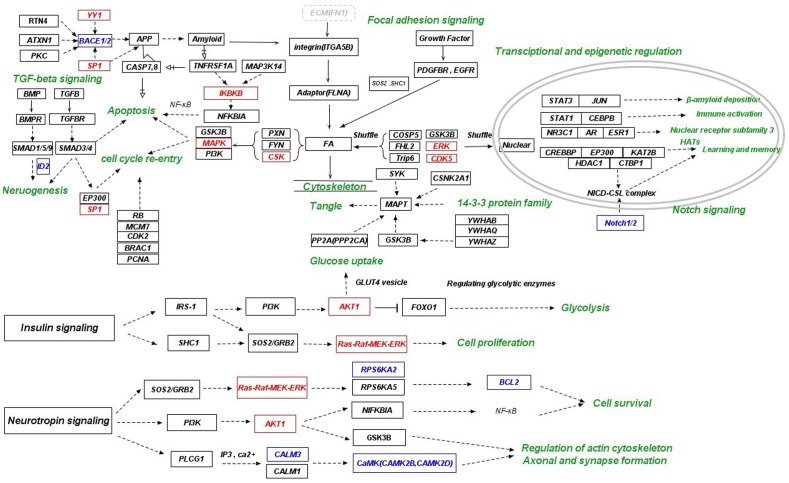
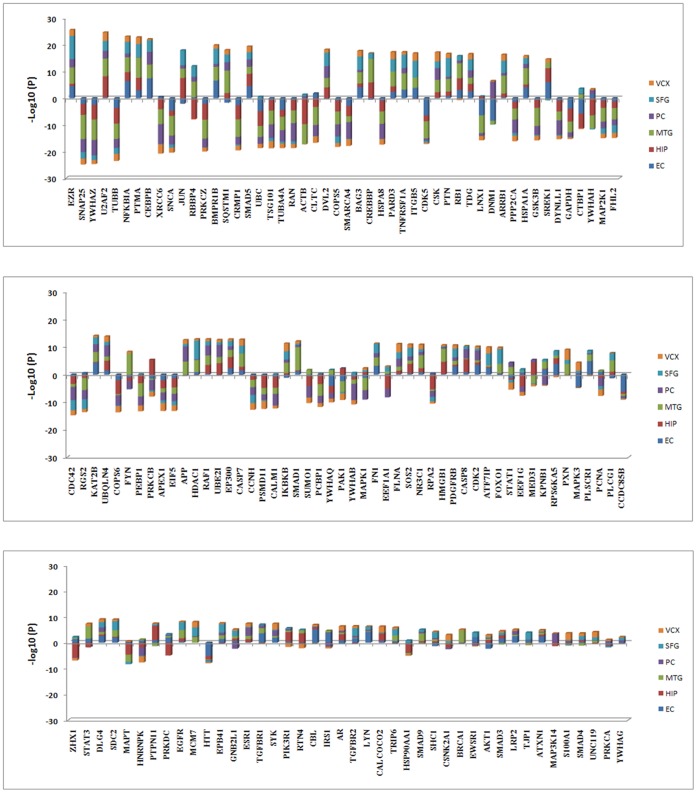
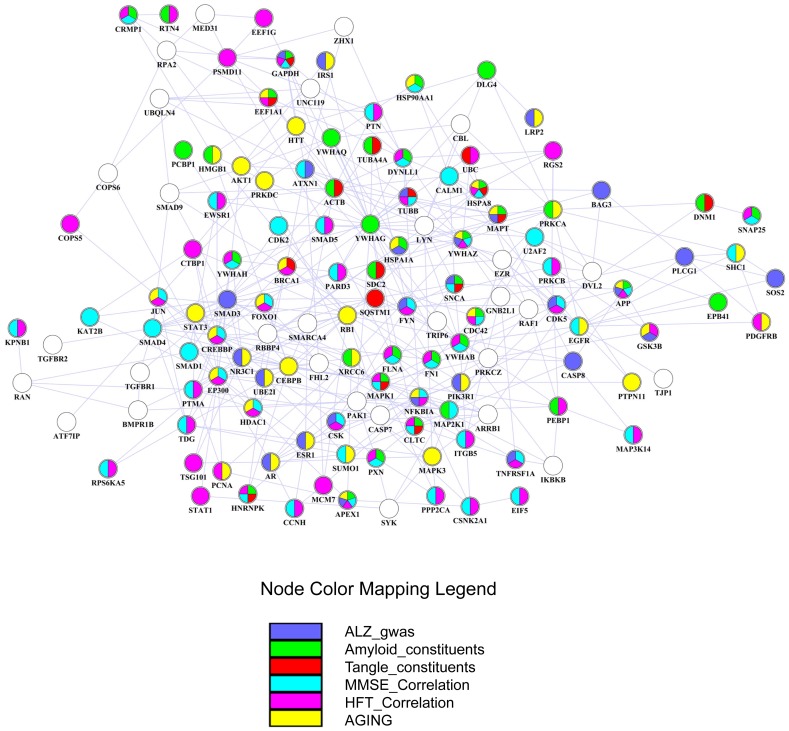
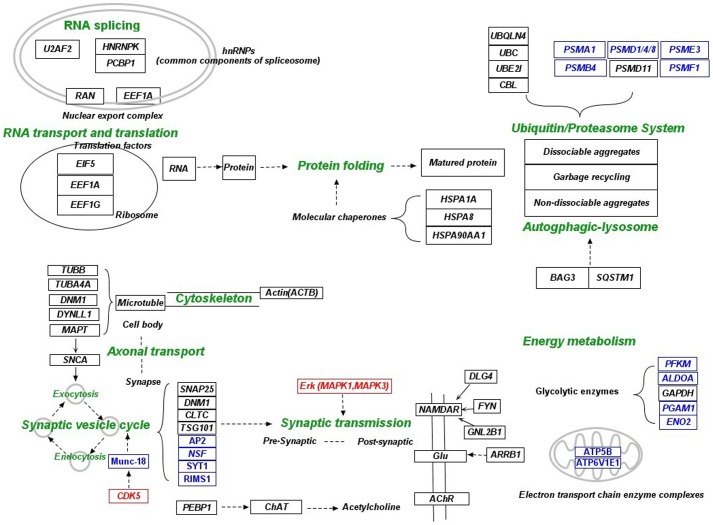
Alzheimer's disease (AD) is a progressive neurodegenerative disease involving the alteration of gene expression at the whole genome level. Genome-wide transcriptional profiling of AD has been conducted by many groups on several relevant brain regions. However, identifying the most critical dys-regulated genes has been challenging. In this work, we addressed this issue by deriving critical genes from perturbed subnetworks. Using a recent microarray dataset on six brain regions, we applied a heaviest induced subgraph algorithm with a modular scoring function to reveal the significantly perturbed subnetwork in each brain region. These perturbed subnetworks were found to be significantly overlapped with each other. Furthermore, the hub genes from these perturbed subnetworks formed a connected hub network consisting of 136 genes. Comparison between AD and several related diseases demonstrated that the hub network was robustly and specifically perturbed in AD. In addition, strong correlation between the expression level of these hub genes and indicators of AD severity suggested that this hub network can partially reflect AD progression. More importantly, this hub network reflected the adaptation of neurons to the AD-specific microenvironment through a variety of adjustments, including reduction of neuronal and synaptic activities and alteration of survival signaling. Therefore, it is potentially useful for the development of biomarkers and network medicine for AD.
阿尔茨海默病(AD)是一种进行性神经退行性疾病,涉及整个基因组水平的基因表达改变。许多研究小组已经在几个相关的大脑区域进行了 AD 的全基因组转录谱分析。然而,确定最关键的失调基因一直具有挑战性。在这项工作中,我们通过从扰动的子网络中推导出关键基因来解决这个问题。使用最近的一个关于六个大脑区域的微阵列数据集,我们应用了一个带有模块评分函数的最重诱导子图算法,以揭示每个大脑区域中显著扰动的子网络。这些扰动的子网络彼此之间存在显著重叠。此外,这些扰动的子网络中的枢纽基因形成了一个由 136 个基因组成的连通枢纽网络。AD 与几种相关疾病的比较表明,枢纽网络在 AD 中受到了稳健而特异的扰动。此外,这些枢纽基因的表达水平与 AD 严重程度的指标之间存在很强的相关性,表明该枢纽网络可以部分反映 AD 的进展。更重要的是,该枢纽网络通过多种调整反映了神经元对 AD 特异性微环境的适应,包括神经元和突触活动的减少以及存活信号的改变。因此,它对于 AD 的生物标志物和网络医学的发展具有潜在的应用价值。