Kong Wei, Mou Xiaoyang, Zhang Na, Zeng Weiming, Li Shasha, Yang Yang
Information Engineering College, Shanghai Maritime University, Shanghai 201306, China.
DNJ Pharma and Rowan University, Glassboro, NJ 08028, USA.
Biomed Res Int. 2015;2015:394260. doi: 10.1155/2015/394260. Epub 2015 Mar 19.
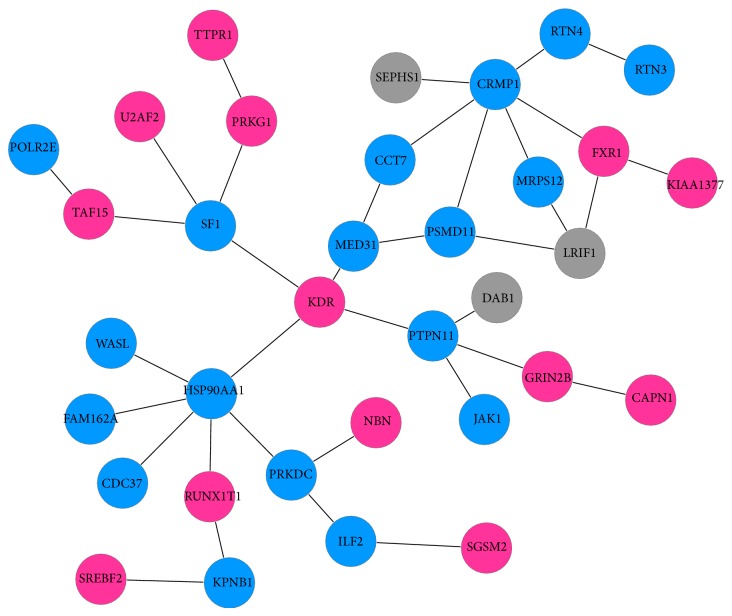
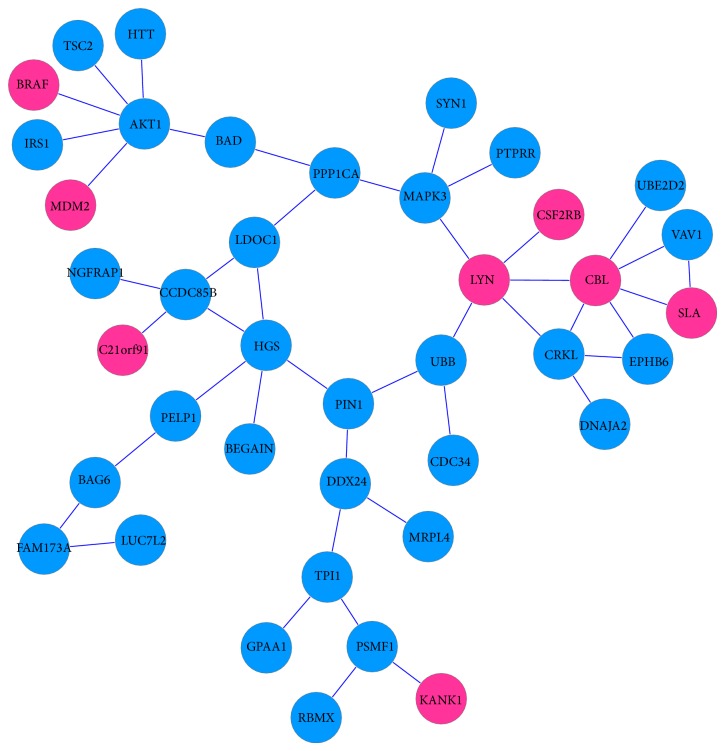
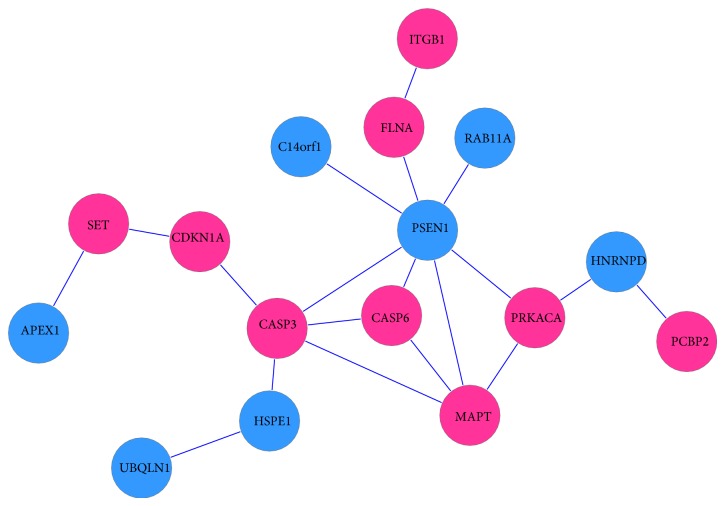
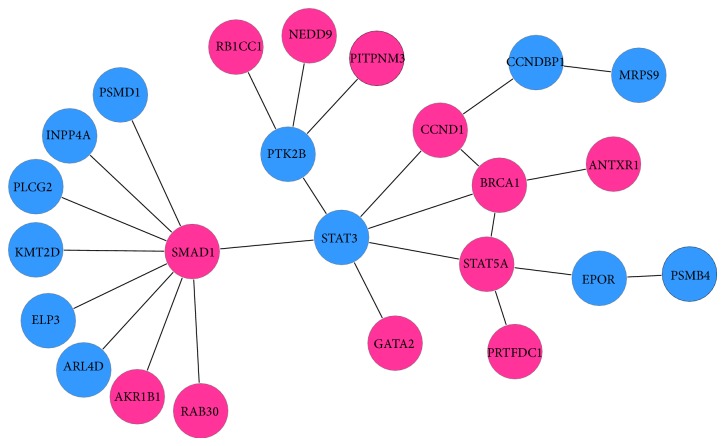
Alzheimer's disease (AD) is a progressively and fatally neurodegenerative disorder and leads to irreversibly cognitive and memorial damage in different brain regions. The identification and analysis of the dysregulated pathways and subnetworks among affected brain regions will provide deep insights for the pathogenetic mechanism of AD. In this paper, commonly and specifically significant subnetworks were identified from six AD brain regions. Protein-protein interaction (PPI) data were integrated to add molecular biological information to construct the functional modules of six AD brain regions by Heinz algorithm. Then, the simulated annealing algorithm based on edge weight is applied to predicting and optimizing the maximal scoring networks for common and specific genes, respectively, which can remove the weak interactions and add the prediction of strong interactions to increase the accuracy of the networks. The identified common subnetworks showed that inflammation of the brain nerves is one of the critical factors of AD and calcium imbalance may be a link among several causative factors in AD pathogenesis. In addition, the extracted specific subnetworks for each brain region revealed many biologically functional mechanisms to understand AD pathogenesis.
阿尔茨海默病(AD)是一种进行性致命的神经退行性疾病,会导致不同脑区出现不可逆的认知和记忆损伤。识别和分析受影响脑区中失调的通路和子网将为AD的发病机制提供深入见解。本文从六个AD脑区中识别出常见和特定的重要子网。整合蛋白质-蛋白质相互作用(PPI)数据以添加分子生物学信息,通过海因茨算法构建六个AD脑区的功能模块。然后,应用基于边权重的模拟退火算法分别预测和优化常见基因和特定基因的最大评分网络,这可以去除弱相互作用并添加强相互作用的预测以提高网络的准确性。识别出的常见子网表明,脑神经炎症是AD的关键因素之一,钙失衡可能是AD发病机制中几个致病因素之间的一个环节。此外,为每个脑区提取的特定子网揭示了许多生物学功能机制,有助于理解AD的发病机制。