Department of Biophysics, University of Texas Southwestern Medical Center, Dallas, Texas, United States of America.
PLoS One. 2012;7(7):e41071. doi: 10.1371/journal.pone.0041071. Epub 2012 Jul 18.
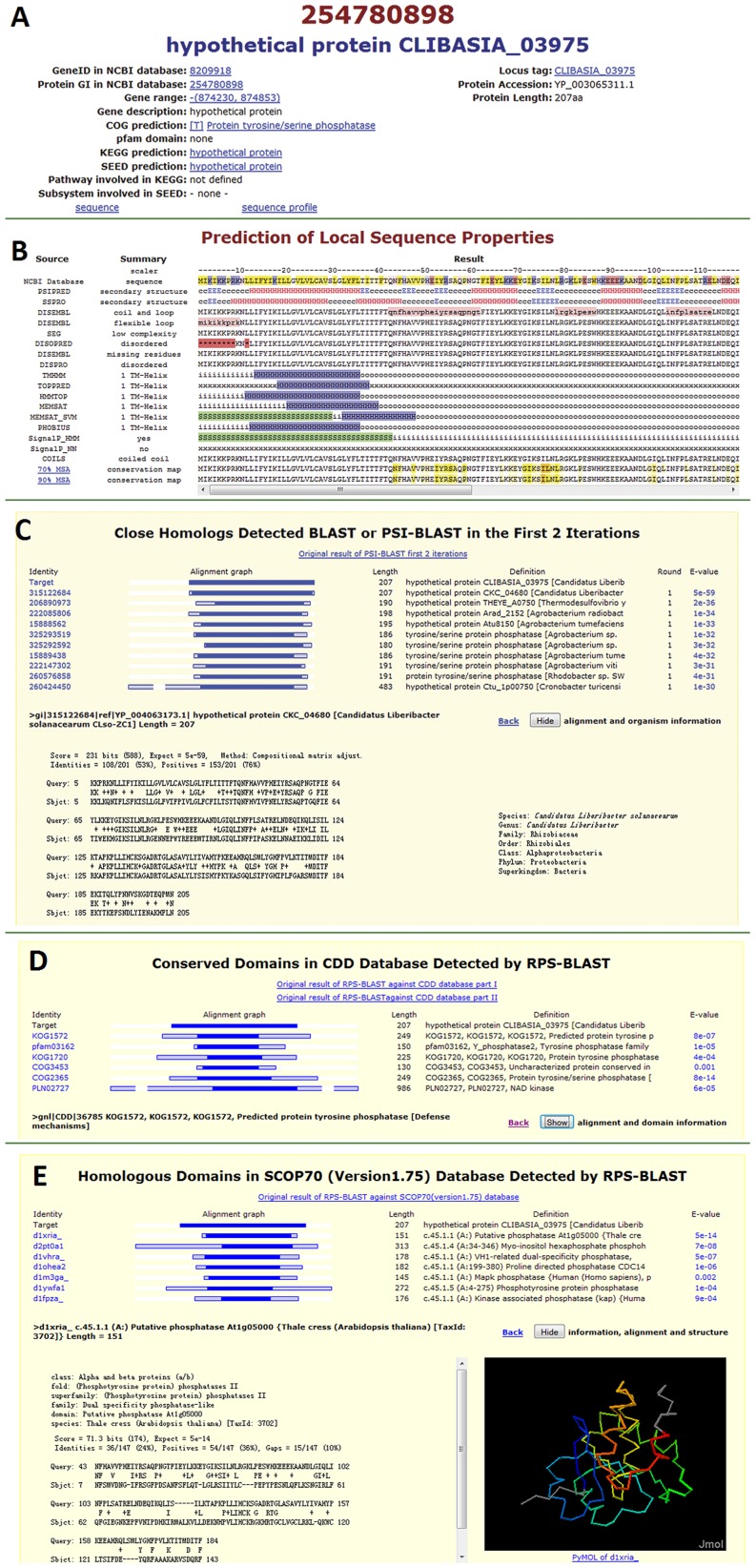
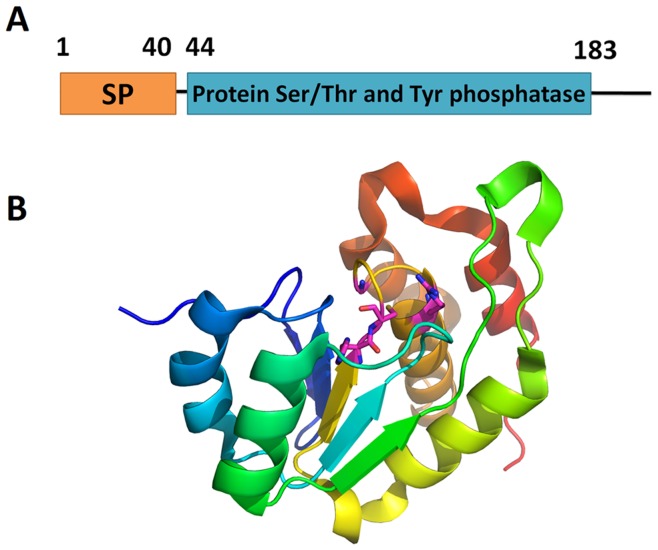
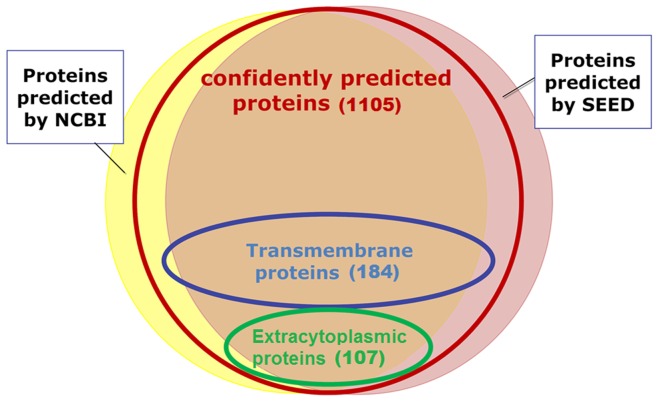
Candidatus Liberibacter asiaticus (Ca. L. asiaticus) is a parasitic gram-negative bacterium that is closely associated with Huanglongbing (HLB), a worldwide citrus disease. Given the difficulty in culturing the bacterium and thus in its experimental characterization, computational analyses of the whole Ca. L. asiaticus proteome can provide much needed insights into the mechanisms of the disease and guide the development of treatment strategies. In this study, we applied state-of-the-art sequence analysis tools to every Ca. L. asiaticus protein. Our results are available as a public website at http://prodata.swmed.edu/liberibacter_asiaticus/. In particular, we manually curated the results to predict the subcellular localization, spatial structure and function of all Ca. L. asiaticus proteins (http://prodata.swmed.edu/liberibacter_asiaticus/curated/). This extensive information should facilitate the study of Ca. L. asiaticus proteome function and its relationship to disease. Pilot studies based on the information from our website have revealed several potential virulence factors, discussed herein.
亚洲韧皮杆菌(Ca. Liberibacter asiaticus,Ca. L. asiaticus)是一种寄生性革兰氏阴性菌,与黄龙病(HLB)密切相关,HLB 是一种世界性的柑橘病害。由于该细菌难以培养,因此难以对其进行实验表征,对整个亚洲韧皮杆菌蛋白质组进行计算分析可以深入了解疾病的机制,并为治疗策略的制定提供指导。在这项研究中,我们应用了最先进的序列分析工具来分析每一个亚洲韧皮杆菌蛋白。我们的结果可以在公共网站 http://prodata.swmed.edu/liberibacter_asiaticus/ 上获取。特别是,我们对结果进行了人工编辑,以预测所有亚洲韧皮杆菌蛋白的亚细胞定位、空间结构和功能(http://prodata.swmed.edu/liberibacter_asiaticus/curated/)。这些广泛的信息将有助于研究亚洲韧皮杆菌蛋白质组的功能及其与疾病的关系。基于我们网站信息的初步研究已经揭示了几个潜在的毒力因子,本文将对其进行讨论。