United States Department of Agriculture-Agricultural Research Service, CDPG, San Joaquin Valley Agricultural Sciences Center, Parlier, California, United States of America.
PLoS One. 2011 Apr 28;6(4):e19135. doi: 10.1371/journal.pone.0019135.
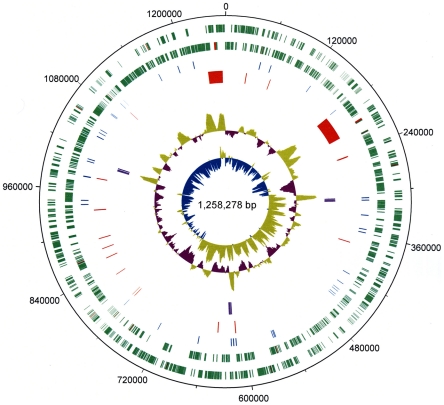
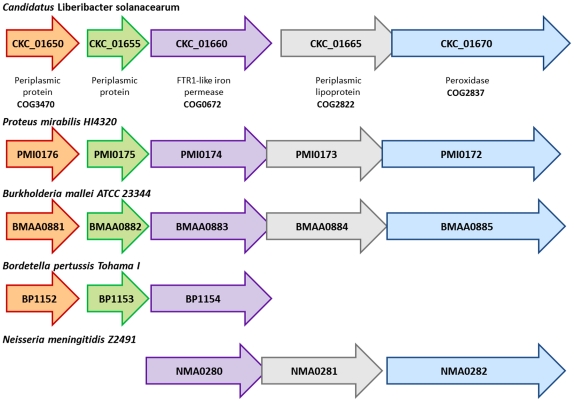
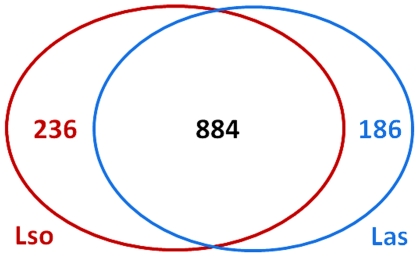
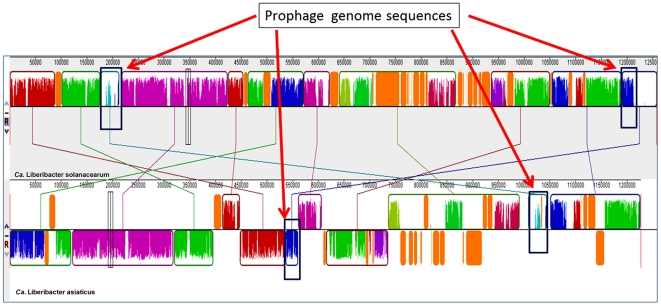
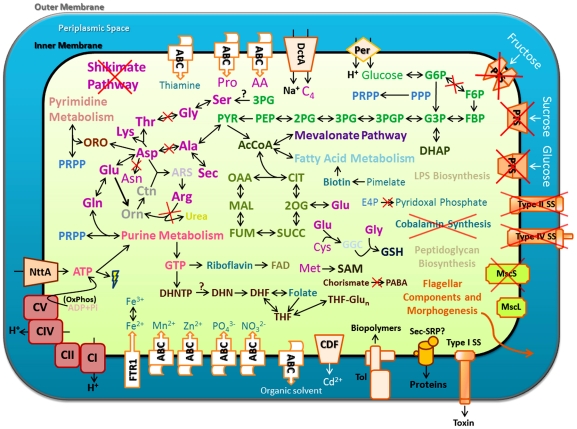
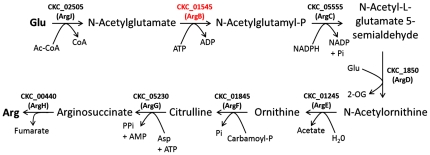
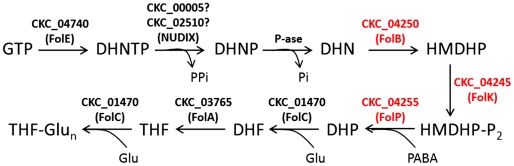
Zebra Chip (ZC) is an emerging plant disease that causes aboveground decline of potato shoots and generally results in unusable tubers. This disease has led to multi-million dollar losses for growers in the central and western United States over the past decade and impacts the livelihood of potato farmers in Mexico and New Zealand. ZC is associated with 'Candidatus Liberibacter solanacearum', a fastidious alpha-proteobacterium that is transmitted by a phloem-feeding psyllid vector, Bactericera cockerelli Sulc. Research on this disease has been hampered by a lack of robust culture methods and paucity of genome sequence information for 'Ca. L. solanacearum'. Here we present the sequence of the 1.26 Mbp metagenome of 'Ca. L. solanacearum', based on DNA isolated from potato psyllids. The coding inventory of the 'Ca. L. solanacearum' genome was analyzed and compared to related Rhizobiaceae to better understand 'Ca. L. solanacearum' physiology and identify potential targets to develop improved treatment strategies. This analysis revealed a number of unique transporters and pathways, all potentially contributing to ZC pathogenesis. Some of these factors may have been acquired through horizontal gene transfer. Taxonomically, 'Ca. L. solanacearum' is related to 'Ca. L. asiaticus', a suspected causative agent of citrus huanglongbing, yet many genome rearrangements and several gene gains/losses are evident when comparing these two Liberibacter. species. Relative to 'Ca. L. asiaticus', 'Ca. L. solanacearum' probably has reduced capacity for nucleic acid modification, increased amino acid and vitamin biosynthesis functionalities, and gained a high-affinity iron transport system characteristic of several pathogenic microbes.
斑马纹块茎病(ZC)是一种新兴的植物病害,会导致马铃薯幼苗地上部分衰退,通常导致薯块无法使用。在过去十年中,这种疾病给美国中西部的种植者造成了数百万美元的损失,并影响了墨西哥和新西兰的马铃薯农民的生计。ZC 与“韧皮部杆菌属韧皮部细菌”有关,这是一种挑剔的α-变形菌,由吸食韧皮部的粉虱媒介,Bactericera cockerelli Sulc 传播。由于缺乏强大的培养方法和“Ca. L. solanacearum”基因组序列信息匮乏,对这种疾病的研究受到了阻碍。在这里,我们根据从马铃薯粉虱中分离的 DNA,展示了 1.26 Mbp 元基因组的序列。分析了“Ca. L. solanacearum”基因组的编码清单,并与相关的根瘤菌科进行了比较,以更好地了解“Ca. L. solanacearum”的生理学,并确定潜在的目标,以开发改进的治疗策略。这项分析揭示了许多独特的转运蛋白和途径,所有这些都可能有助于 ZC 的发病机制。其中一些因素可能是通过水平基因转移获得的。从分类学上讲,“Ca. L. solanacearum”与“Ca. L. asiaticus”有关,后者被怀疑是柑橘黄龙病的病原体,但当比较这两种韧皮部细菌时,许多基因组重排和几个基因的获得/缺失是明显的。与“Ca. L. asiaticus”相比,“Ca. L. solanacearum”可能核酸修饰的能力降低,增加了氨基酸和维生素生物合成功能,并获得了几种病原微生物特有的高亲和力铁转运系统。