Laboratorio de Biotoxinas Marinas, Instituto de Ciencias del Mar y Limnologia, Universidad Nacional Autonoma de Mexico, Apdo. Postal 811, Mazatlan, Sinaloa 82040, Mexico.
Departamento de Ingenieria Quimica-Bioquimica, Instituto Tecnologico de Mazatlan, Calle Corsario 1 No. 203, Col. Urias, Mazatlan, Sinaloa 82070, Mexico.
Mar Drugs. 2012 May;10(5):1044-1065. doi: 10.3390/md10051044. Epub 2012 May 9.
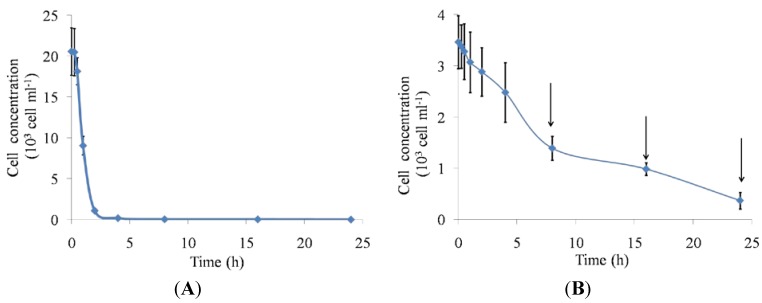
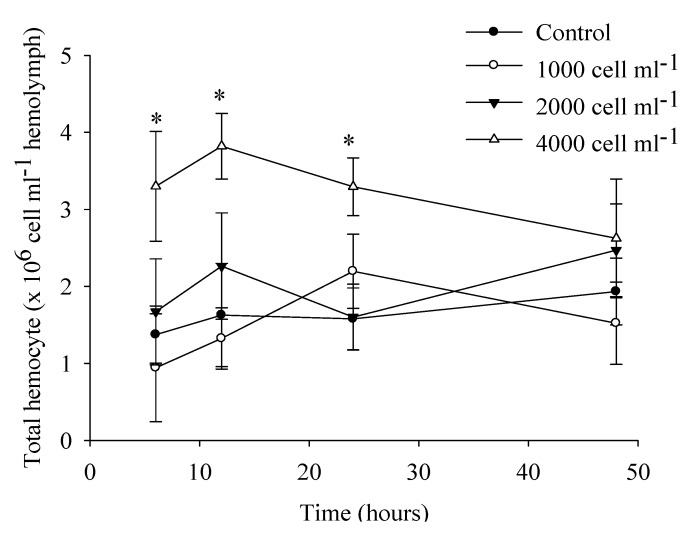
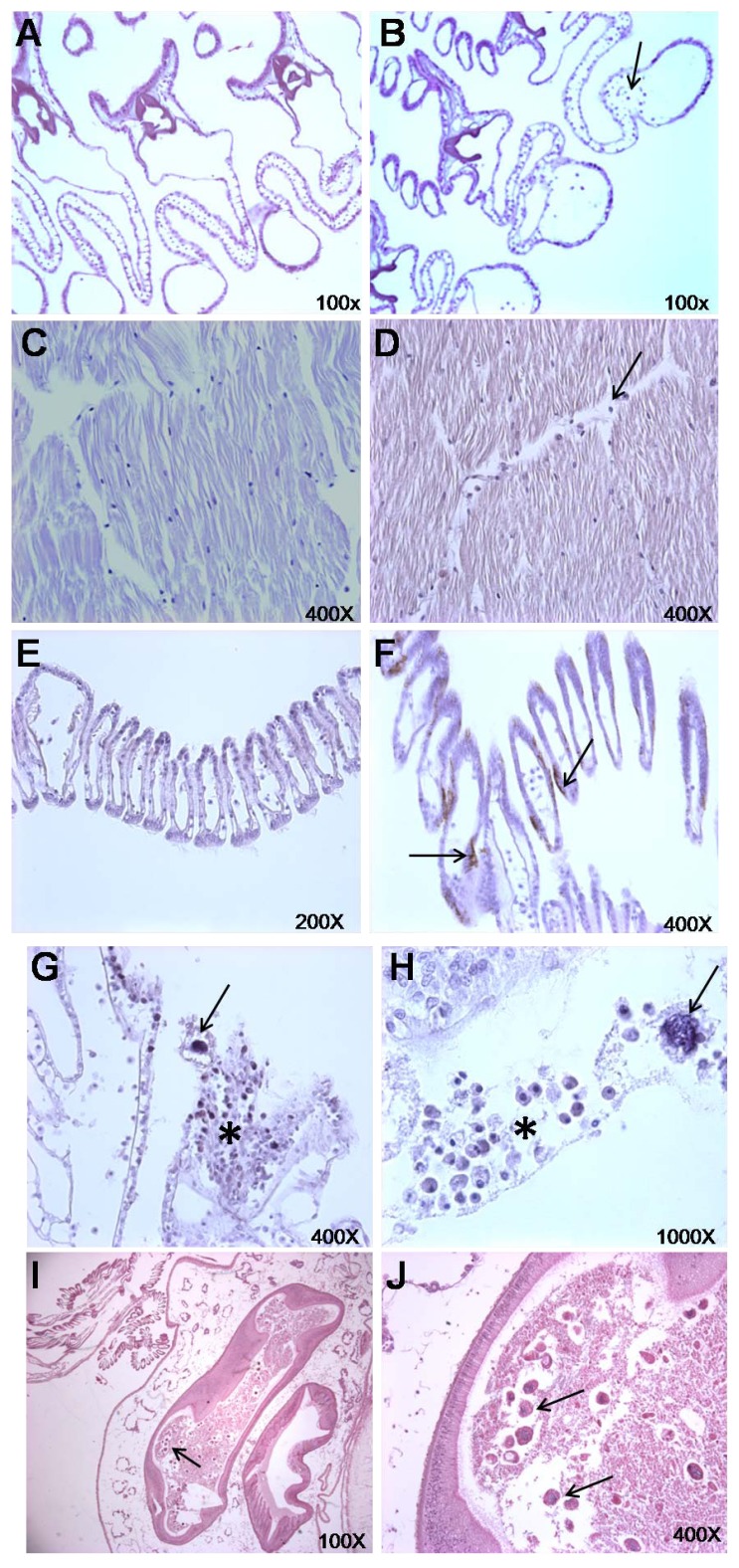
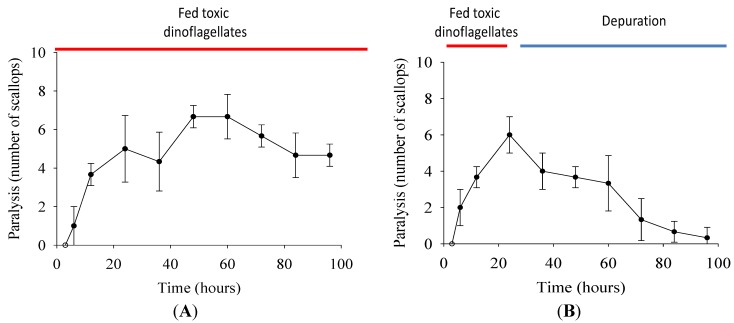
The dinoflagellate Gymnodinium catenatum produces paralyzing shellfish poisons that are consumed and accumulated by bivalves. We performed short-term feeding experiments to examine ingestion, accumulation, biotransformation, histopathology, and paralysis in the juvenile Pacific calico scallop Argopecten ventricosus that consume this dinoflagellate. Depletion of algal cells was measured in closed systems. Histopathological preparations were microscopically analyzed. Paralysis was observed and the time of recovery recorded. Accumulation and possible biotransformation of toxins were measured by HPLC analysis. Feeding activity in treated scallops showed that scallops produced pseudofeces, ingestion rates decreased at 8 h; approximately 60% of the scallops were paralyzed and melanin production and hemocyte aggregation were observed in several tissues at 15 h. HPLC analysis showed that the only toxins present in the dinoflagellates and scallops were the N-sulfo-carbamoyl toxins (C1, C2); after hydrolysis, the carbamate toxins (epimers GTX2/3) were present. C1 and C2 toxins were most common in the mantle, followed by the digestive gland and stomach-complex, adductor muscle, kidney and rectum group, and finally, gills. Toxin profiles in scallop tissue were similar to the dinoflagellate; biotransformations were not present in the scallops in this short-term feeding experiment.
甲藻夜光藻产生麻痹性贝类毒素,这些毒素被双壳贝类摄入并积累。我们进行了短期喂养实验,以研究食用这种甲藻的幼年太平洋花蛤(Argopecten ventricosus)的摄入、积累、生物转化、组织病理学和麻痹情况。在封闭系统中测量藻类细胞的耗竭情况。对组织病理学制备进行显微镜分析。观察麻痹情况并记录恢复时间。通过 HPLC 分析测量毒素的积累和可能的生物转化。在处理过的扇贝中观察到摄食活动表明,扇贝产生了假粪便,摄食率在 8 小时后下降;约 60%的扇贝瘫痪,在 15 小时时,在几个组织中观察到黑色素生成和血球细胞聚集。HPLC 分析表明,甲藻和扇贝中仅存在 N-磺酰基氨基甲酰毒素(C1、C2);水解后,存在氨基甲酸酯毒素(差向异构体 GTX2/3)。C1 和 C2 毒素在套膜中最常见,其次是消化腺和胃复合体、闭壳肌、肾脏和直肠组,最后是鳃。扇贝组织中的毒素谱与甲藻相似;在这个短期喂养实验中,扇贝中没有发生生物转化。