Ekman Elisabet, Petersson Göran, Tågerud Sven, Bäckström Martin
Regional Pharmacovigilance Unit, R & D Centre Skåne, Skåne University Hospital, Lund.
Drug Healthc Patient Saf. 2012;4:61-6. doi: 10.2147/DHPS.S31103. Epub 2012 Jun 28.
The purpose of this study was to investigate awareness among nurses regarding their new role as reporters of adverse drug reactions in Sweden and factors that may influence reporting by nurses.
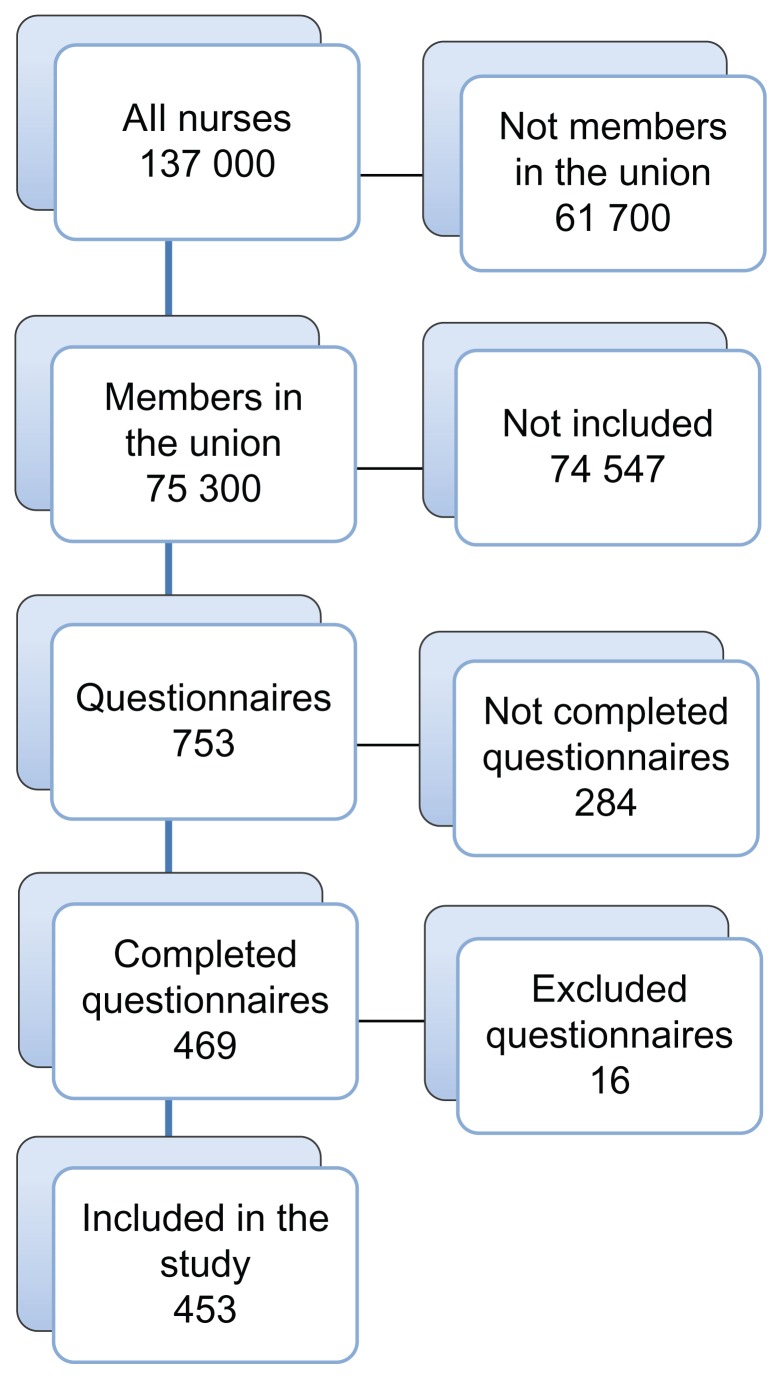
In 2007, all nurses were included in the adverse drug reaction reporting scheme in Sweden. A questionnaire was sent to 753 randomly selected nurses in September 2010.
Of the 453 (60%) responding nurses, 265 (58%) were aware that nurses were included in the reporting of adverse drug reactions. Sixty-one nurses (14%) stated that they had reported an adverse drug reaction. Fifteen percent (n = 70) of the respondents had received training about reporting of adverse drug reactions. Almost one third of these (n = 21, 30%) had reported an adverse drug reaction on at least one occasion. Among nurses without training, a smaller proportion (n = 40, 11%, P < 0.05) had reported an adverse drug reaction on at least one occasion. The two factors considered most important by nurses for reporting were the severity of the adverse drug reaction and if the reaction was to a newly approved drug. A majority of the nurses (n = 397, 88%) were interested in a training course in pharmacology as part of their ongoing professional development. One third (32%) of all nurses stated that one reason for not reporting a suspected adverse drug reaction was that the physician responsible did not regard the reaction necessary to report.
We found that more than half of the study population of nurses in Sweden were aware of their new role as reporters of adverse drug reactions, but few of the responding nurses had reported an adverse drug reaction. Given that training seems to be associated with high reporting frequency, we suggest more training in pharmacovigilance for nurses.
本研究旨在调查瑞典护士对其作为药品不良反应报告者这一新角色的认知情况以及可能影响护士报告行为的因素。
2007年,瑞典所有护士均被纳入药品不良反应报告计划。2010年9月,向753名随机抽取的护士发放了调查问卷。
在453名(60%)回复问卷的护士中,265名(58%)知晓护士被纳入药品不良反应报告工作。61名护士(14%)表示曾报告过药品不良反应。15%(n = 70)的受访者接受过药品不良反应报告培训。其中近三分之一(n = 21,30%)至少报告过一次药品不良反应。在未接受培训的护士中,报告过至少一次药品不良反应的比例较小(n = 40,11%,P < 0.05)。护士认为报告时最重要的两个因素是药品不良反应的严重程度以及该反应是否针对新批准的药物。大多数护士(n = 397,88%)对作为其持续专业发展一部分的药理学培训课程感兴趣。所有护士中有三分之一(32%)表示未报告疑似药品不良反应的一个原因是负责的医生认为该反应无需报告。
我们发现瑞典护士研究人群中超过一半知晓其作为药品不良反应报告者的新角色,但回复问卷的护士中很少有人报告过药品不良反应。鉴于培训似乎与高报告频率相关,我们建议对护士进行更多的药物警戒培训。