Department of Ophthalmology, Columbia University, New York, New York, USA.
PLoS One. 2012;7(7):e41309. doi: 10.1371/journal.pone.0041309. Epub 2012 Jul 19.
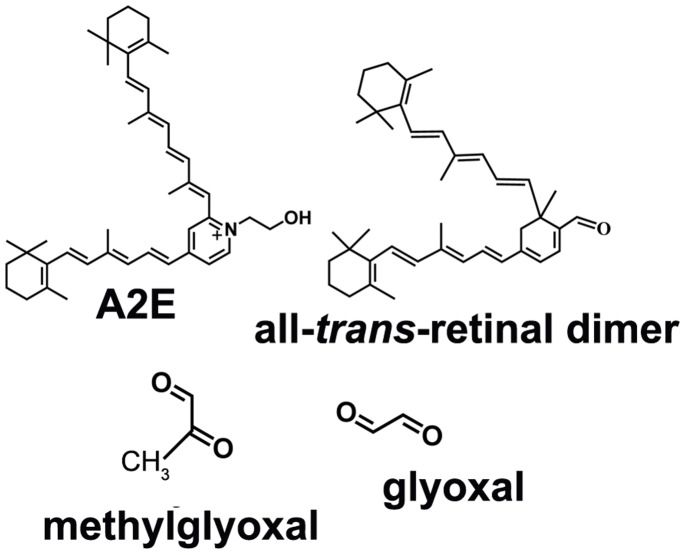
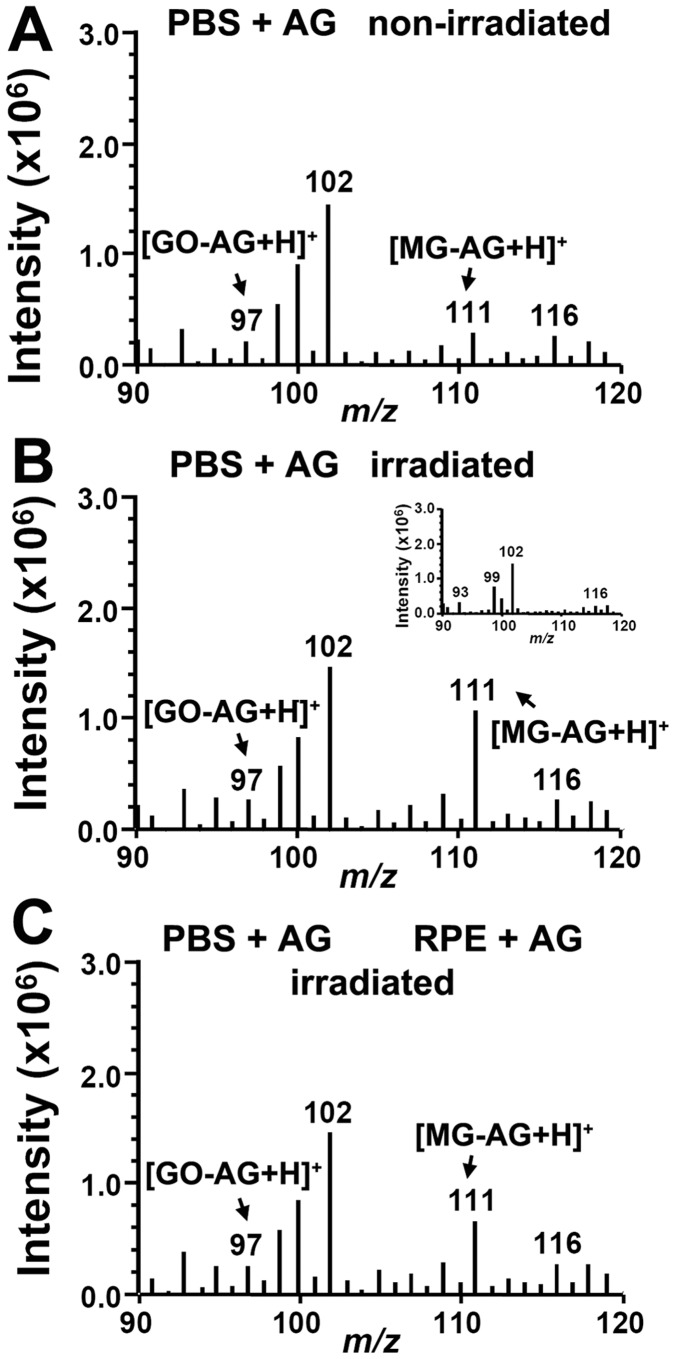
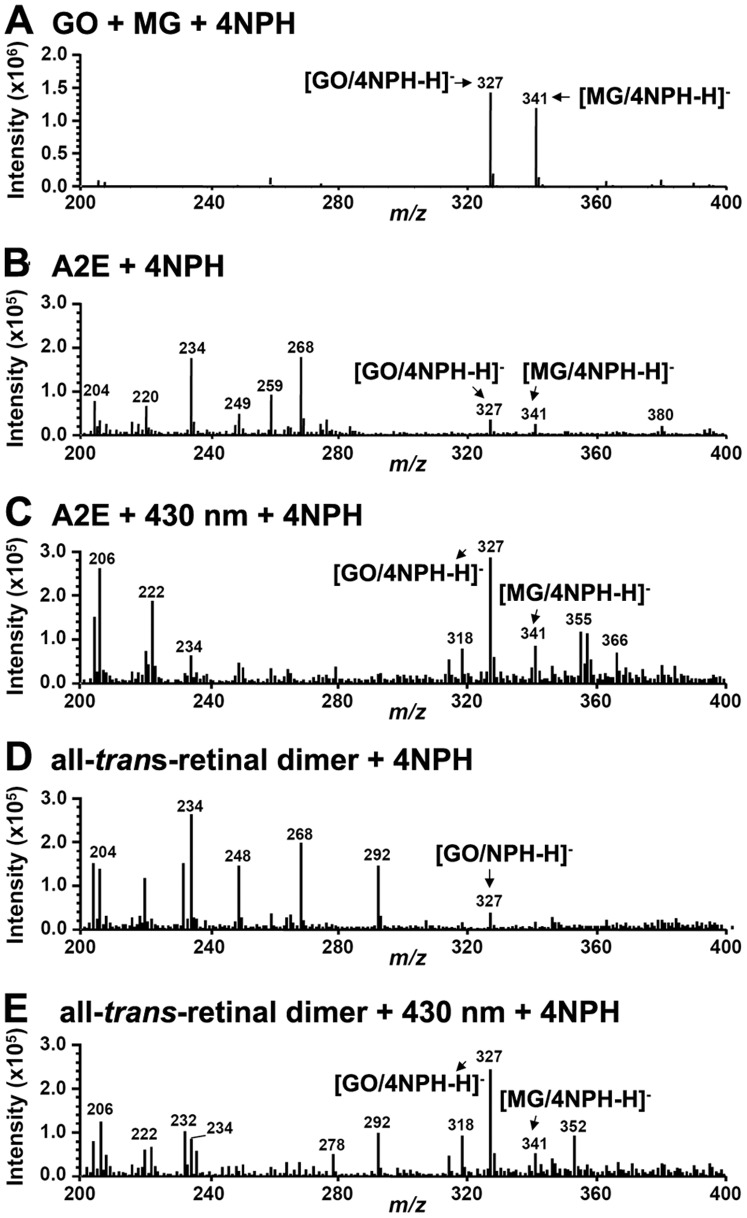
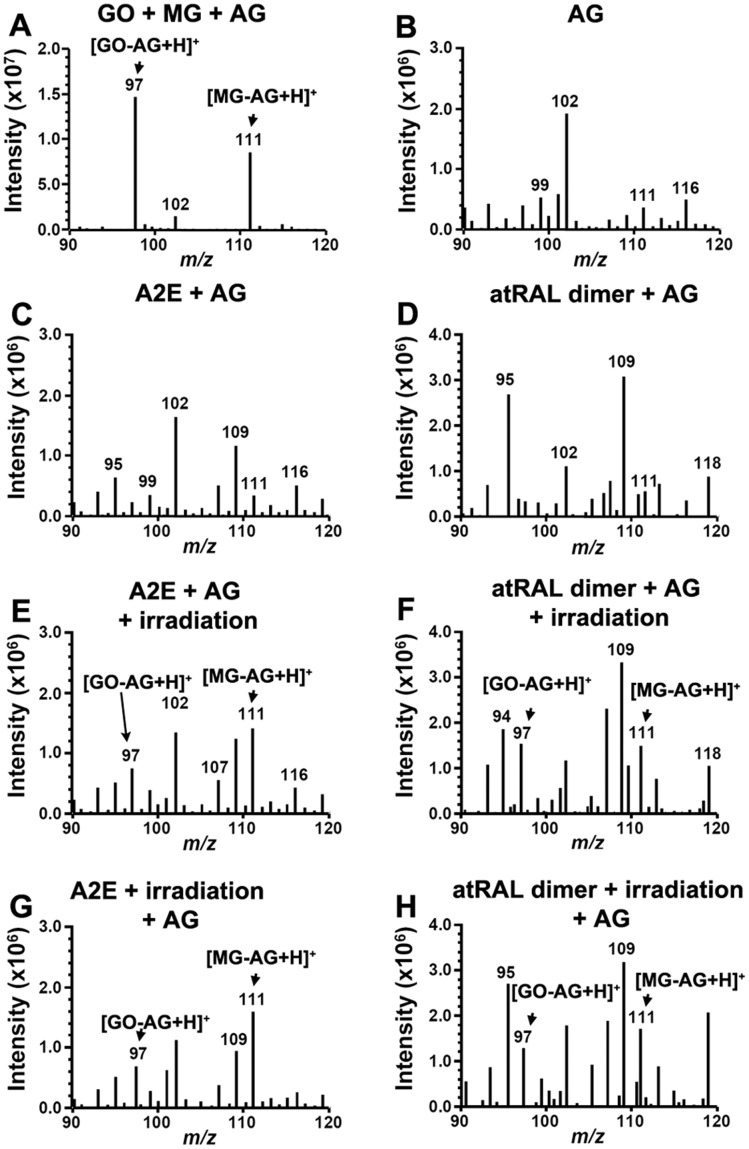
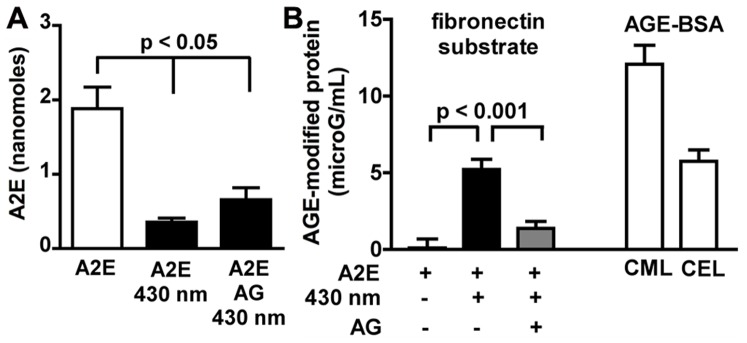
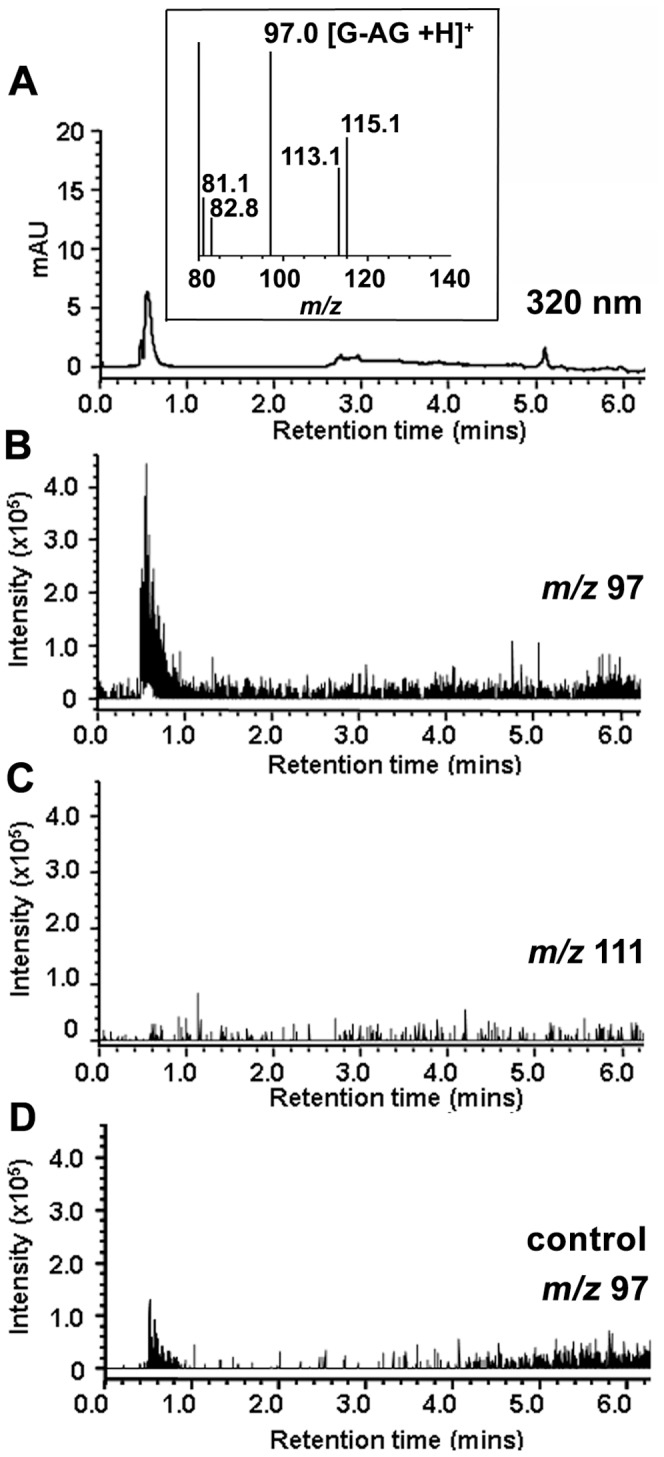
Aging of retinal pigment epithelial (RPE) cells of the eye is marked by accumulations of bisretinoid fluorophores; two of the compounds within this lipofuscin mixture are A2E and all-trans-retinal dimer. These pigments are implicated in pathological mechanisms involved in some vision-threatening disorders including age-related macular degeneration (AMD). Studies have shown that bisretinoids are photosensitive compounds that undergo photooxidation and photodegradation when irradiated with short wavelength visible light. Utilizing ultra performance liquid chromatography (UPLC) with electrospray ionization mass spectrometry (ESI-MS) we demonstrate that photodegradation of A2E and all-trans-retinal dimer generates the dicarbonyls glyoxal (GO) and methylglyoxal (MG), that are known to modify proteins by advanced glycation endproduct (AGE) formation. By extracellular trapping with aminoguanidine, we established that these oxo-aldehydes are released from irradiated A2E-containing RPE cells. Enzyme-linked immunosorbant assays (ELISA) revealed that the substrate underlying A2E-containing RPE was AGE-modified after irradiation. This AGE deposition was suppressed by prior treatment of the cells with aminoguanidine. AGE-modification causes structural and functional impairment of proteins. In chronic diseases such as diabetes and atherosclerosis, MG and GO modify proteins by non-enzymatic glycation and oxidation reactions. AGE-modified proteins are also components of drusen, the sub-RPE deposits that confer increased risk of AMD onset. These results indicate that photodegraded RPE bisretinoid is likely to be a previously unknown source of MG and GO in the eye.
眼部视网膜色素上皮 (RPE) 细胞的衰老以双视黄醛荧光团的积累为标志;脂褐素混合物中的两种化合物是 A2E 和全反式视黄醛二聚体。这些色素与一些威胁视力的疾病(包括年龄相关性黄斑变性 (AMD))相关的病理机制有关。研究表明,双视黄醛是光敏化合物,当受到短波长可见光照射时,会发生光氧化和光降解。我们利用超高效液相色谱 (UPLC) 与电喷雾电离质谱 (ESI-MS) 证明,A2E 和全反式视黄醛二聚体的光降解生成二羰基化合物乙醛 (GO) 和甲基乙二醛 (MG),已知这些化合物通过晚期糖基化终末产物 (AGE) 形成来修饰蛋白质。通过氨基胍的细胞外捕获,我们确定这些氧化醛是从照射的含有 A2E 的 RPE 细胞中释放出来的。酶联免疫吸附测定 (ELISA) 显示,照射后含有 A2E 的 RPE 细胞的基底被 AGE 修饰。在用氨基胍预先处理细胞后,这种 AGE 沉积被抑制。AGE 修饰会导致蛋白质结构和功能受损。在糖尿病和动脉粥样硬化等慢性疾病中,MG 和 GO 通过非酶糖化和氧化反应修饰蛋白质。AGE 修饰的蛋白质也是玻璃膜疣的成分,玻璃膜疣是 AMD 发病风险增加的 RPE 下沉积物。这些结果表明,光降解的 RPE 双视黄醛可能是眼睛中 MG 和 GO 的一个以前未知的来源。