CAS Key Laboratory of Plant Germplasm Enhancement and Specialty Agriculture, Wuhan Botanical Garden, Chinese Academy of Sciences, Wuhan, China.
PLoS One. 2012;7(7):e41310. doi: 10.1371/journal.pone.0041310. Epub 2012 Jul 19.
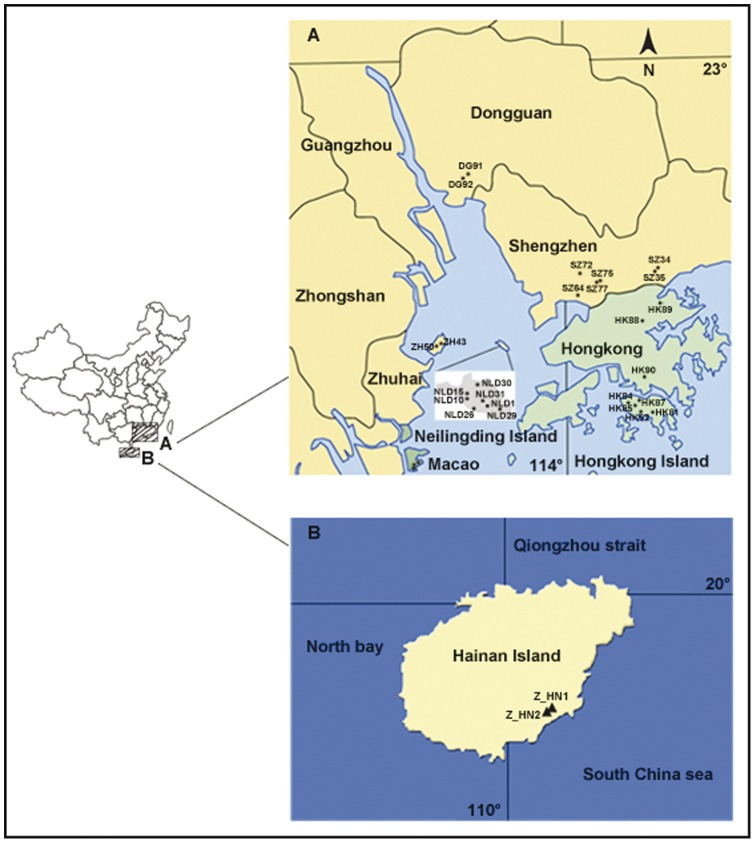
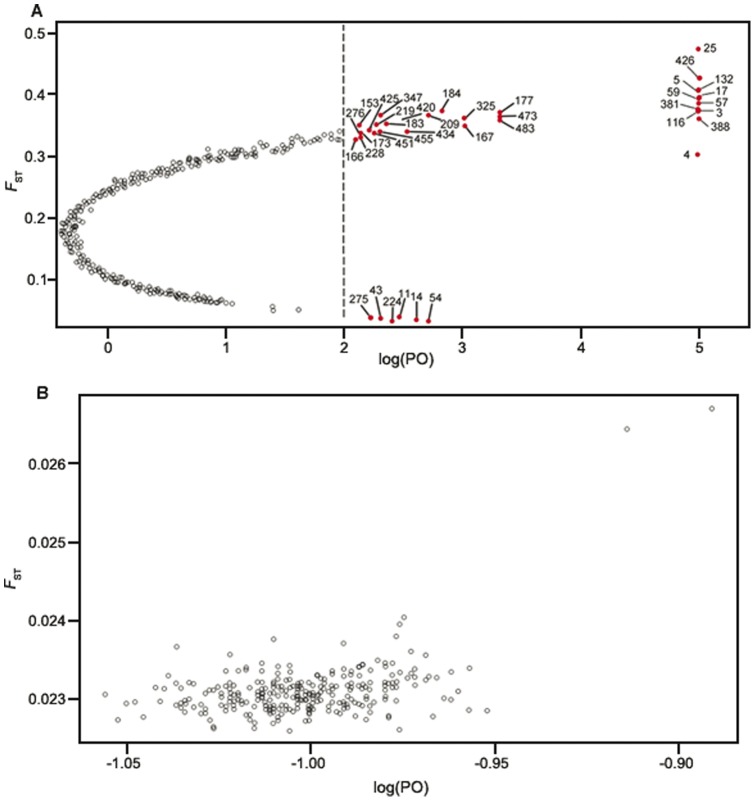
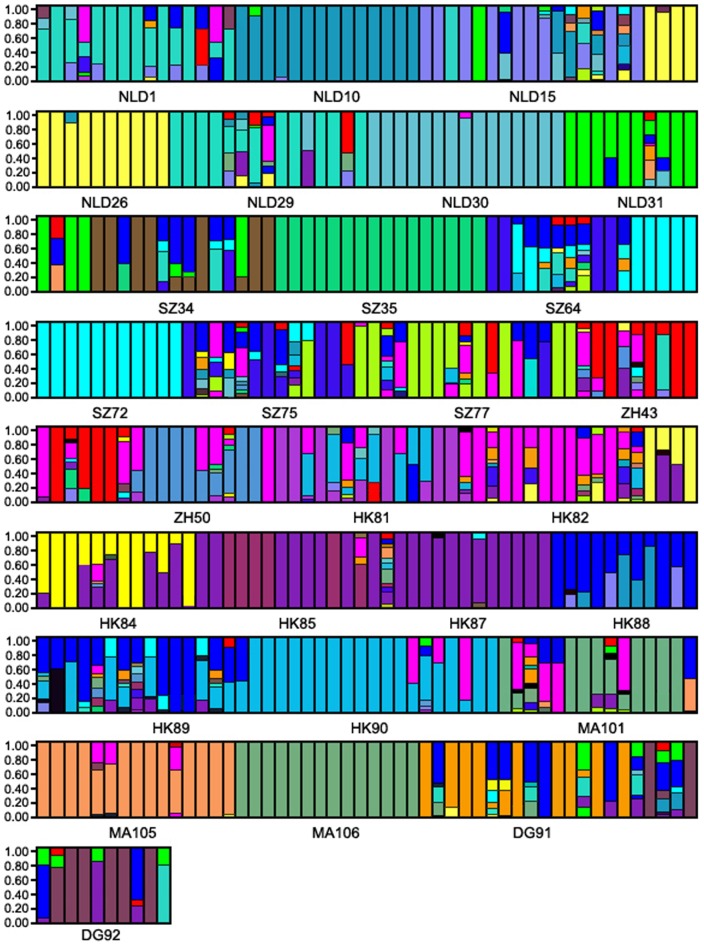
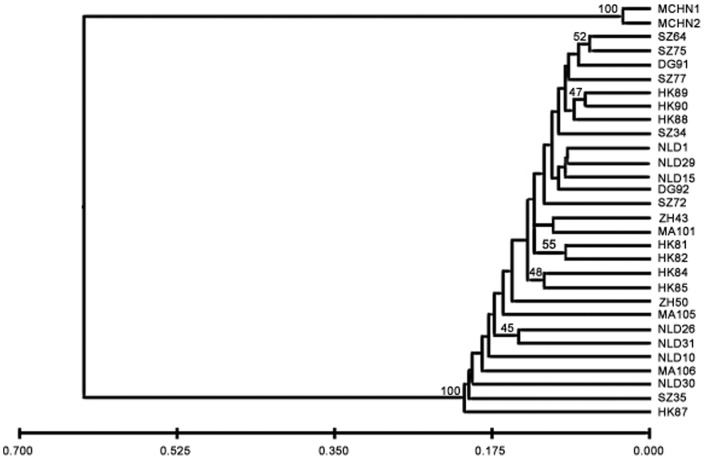
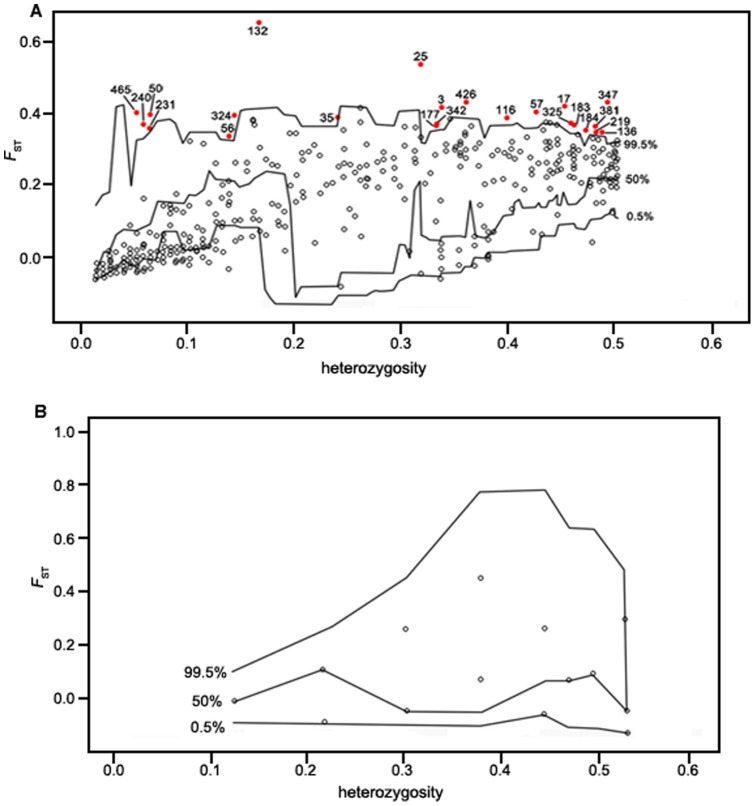
Why some species become successful invaders is an important issue in invasive biology. However, limited genomic resources make it very difficult for identifying candidate genes involved in invasiveness. Mikania micrantha H.B.K. (Asteraceae), one of the world's most invasive weeds, has adapted rapidly in response to novel environments since its introduction to southern China. In its genome, we expect to find outlier loci under selection for local adaptation, critical to dissecting the molecular mechanisms of invasiveness. An explorative amplified fragment length polymorphism (AFLP) genome scan was used to detect candidate loci under selection in 28 M. micrantha populations across its entire introduced range in southern China. We also estimated population genetic parameters, bottleneck signatures, and linkage disequilibrium. In binary characters, such as presence or absence of AFLP bands, if all four character combinations are present, it is referred to as a character incompatibility. Since character incompatibility is deemed to be rare in populations with extensive asexual reproduction, a character incompatibility analysis was also performed in order to infer the predominant mating system in the introduced M. micrantha populations. Out of 483 AFLP loci examined using stringent significance criteria, 14 highly credible outlier loci were identified by Dfdist and Bayescan. Moreover, remarkable genetic variation, multiple introductions, substantial bottlenecks and character compatibility were found to occur in M. micrantha. Thus local adaptation at the genome level indeed exists in M. micrantha, and may represent a major evolutionary mechanism of successful invasion. Interactions between genetic diversity, multiple introductions, and reproductive modes contribute to increase the capacity of adaptive evolution.
为什么有些物种会成为成功的入侵物种是入侵生物学中的一个重要问题。然而,有限的基因组资源使得确定与入侵性相关的候选基因变得非常困难。薇甘菊(Mikania micrantha H.B.K.)(菊科)是世界上最具侵略性的杂草之一,自从引入中国南方以来,它已经迅速适应了新的环境。在其基因组中,我们期望发现针对局部适应的选择异常基因座,这对于剖析入侵性的分子机制至关重要。利用探索性扩增片段长度多态性(AFLP)基因组扫描,在薇甘菊整个引入中国南方的分布范围内的 28 个种群中检测到选择的候选基因座。我们还估计了种群遗传参数、瓶颈标志和连锁不平衡。在二进制特征中,例如 AFLP 带的存在或不存在,如果存在所有四个特征组合,则称为特征不兼容。由于特征不兼容在具有广泛无性繁殖的种群中被认为很少见,因此还进行了特征不兼容分析,以便推断引入的薇甘菊种群中的主要交配系统。在使用严格显著标准检查的 483 个 AFLP 基因座中,通过 Dfdist 和 Bayescan 鉴定出了 14 个高度可信的异常基因座。此外,在薇甘菊中发现了显著的遗传变异、多次引入、大量瓶颈和特征兼容性。因此,薇甘菊在基因组水平上确实存在局部适应,这可能代表了成功入侵的主要进化机制。遗传多样性、多次引入和繁殖方式之间的相互作用有助于提高适应性进化的能力。