Laboratory of Biochemistry, Wageningen University, Wageningen, The Netherlands.
PLoS One. 2012;7(7):e41363. doi: 10.1371/journal.pone.0041363. Epub 2012 Jul 19.
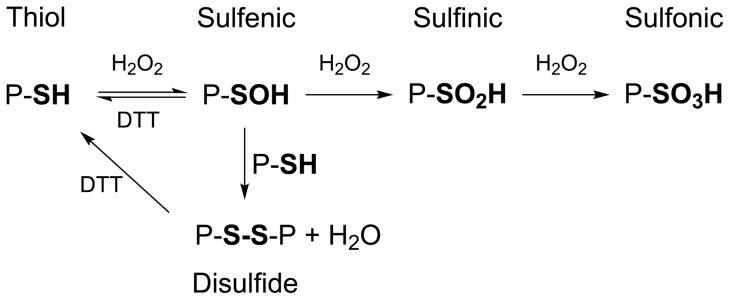
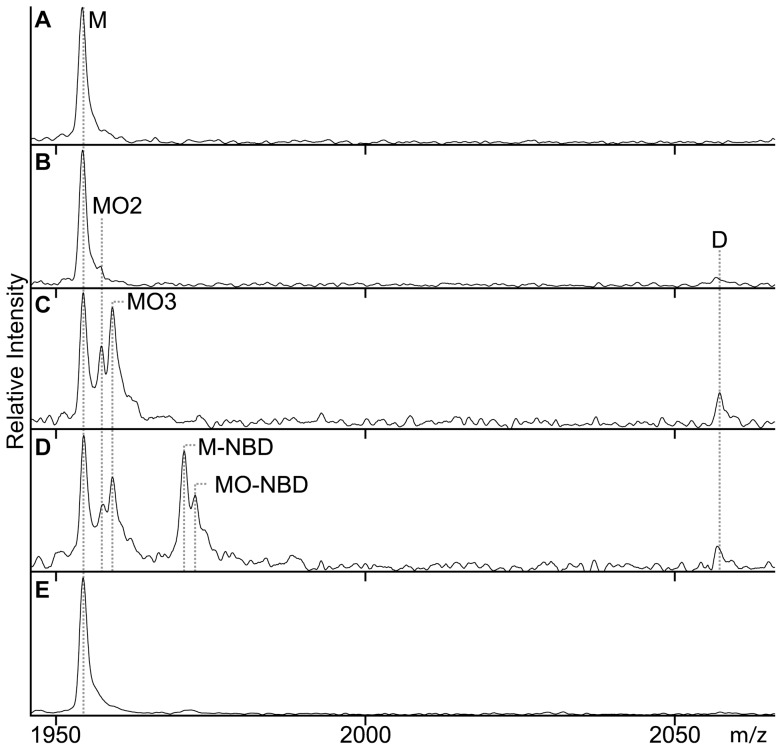
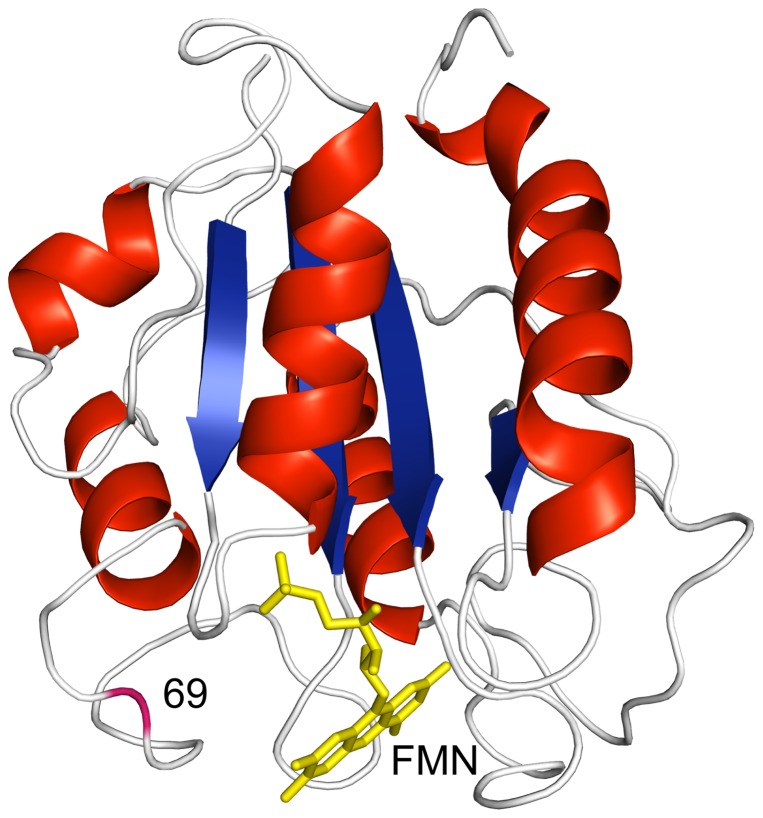
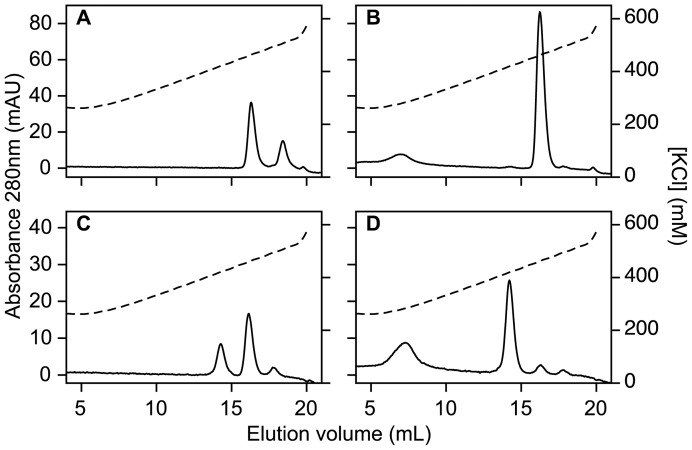
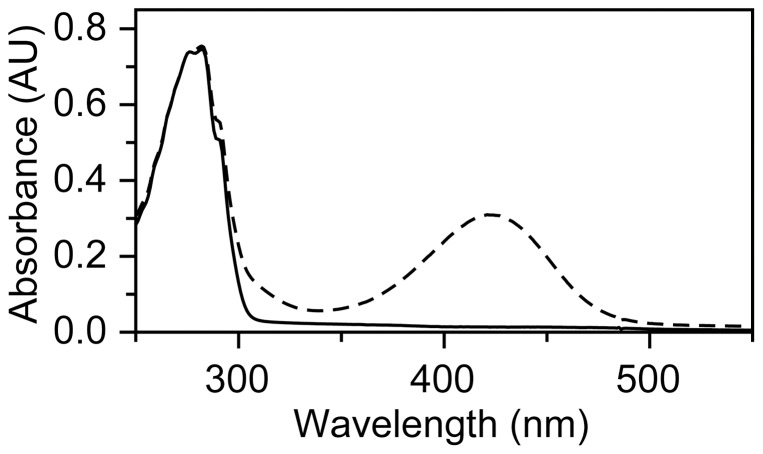
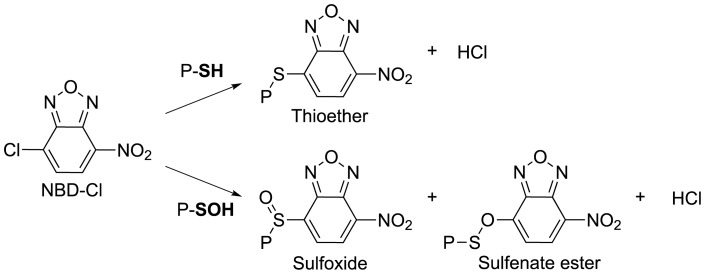
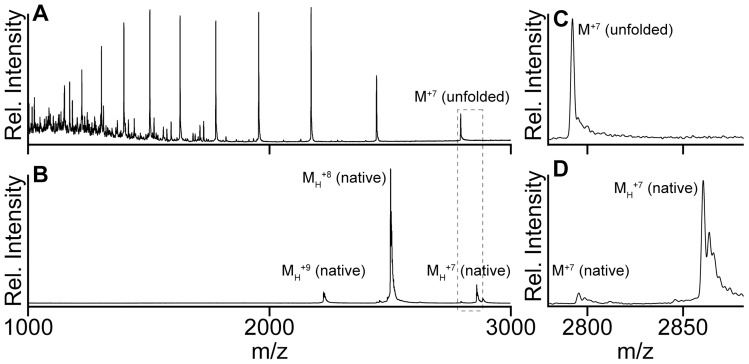
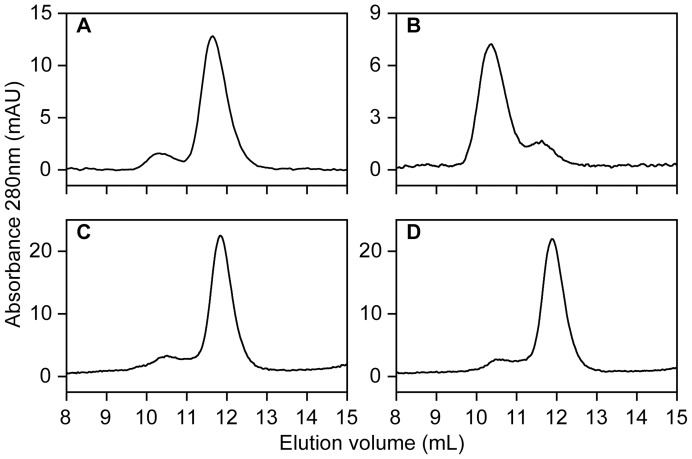
In organisms, various protective mechanisms against oxidative damaging of proteins exist. Here, we show that cofactor binding is among these mechanisms, because flavin mononucleotide (FMN) protects Azotobacter vinelandii flavodoxin against hydrogen peroxide-induced oxidation. We identify an oxidation sensitive cysteine residue in a functionally important loop close to the cofactor, i.e., Cys69. Oxidative stress causes dimerization of apoflavodoxin (i.e., flavodoxin without cofactor), and leads to consecutive formation of sulfinate and sulfonate states of Cys69. Use of 7-chloro-4-nitrobenzo-2-oxa-1,3-diazole (NBD-Cl) reveals that Cys69 modification to a sulfenic acid is a transient intermediate during oxidation. Dithiothreitol converts sulfenic acid and disulfide into thiols, whereas the sulfinate and sulfonate forms of Cys69 are irreversible with respect to this reagent. A variable fraction of Cys69 in freshly isolated flavodoxin is in the sulfenic acid state, but neither oxidation to sulfinic and sulfonic acid nor formation of intermolecular disulfides is observed under oxidising conditions. Furthermore, flavodoxin does not react appreciably with NBD-Cl. Besides its primary role as redox-active moiety, binding of flavin leads to considerably improved stability against protein unfolding and to strong protection against irreversible oxidation and other covalent thiol modifications. Thus, cofactors can protect proteins against oxidation and modification.
在生物体中,存在着各种防止蛋白质氧化损伤的保护机制。在这里,我们表明,辅因子结合是这些机制之一,因为黄素单核苷酸(FMN)可保护固氮菌黄素蛋白免受过氧化氢诱导的氧化。我们在靠近辅因子的功能重要环中鉴定出一个氧化敏感的半胱氨酸残基,即 Cys69。氧化应激导致脱辅基黄素(即没有辅因子的黄素蛋白)二聚化,并导致 Cys69 的亚磺酸盐和磺酸盐状态的连续形成。使用 7-氯-4-硝基苯并-2-氧代-1,3-二唑(NBD-Cl)表明,Cys69 修饰为亚磺酸是氧化过程中的瞬态中间产物。二硫苏糖醇将亚磺酸和二硫化物转化为硫醇,而 Cys69 的亚磺酸盐和磺酸盐形式相对于该试剂是不可逆的。新鲜分离的黄素蛋白中 Cys69 的可变分数处于亚磺酸状态,但在氧化条件下,既不会观察到氧化为亚磺酸盐和磺酸盐,也不会形成分子间二硫键。此外,黄素蛋白与 NBD-Cl 没有明显反应。除了作为氧化还原活性部分的主要作用外,黄素的结合还导致对蛋白质展开的稳定性有相当大的提高,并对不可逆氧化和其他共价硫醇修饰有很强的保护作用。因此,辅因子可以保护蛋白质免受氧化和修饰。