Department of Psychiatry, Indiana University School of Medicine, Indianapolis, IN 46202, USA.
Transl Psychiatry. 2011 Apr 26;1(4):e4. doi: 10.1038/tp.2011.1.
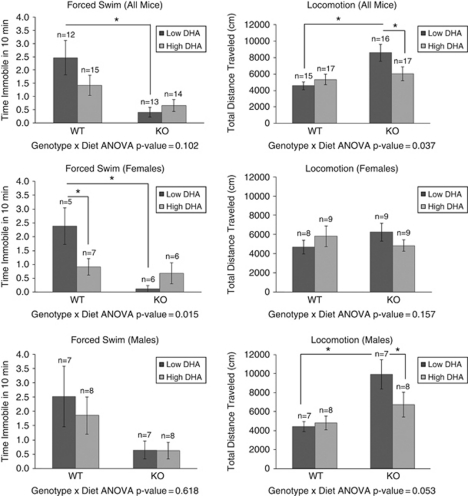
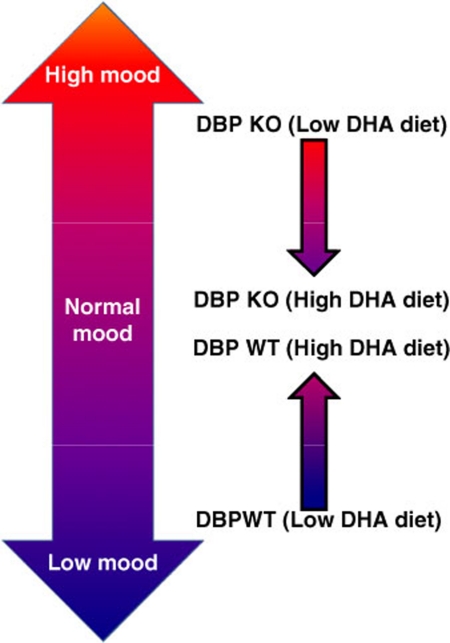
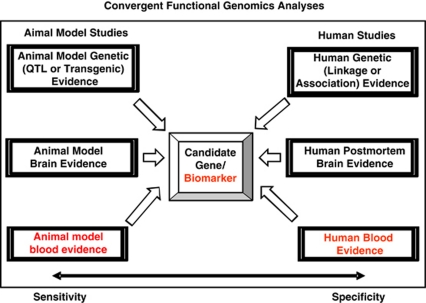
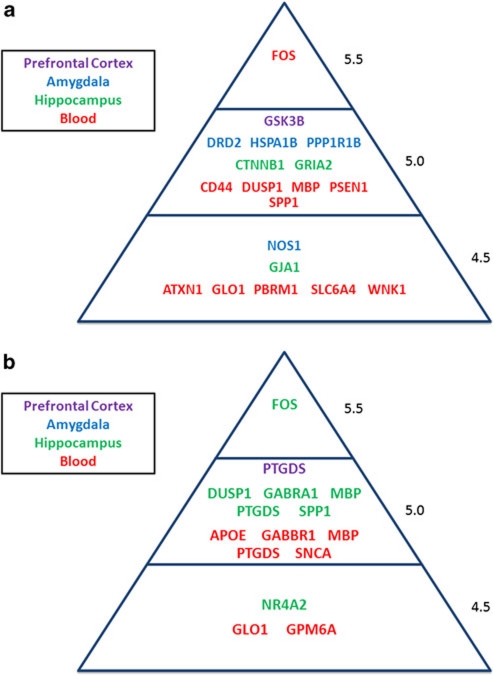
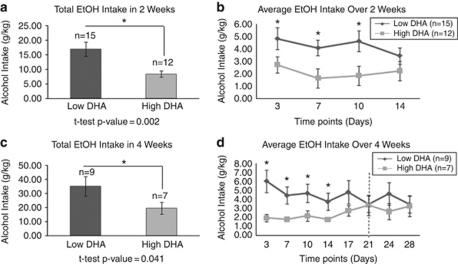
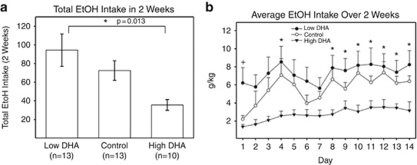
Omega-3 fatty acids have been proposed as an adjuvant treatment option in psychiatric disorders. Given their other health benefits and their relative lack of toxicity, teratogenicity and side effects, they may be particularly useful in children and in females of child-bearing age, especially during pregnancy and postpartum. A comprehensive mechanistic understanding of their effects is needed. Here we report translational studies demonstrating the phenotypic normalization and gene expression effects of dietary omega-3 fatty acids, specifically docosahexaenoic acid (DHA), in a stress-reactive knockout mouse model of bipolar disorder and co-morbid alcoholism, using a bioinformatic convergent functional genomics approach integrating animal model and human data to prioritize disease-relevant genes. Additionally, to validate at a behavioral level the novel observed effects on decreasing alcohol consumption, we also tested the effects of DHA in an independent animal model, alcohol-preferring (P) rats, a well-established animal model of alcoholism. Our studies uncover sex differences, brain region-specific effects and blood biomarkers that may underpin the effects of DHA. Of note, DHA modulates some of the same genes targeted by current psychotropic medications, as well as increases myelin-related gene expression. Myelin-related gene expression decrease is a common, if nonspecific, denominator of neuropsychiatric disorders. In conclusion, our work supports the potential utility of omega-3 fatty acids, specifically DHA, for a spectrum of psychiatric disorders such as stress disorders, bipolar disorder, alcoholism and beyond.
ω-3 脂肪酸已被提议作为精神疾病的辅助治疗选择。鉴于其对其他健康的益处,以及它们相对缺乏毒性、致畸性和副作用,它们在儿童和育龄妇女中可能特别有用,尤其是在怀孕期间和产后。需要对其作用进行全面的机制理解。在这里,我们报告了转化研究,这些研究使用整合了动物模型和人类数据的生物信息学汇聚功能基因组学方法,优先考虑与疾病相关的基因,展示了饮食 ω-3 脂肪酸(特别是二十二碳六烯酸,DHA)对双相情感障碍和共病酒精中毒应激反应性基因敲除小鼠模型的表型正常化和基因表达效应。此外,为了在行为水平上验证减少酒精消耗的新观察到的效应,我们还在另一个独立的动物模型,即酒精偏好(P)大鼠中测试了 DHA 的效应,这是一种公认的酒精中毒动物模型。我们的研究揭示了性别差异、大脑区域特异性效应和血液生物标志物,这些可能是 DHA 作用的基础。值得注意的是,DHA 调节了一些当前精神药物靶向的相同基因,并增加了髓鞘相关基因的表达。髓鞘相关基因表达的减少是神经精神疾病的一个常见但非特异性的共同特征。总之,我们的工作支持 ω-3 脂肪酸,特别是 DHA,在一系列精神疾病中的潜在应用,如应激障碍、双相情感障碍、酒精中毒等。