Lommer Markus, Specht Michael, Roy Alexandra-Sophie, Kraemer Lars, Andreson Reidar, Gutowska Magdalena A, Wolf Juliane, Bergner Sonja V, Schilhabel Markus B, Klostermeier Ulrich C, Beiko Robert G, Rosenstiel Philip, Hippler Michael, LaRoche Julie
Genome Biol. 2012 Jul 26;13(7):R66. doi: 10.1186/gb-2012-13-7-r66.
Biogeochemical elemental cycling is driven by primary production of biomass via phototrophic phytoplankton growth, with 40% of marine productivity being assigned to diatoms. Phytoplankton growth is widely limited by the availability of iron, an essential component of the photosynthetic apparatus. The oceanic diatom Thalassiosira oceanica shows a remarkable tolerance to low-iron conditions and was chosen as a model for deciphering the cellular response upon shortage of this essential micronutrient.
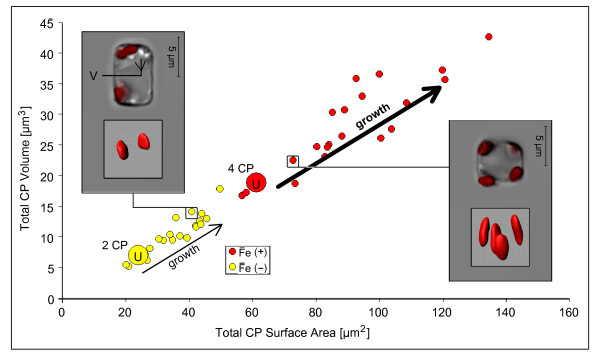
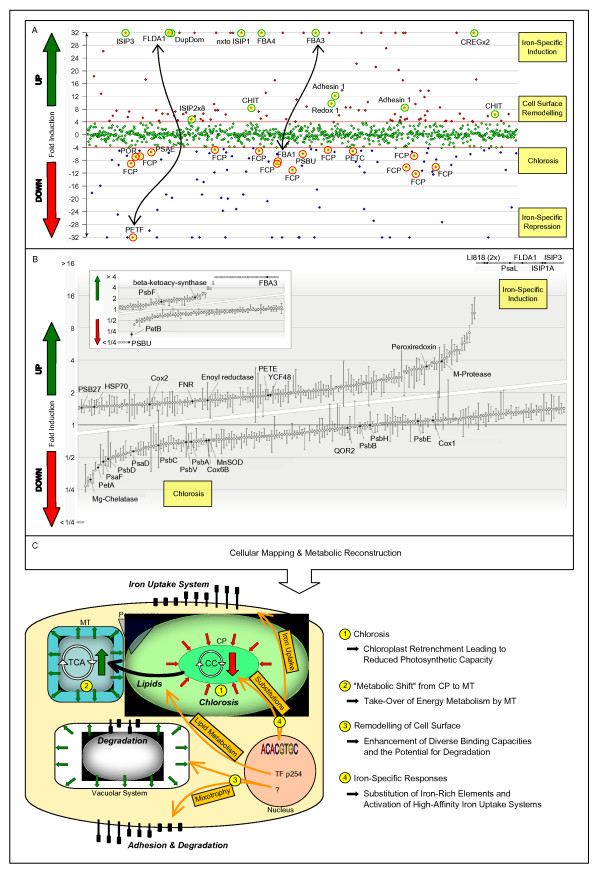
The combined efforts in genomics, transcriptomics and proteomics reveal an unexpected metabolic flexibility in response to iron availability for T. oceanica CCMP1005. The complex response comprises cellular retrenchment as well as remodeling of bioenergetic pathways, where the abundance of iron-rich photosynthetic proteins is lowered, whereas iron-rich mitochondrial proteins are preserved. As a consequence of iron deprivation, the photosynthetic machinery undergoes a remodeling to adjust the light energy utilization with the overall decrease in photosynthetic electron transfer complexes.
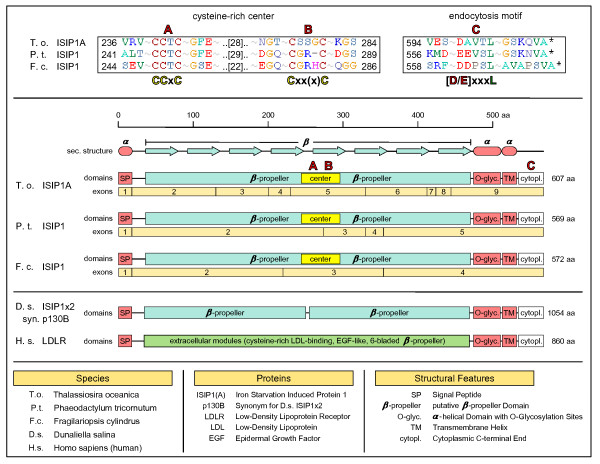
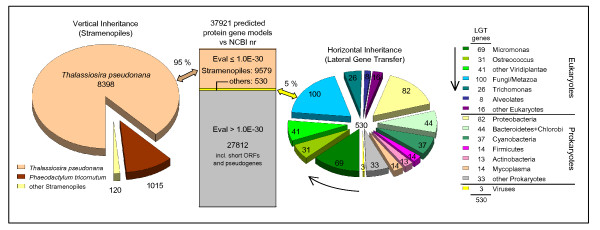
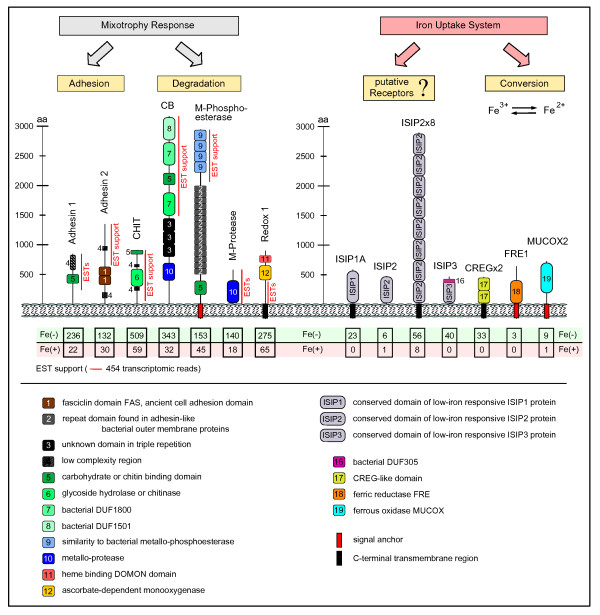
Beneficial adaptations to low-iron environments include strategies to lower the cellular iron requirements and to enhance iron uptake. A novel contribution enhancing iron economy of phototrophic growth is observed with the iron-regulated substitution of three metal-containing fructose-bisphosphate aldolases involved in metabolic conversion of carbohydrates for enzymes that do not contain metals. Further, our data identify candidate components of a high-affinity iron-uptake system, with several of the involved genes and domains originating from duplication events. A high genomic plasticity, as seen from the fraction of genes acquired through horizontal gene transfer, provides the platform for these complex adaptations to a low-iron world.
生物地球化学元素循环是由光合浮游植物生长产生生物量的初级生产驱动的,海洋生产力的40%归因于硅藻。浮游植物的生长广泛受到铁(光合装置的必需成分)可用性的限制。海洋硅藻海洋角毛藻对低铁条件表现出显著的耐受性,被选为破译这种必需微量营养素短缺时细胞反应的模型。
基因组学、转录组学和蛋白质组学的综合研究揭示了海洋角毛藻CCMP1005对铁可用性的意外代谢灵活性。这种复杂的反应包括细胞紧缩以及生物能量途径的重塑,其中富含铁的光合蛋白丰度降低,而富含铁的线粒体蛋白得以保留。铁缺乏的结果是,光合机构进行重塑以调整光能利用,光合电子传递复合体总体减少。
对低铁环境的有益适应包括降低细胞铁需求和增强铁吸收的策略。观察到一种新的贡献,即通过铁调节将参与碳水化合物代谢转化的三种含金属的果糖-1,6-二磷酸醛缩酶替换为不含金属的酶,从而提高光合生长的铁经济性。此外,我们的数据确定了高亲和力铁吸收系统的候选成分,其中一些涉及的基因和结构域起源于复制事件。从通过水平基因转移获得的基因比例可以看出,高基因组可塑性为这些对低铁世界的复杂适应提供了平台。