Department of Medical Physics, Anna University, Chennai 600-025, India.
Sci Rep. 2012;2:534. doi: 10.1038/srep00534. Epub 2012 Jul 26.
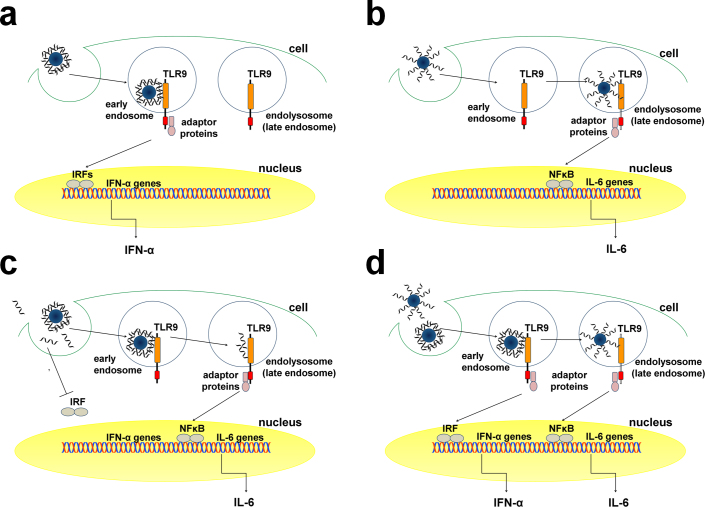
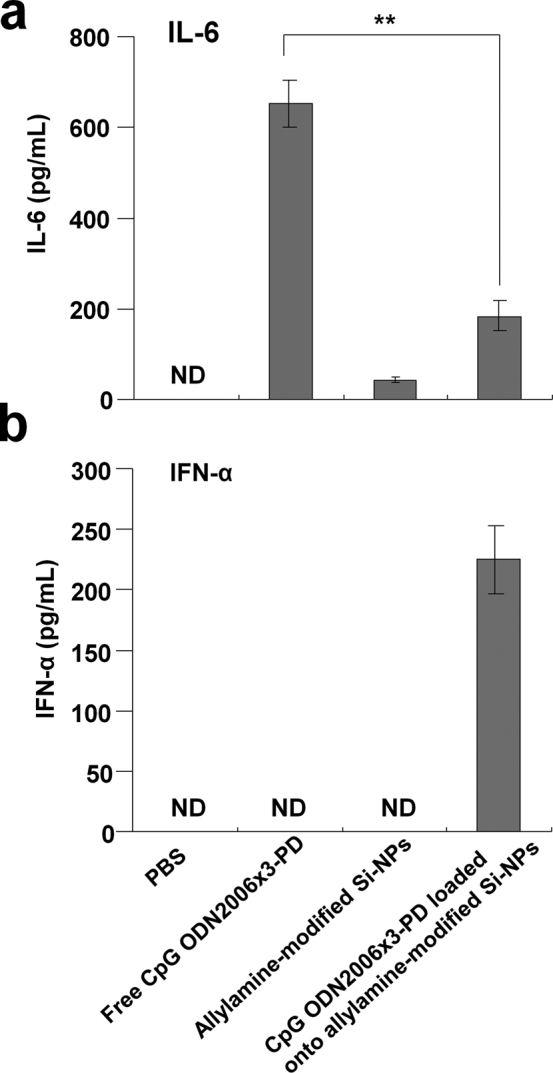
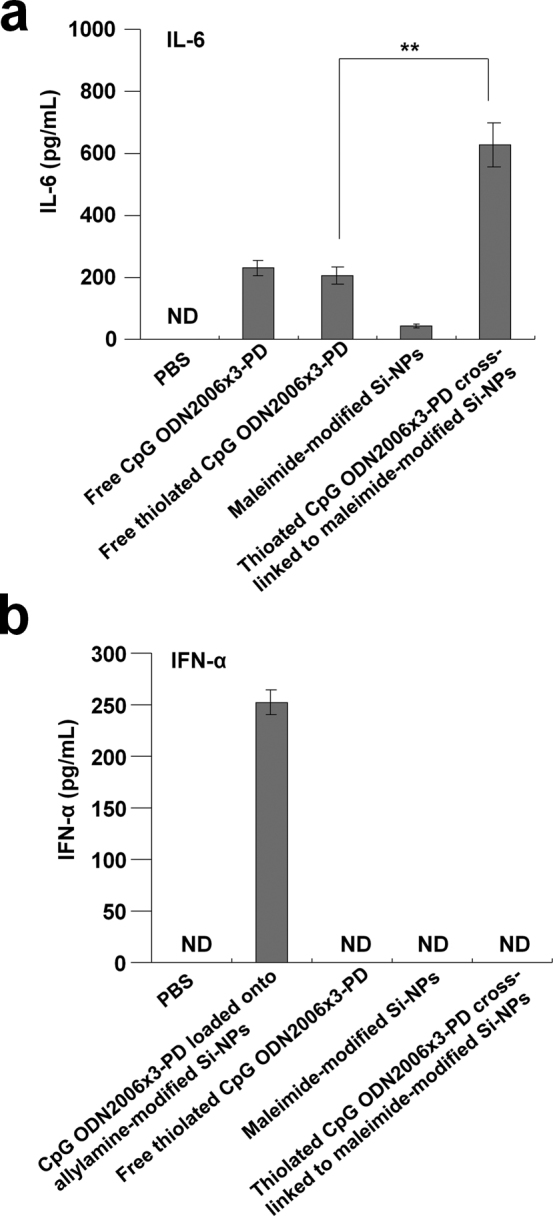
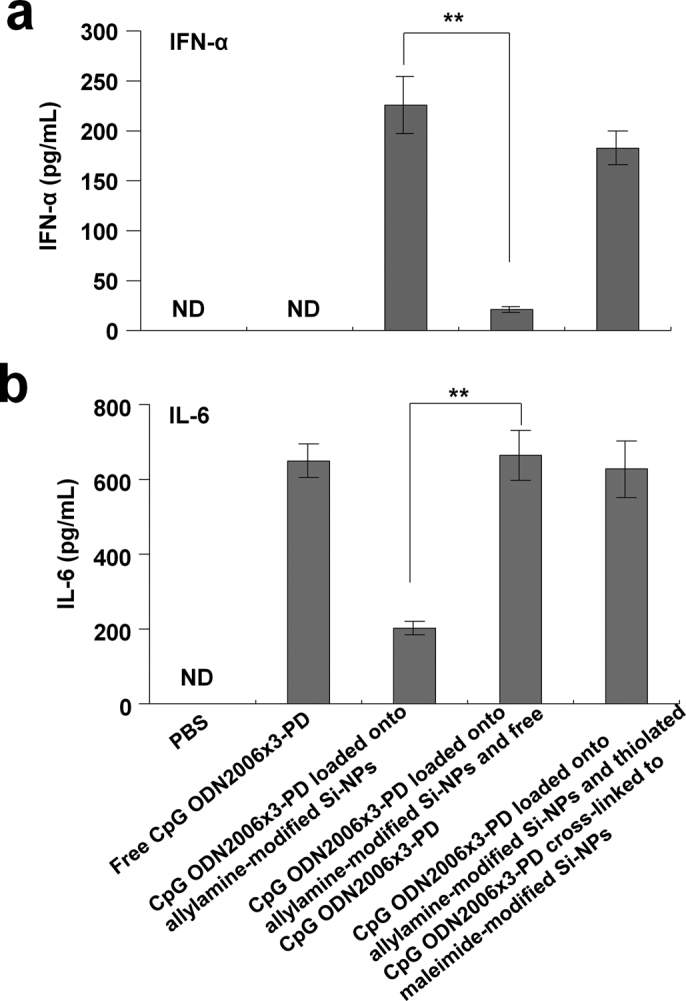
The interaction of cytosine-phosphate-guanine oligodeoxynucleotides (CpG ODNs) with Toll-like receptor 9 (TLR9) activates the immune system. Multimeric class A CpG ODNs induce interferon-α (IFN-α) and, to a lesser extent, interleukin-6. By contrast, monomeric class B CpG ODNs induce interleukin-6 but not IFN-α. This difference suggests that the multimerization of CpG ODN molecules is a key factor in IFN-α induction. We multimerized class B CpG ODN2006x3-PD molecules that consist entirely of a phosphodiester backbone onto quantum dot silicon nanoparticles with various binding modes. Herein, we present the binding mode-dependent bifurcation of cytokine induction and discuss its possible mechanism of CpG ODN and TLR9 interaction. Our discoveries also suggest that nanoparticles play roles in not only delivery of CpG ODNs but also control of CpG ODN activity.
胞嘧啶-磷酸-鸟嘌呤寡脱氧核苷酸(CpG ODN)与 Toll 样受体 9(TLR9)的相互作用激活了免疫系统。多聚体 A 类 CpG ODN 诱导干扰素-α(IFN-α),并在较小程度上诱导白细胞介素-6。相比之下,单体 B 类 CpG ODN 诱导白细胞介素-6,但不诱导 IFN-α。这种差异表明 CpG ODN 分子的多聚化是诱导 IFN-α 的关键因素。我们将完全由磷酸二酯骨架组成的 B 类 CpG ODN2006x3-PD 分子多聚化到具有各种结合模式的量子点硅纳米颗粒上。在此,我们提出了细胞因子诱导的结合模式依赖性分支,并讨论了 CpG ODN 和 TLR9 相互作用的可能机制。我们的发现还表明,纳米颗粒不仅在 CpG ODN 的递送上发挥作用,而且还控制 CpG ODN 的活性。