Bajwa Sukhminder Jit Singh, Bajwa Sukhwinder Kaur, Kaur Jasbir, Singh Amarjit, Singh Anita, Parmar Surjit Singh
Department of Anesthesiology and Intensive Care Medicine, Gian Sagar Medical College and Hospital, Banur, Punjab, India.
Int J Crit Illn Inj Sci. 2012 May;2(2):63-9. doi: 10.4103/2229-5151.97269.
Different adjuvants been tried out for neuraxial anesthesia in emergency caesarean section so that the dose of the local anesthetic can be reduced and hypotension thereby prevented.
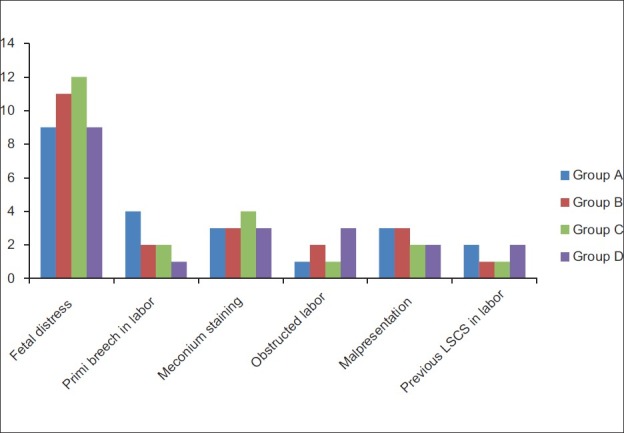
The present study was carried out in patients presenting for emergency lower segment caesarean section (LSCS) to establish the dose of intrathecal clonidine that would allow reduction of the dose of local anesthetic (thereby reducing the incidence and magnitude of hypotension) while at the same time providing clinically relevant prolongation of spinal anesthesia without significant side effects.
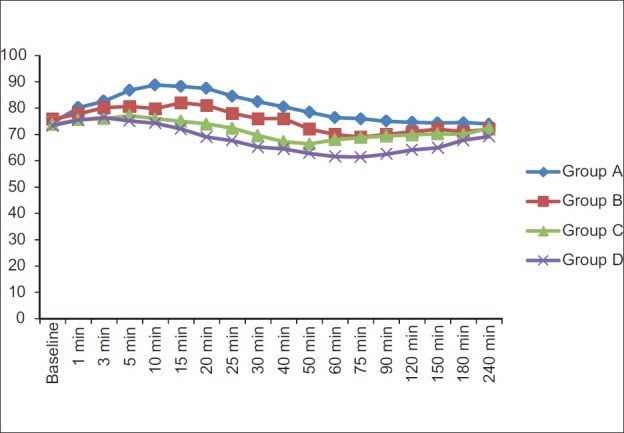
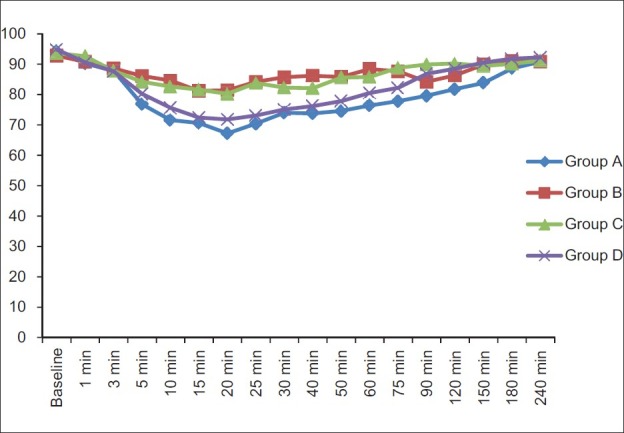
This randomized clinical study was carried out in our institution among 100 pregnant females who underwent emergency caesarean section. The participants were divided randomly into four groups: A, B, C, and D, each comprising 25 parturients. Subarachnoid block was performed using a 26G Quincke needle, with 12 mg of hyperbaric bupivacaine (LA) in group A, 9 mg of LA + 30 μg of clonidine in group B, LA + 37.5 μg of clonidine in group C, and LA + 45 μg of clonidine in group D. The solution was uniformly made up to 2.2 mL with normal saline in all the groups. Onset of analgesia at T(10) level, sensory and motor blockade levels, maternal heart rate and blood pressure, neonatal Apgar scores, postoperative block characteristics, and adverse events were looked for and recorded. Statistical analysis was carried out with SPSS(®) version 10.0 for Windows(®), using the ANOVA test with post hoc significance, the Chi-square test, and the Mann-Whitney U test. P<.05 was considered significant and P<.0001 as highly significant.
One hundred patients were enrolled for this study. The four groups were comparable with regard to demographic data and neonatal Apgar scores. Onset and establishment of sensory and motor analgesia was significantly shorter in groups C and D, while hypotension (and the use of vasopressors) was significantly higher in groups A and D. Perioperative shivering, nausea, and vomiting were significantly higher in groups A and D, while incidence of dry mouth was significantly higher in group D.
The addition of 45 μg, 37.5 μg, and 30 μg of clonidine to hyperbaric bupivacaine results in more prolonged complete and effective analgesia, allowing reduction of up to 18% of the total dose of hyperbaric bupivacaine. From the results of this study, 37.5 μg of clonidine seems to be the optimal dose.
已对不同佐剂用于急诊剖宫产的蛛网膜下腔麻醉进行了试验,以便减少局部麻醉药的剂量,从而预防低血压。
本研究针对行急诊下段剖宫产(LSCS)的患者开展,以确定鞘内注射可乐定的剂量,该剂量既能减少局部麻醉药的剂量(从而降低低血压的发生率和严重程度),又能在不产生明显副作用的情况下,使脊髓麻醉在临床上得到有效延长。
本随机临床研究在我院100例接受急诊剖宫产的孕妇中进行。参与者被随机分为四组:A组、B组、C组和D组,每组25名产妇。使用26G Quincke针进行蛛网膜下腔阻滞,A组注射12mg重比重布比卡因(局部麻醉药),B组注射9mg局部麻醉药+30μg可乐定,C组注射局部麻醉药+37.5μg可乐定,D组注射局部麻醉药+45μg可乐定。所有组均用生理盐水将溶液总体积调至2.2mL。观察并记录T(10)水平的镇痛起效时间、感觉和运动阻滞平面、产妇心率和血压、新生儿阿普加评分、术后阻滞特征及不良事件。使用SPSS(®) 10.0 for Windows(®)软件进行统计分析,采用方差分析及事后显著性检验、卡方检验和曼-惠特尼U检验。P<0.05为差异有统计学意义,P<0.0001为差异有高度统计学意义。
100例患者纳入本研究。四组在人口统计学数据和新生儿阿普加评分方面具有可比性。C组和D组感觉和运动镇痛的起效及建立时间明显更短,而A组和D组低血压(及血管升压药的使用)明显更严重。A组和D组围手术期寒战、恶心和呕吐明显更多,而D组口干发生率明显更高。
在重比重布比卡因中添加45μg、37.5μg和30μg可乐定可使完全有效的镇痛时间延长,使重比重布比卡因总剂量最多可减少18%。从本研究结果来看,37.5μg可乐定似乎是最佳剂量。