Department of Parasitology, Faculty of Veterinary Medicine, Miguel Servet, 177, 50013, Zaragoza, Spain.
Exp Appl Acarol. 2013 Mar;59(3):351-66. doi: 10.1007/s10493-012-9600-7. Epub 2012 Jul 28.
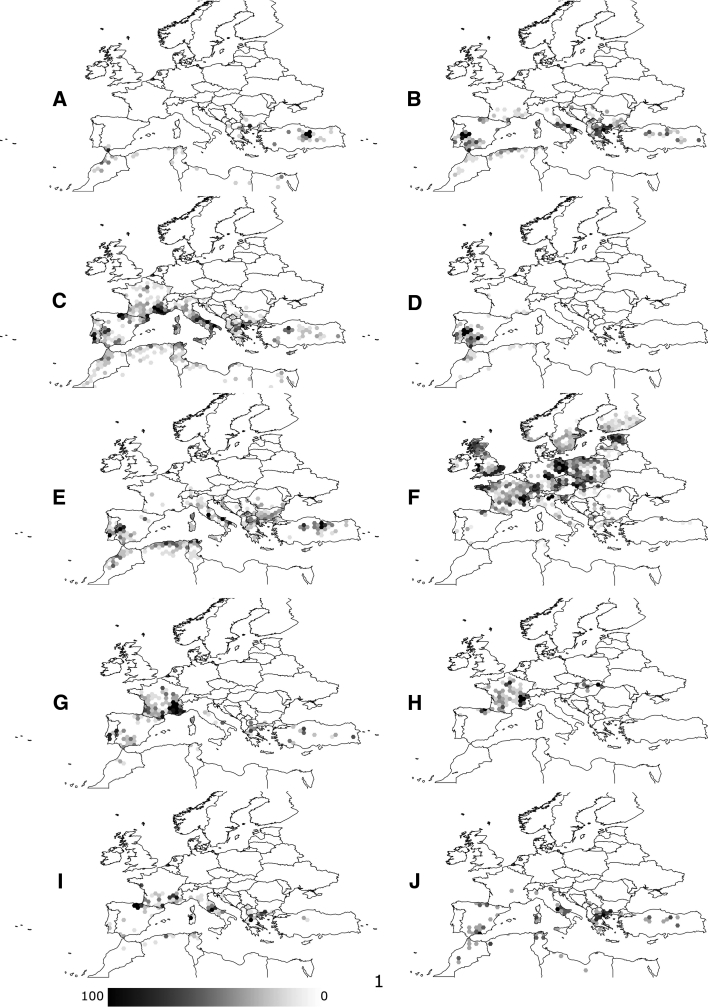
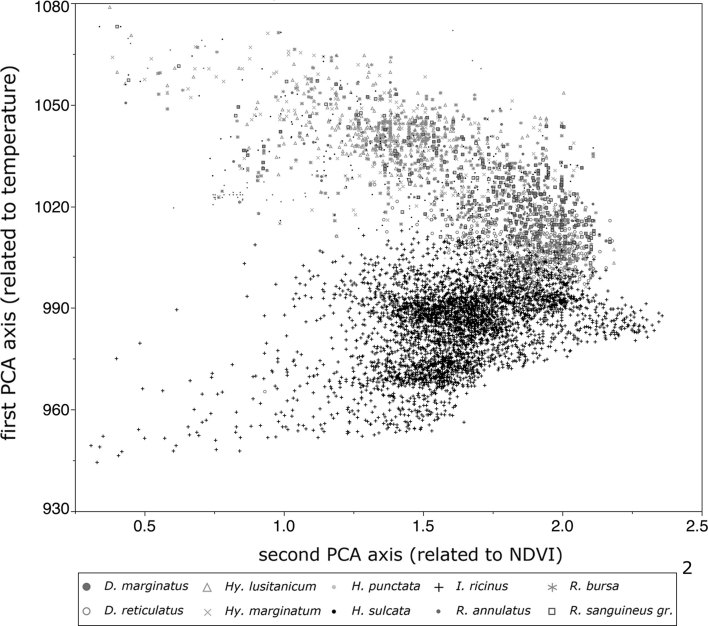
We compiled information on the distribution of ticks in the western Palearctic (11°W, 45°E; 29°N, 71°N), published during 1970-2010. The literature search was filtered by the tick's species name and an unambiguous reference to the point of capture. Records from some curated collections were included. We focused on tick species of importance to human and animal health, in particular: Ixodes ricinus, Dermacentor marginatus, D. reticulatus, Haemaphysalis punctata, H. sulcata, Hyalomma marginatum, Hy. lusitanicum, Rhipicephalus annulatus, R. bursa, and the R. sanguineus group. A few records of other species (I. canisuga, I. hexagonus, Hy. impeltatum, Hy. anatolicum, Hy. excavatum, Hy. scupense) were also included. A total of 10,280 records was included in the data set. Almost 42 % of published references are not adequately referenced (and not included in the data set), host is reported for only 61 % of records and a reference to time of collection is missed for 84 % of published records. Ixodes ricinus accounted for 44.3 % of total records, with H. marginatum and D. marginatus accounting for 7.1 and 8.1 % of records, respectively. The lack of homogeneity of the references and potential pitfalls in the compilation were addressed to create a digital data set of the records of the ticks. We attached to every record a coherent set of quantitative descriptors for the site of reporting, namely gridded interpolated monthly climate and remotely sensed data on vegetation (NDVI). We also attached categorical descriptors of the habitat: a standard classification of land biomes and an ad hoc classification of the target territory from remotely sensed temperature and NDVI data. A descriptive analysis of the data revealed that a principal components reduction of the environmental (temperature and NDVI) variables described the distribution of the species in the target territory. However, categorical descriptors of the habitat were less effective. We stressed the importance of building reliable collections of ticks with specific references as to collection point, host and date of capture. The data set is freely downloadable.
我们汇编了 1970 年至 2010 年间发表的关于西古北区(11°W,45°E;29°N,71°N)蜱分布的信息。文献检索通过蜱的种名和明确的捕获地点进行筛选。一些经过精心整理的收藏记录也包括在内。我们专注于对人类和动物健康有重要意义的蜱种,特别是:蓖子硬蜱、边缘革蜱、血红扇头蜱、璃眼蜱、扇头蜱、边缘革蜱、卢氏革蜱、环纹硬蜱、肩突硬蜱和血革蜱组。还包括其他一些物种(犬硬蜱、硬蜱、扇头蜱、阿尼硬蜱、扇头蜱、扇头蜱)的少量记录。该数据集共包含 10280 条记录。近 42%的已发表参考文献未得到充分引用(未包含在数据集中),仅 61%的记录报告了宿主,84%的已发表记录未报告采集时间。蓖子硬蜱占总记录的 44.3%,边缘革蜱和边缘革蜱分别占记录的 7.1%和 8.1%。参考文献缺乏同质性,编译中存在潜在陷阱,我们为此创建了蜱记录的数字数据集。我们为每个记录附加了一组关于报告地点的定量描述符,即网格化插值的每月气候和植被的遥感数据(NDVI)。我们还为栖息地附加了分类描述符:土地生物群落的标准分类和来自遥感温度和 NDVI 数据的目标领土的专门分类。对数据的描述性分析表明,环境(温度和 NDVI)变量的主成分减少描述了目标领土中物种的分布。然而,栖息地的分类描述符效果较差。我们强调了建立具有特定参考信息(包括采集点、宿主和采集日期)的可靠蜱收集的重要性。该数据集可免费下载。