Meghezi Sébastien, Couet Frédéric, Chevallier Pascale, Mantovani Diego
Laboratory for Biomaterials and Bioengineering, Department of Mining Metallurgy and Materials Engineering and University Hospital Research Center, Laval University, Quebec City, QC, Canada G1V 0A6.
Int J Biomater. 2012;2012:319290. doi: 10.1155/2012/319290. Epub 2012 Jul 12.
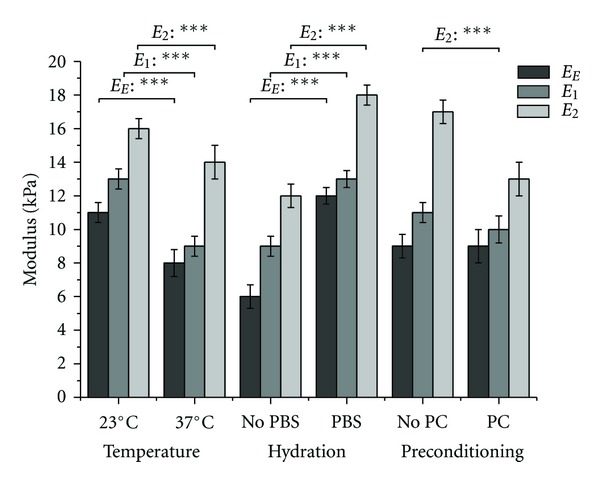
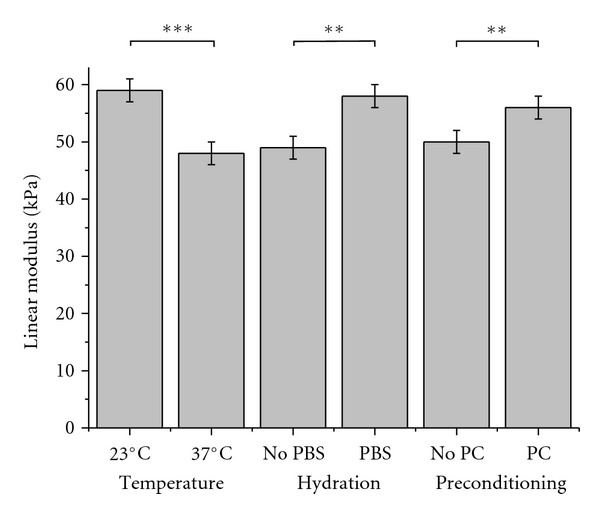
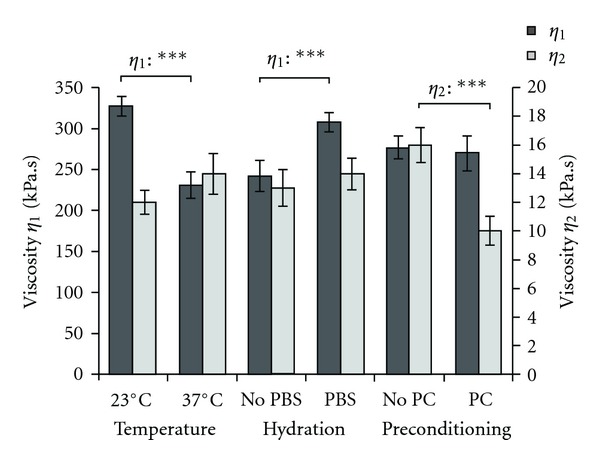
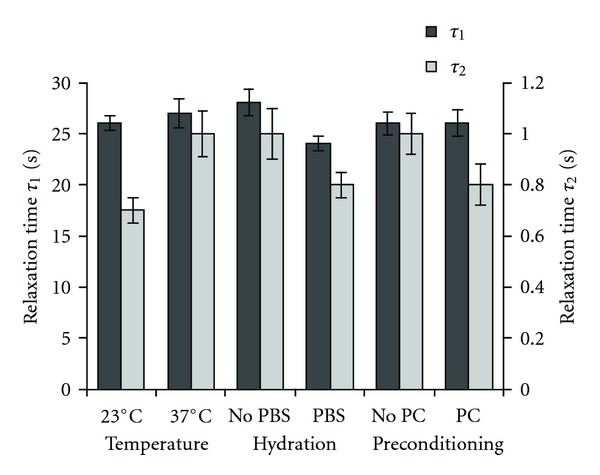
Vascular tissue engineering focuses on the replacement of diseased small-diameter blood vessels with a diameter less than 6 mm for which adequate substitutes still do not exist. One approach to vascular tissue engineering is to culture vascular cells on a scaffold in a bioreactor. The bioreactor establishes pseudophysiological conditions for culture (medium culture, 37°C, mechanical stimulation). Collagen gels are widely used as scaffolds for tissue regeneration due to their biological properties; however, they exhibit low mechanical properties. Mechanical characterization of these scaffolds requires establishing the conditions of testing in regard to the conditions set in the bioreactor. The effects of different parameters used during mechanical testing on the collagen gels were evaluated in terms of mechanical and viscoelastic properties. Thus, a factorial experiment was adopted, and three relevant factors were considered: temperature (23°C or 37°C), hydration (aqueous saline solution or air), and mechanical preconditioning (with or without). Statistical analyses showed significant effects of these factors on the mechanical properties which were assessed by tensile tests as well as stress relaxation tests. The last tests provide a more consistent understanding of the gels' viscoelastic properties. Therefore, performing mechanical analyses on hydrogels requires setting an adequate environment in terms of temperature and aqueous saline solution as well as choosing the adequate test.
血管组织工程致力于用直径小于6毫米的人工血管替代病变的小直径血管,目前仍缺乏足够的替代物。血管组织工程的一种方法是在生物反应器中的支架上培养血管细胞。生物反应器为培养建立了假生理条件(培养基培养、37°C、机械刺激)。胶原凝胶因其生物学特性而被广泛用作组织再生的支架;然而,它们的机械性能较低。这些支架的力学特性需要根据生物反应器设定的条件来确定测试条件。通过力学和粘弹性特性评估了力学测试中使用的不同参数对胶原凝胶的影响。因此,采用了析因实验,并考虑了三个相关因素:温度(23°C或37°C)、水合作用(盐水溶液或空气)和机械预处理(有或无)。统计分析表明,这些因素对通过拉伸试验和应力松弛试验评估的力学性能有显著影响。最后一项试验能更一致地了解凝胶的粘弹性特性。因此,对水凝胶进行力学分析需要在温度和盐水溶液方面设定合适的环境,并选择合适的测试方法。