Department of Physiological Nursing, University of California San Francisco, San Francisco, California, United States of America.
PLoS One. 2012;7(7):e40560. doi: 10.1371/journal.pone.0040560. Epub 2012 Jul 23.
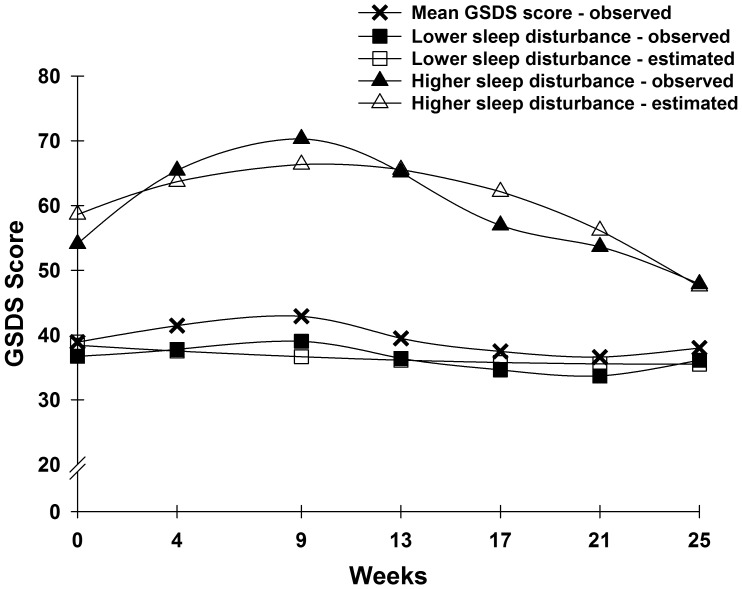
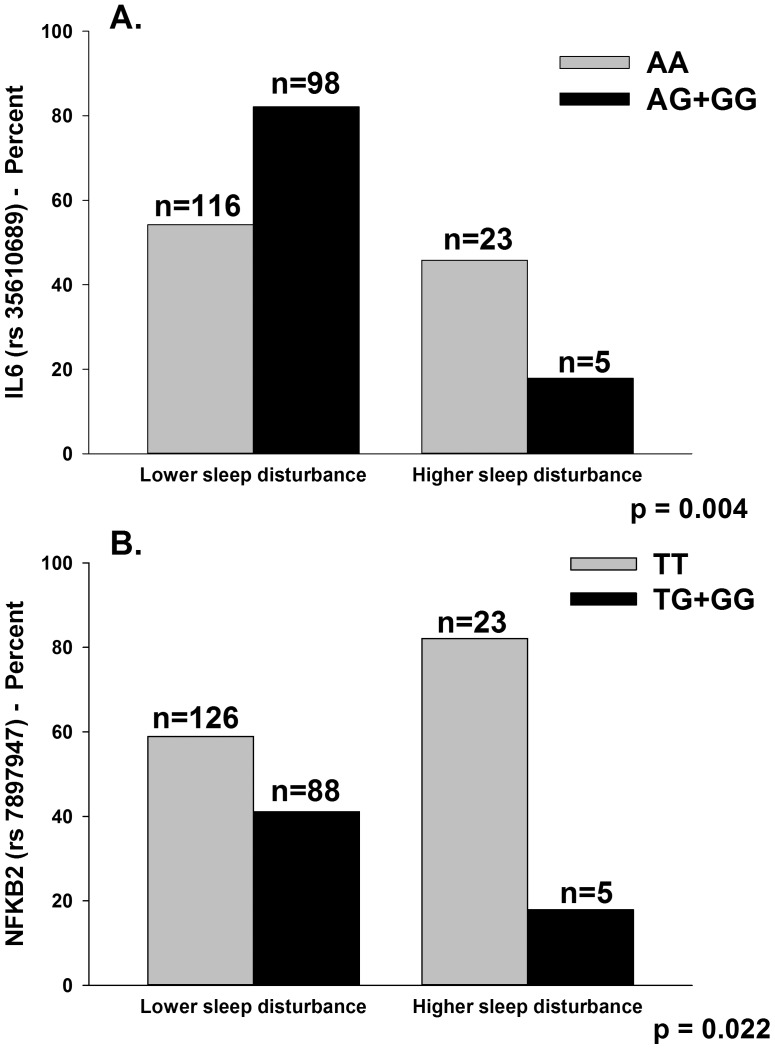
The purposes of this study were to identify distinct latent classes of individuals based on subjective reports of sleep disturbance; to examine differences in demographic, clinical, and symptom characteristics between the latent classes; and to evaluate for variations in pro- and anti-inflammatory cytokine genes between the latent classes. Among 167 oncology outpatients with breast, prostate, lung, or brain cancer and 85 of their FCs, growth mixture modeling (GMM) was used to identify latent classes of individuals based on General Sleep Disturbance Scale (GSDS) obtained prior to, during, and for four months following completion of radiation therapy. Single nucleotide polymorphisms (SNPs) and haplotypes in candidate cytokine genes were interrogated for differences between the two latent classes. Multiple logistic regression was used to assess the effect of phenotypic and genotypic characteristics on GSDS group membership. Two latent classes were identified: lower sleep disturbance (88.5%) and higher sleep disturbance (11.5%). Participants who were younger and had a lower Karnofsky Performance status score were more likely to be in the higher sleep disturbance class. Variation in two cytokine genes (i.e., IL6, NFKB) predicted latent class membership. Evidence was found for latent classes with distinct sleep disturbance trajectories. Unique genetic markers in cytokine genes may partially explain the interindividual heterogeneity characterizing these trajectories.
本研究旨在根据睡眠障碍的主观报告,确定个体的不同潜在类别;研究潜在类别之间在人口统计学、临床和症状特征方面的差异;并评估潜在类别之间促炎和抗炎细胞因子基因的变化。在 167 名患有乳腺癌、前列腺癌、肺癌或脑癌的肿瘤门诊患者及其 85 名家属中,使用增长混合模型(GMM)根据在放射治疗前、治疗期间和治疗结束后四个月获得的一般睡眠障碍量表(GSDS)来确定个体的潜在类别。对候选细胞因子基因中的单核苷酸多态性(SNP)和单倍型进行了分析,以确定两个潜在类别之间的差异。采用多元逻辑回归评估表型和基因型特征对 GSDS 组归属的影响。确定了两个潜在类别:较低的睡眠障碍(88.5%)和较高的睡眠障碍(11.5%)。年龄较小、卡诺夫斯基表现评分较低的参与者更有可能属于睡眠障碍较高的类别。两种细胞因子基因(即 IL6、NFKB)的变异可预测潜在类别成员身份。有证据表明存在具有不同睡眠障碍轨迹的潜在类别。细胞因子基因中的独特遗传标记可能部分解释了这些轨迹的个体间异质性。